Category: Blogs

  • International Mother Language Day

    International Mother Language Day

    The concept of celebrating International Mother Language Day was an initiative up by Bangladesh. It was supported and accepted at the 1999 UNESCO General Conference and has been celebrated throughout the world since 2000. Linguistic Diversity is increasingly menaced as more and more languages disappear. Globally 40 percent of the population does not have access to an education in a language they speak or understand. Nevertheless, progress is being made in mother tongue-based multilingual education with a growing understanding of its significance, particularly in early schooling, and more dedication and devotion to its blossoming in public life.

    Multilingual and multicultural societies exist through their languages which transmit and preserve traditional knowledge and cultures in an endurable way.

    Sign Language Braille
    Sign Language | Braille

    Different Year Different Theme

    Every year, UNESCO selects a diverse theme and holds different various events at its headquarters in Paris, France. In 2005, there was a focus on Braille and sign languages, and in 2017, a focus on how multilingual education could help the world to have a better future.

    Other countries have also set up special projects to mark this day.

    Like in 2014, the Indian government released digital learning materials for schools and colleges in the 22 most widely spoken Indian languages. It is estimated that there are around 750 languages or dialects in India, and, sadly, that around 250 more languages have been lost in the last 50 years.

    “If you talk to a man in a language he understands, that goes to his head. If you talk to him in his language, that goes to his heart.”Nelson Mandela

    At least 43 percent of all languages are endangered, and fewer than 100 of the world’s languages are used in the digital world. Most internet communication is in one of the following languages: English, Chinese Mandarin, Spanish, Arabic, Portuguese, Indonesian, Malayan, Japanese, Russian and German. But everyone has the right to use their mother language and to keep the memories, traditions, and ways of thinking that their language represents. This concept elucidates the importance of International Mothers Day. 
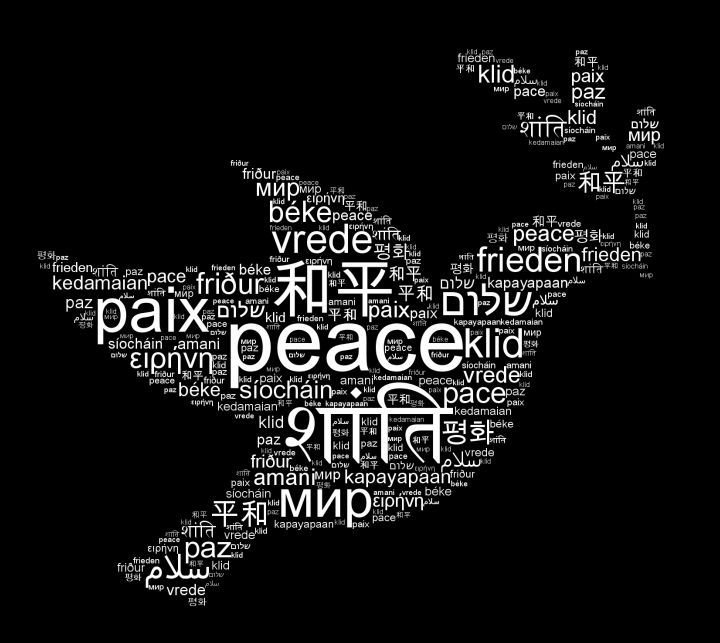
    Peace in Different Languages
    Peace in Different Languages

    Languages and their Individualism

    Bengali or Bangla is an Indo-Aryan language of the eastern Indian subcontinent, evolved from the Magadhi Prakit, Pali, and Sanskrit languages. While the Bengali script is relatively unknown in the West but it’s the fifth most widely used writing system in the world. Today the Bengali-speaking Indians are residing in Bangladesh and West Bengal and the language is recognized as the World’s sweetest language.

    Malayalam has official language status in Kerala, Lakshadweep, and Puducherry and is spoken by 34 million people worldwide. It is a Dravidian language spoken by the Malayali people and is entitled as one of the world’s toughest languages. 

    Today, along with Spanish being the popular language amongst the generation, Mandarin is getting immense recognition all over the world. In terms of native speakers alone, Mandarin is by far the second most spoken language in the world. It’s an official language of mainland China, Taiwan, and Singapore and one of the six official languages of the United Nations. So it’s not surprising that there are approximately 1.09 million native speakers worldwide. Mandarin is a tonal language, which means that the meaning of a word changes based on the way we pronounce it.

    With coming generations, many languages are started getting accepted and welcomed by various people all over the world. The World is connecting with the wide range of acceptance of various languages.

    Theme of the 2022 International Mother Language Day
    Using Technology for Multilingual Learning

    2022 Celebrations in UNESCO  

    “Technology can provide new tools for protecting linguistic diversity. Such tools, for example, facilitating their spread and analysis, allow us to record and preserve languages that sometimes exist only in oral form. Put simply, they make local dialects a shared heritage. However, because the Internet poses a risk of linguistic uniformization, we must also be aware that technological progress will serve plurilingualism only as long as we make the effort to ensure that it does,” Audrey Azoulay, Director-General of UNESCO said in her message for the occasion of International Mother Language Day. 

    The theme of the 2022 International Mother Language Day, “Using technology for multilingual learning: Challenges and opportunities”, will discuss the potential role of technology to advance multilingual education and support the development of quality teaching and learning for all. UNESCO organizes a webinar on 21 February from 11:00 am to 1:00 pm, Paris time) to celebrate Mother Language Day 2022. 

    Multilingual and multicultural societies exist through their languages which transmit and sustainably preserve traditional knowledge and cultures.

    Read More: PRESIDENTS’ DAY 2022: Honoring And Celebrating U.S. Leaders
  • Health and Happiness Against Mental Health Disorders

    Health and Happiness Against Mental Health Disorders

    The most potent topic among the present generation nowadays is to spread awareness about mental health disorders to a multitude of people. It is now one of the rising discussions where the mental health of an individual is questioned. Today the therapists are spreading awareness to the mass that health is not solemnly based on physical fitness but also dependent on mental health. With the progress in technology, media, and medicine, mental health and its importance are invariably important to discuss.

    The Disorders

    Mental health disorders are getting known to people through the advancement in the field of medicine. However, with the advancement in everything, the stress and burden to outlast in the fast-paced world is an add-on to the causes of mental health disorders. The lockdown and pandemic scenario is further responsible for the cause of mental health disorders leading to various serious unhealthy and devastating consequences. Nevertheless the increase in awareness programs and activities like “The Mending League”, “WEVOLVE” and many other teams. Mental Health is nevertheless an integral part of the world of fitness and health concerning issues.  Even the doctors state that the mental health of an individual deserves the same attention the other disorders do.

    Depression, Anxiety, Stress, Postpartum, and other disorders like Bipolar Disorder and Multiple personality disorder require the same attention other disorders concerning someone’s physical stability do.

    The implication of Covid19 on young adults

    The sudden lockdown and quarantine have affected the young adults of the present generation. Resources confirm that four out of ten adults in the U.S  have faced anxiety and depression due to the pandemic which struck countries all over the globe. Reports say that 56.2% of the population belonging to the 18-24 age group have faced depression and anxiety disorder which have later twirled into serious consequences leading to the demise of a young soul.  KFF Health Tracking Poll has shown that masses belonging to the older age group have also faced similar issues after the enforcement of lockdown because of Covid19. 

    Ways to end the Stigma against Mental Health Disorders

    The simple ways to end the mental health stigma are quite an integral part to spread awareness about the same. The need to educate ourselves about mental health and educate others as well. Listening, supporting, and sharing with others create a relaxed and peaceful environment. Nevertheless, a good happy relaxed head leads to the road to happiness. Our happiness depends on the thoughts in our marbles.

    Read More: Remarkable Connection Between Spirituality and the Health

  • Remarkable Connection Between Spirituality and the Health

    Remarkable Connection Between Spirituality and the Health

    You know the principles of healthy life include nourishment and workout, but what about spirituality? Is there a connection between spirituality and the health of people? During difficult periods of your life, you might have turned to prayer, meditation, traditional ceremonies, or any type of practice that invoked a sense of clarity or peace. The need to reach out and find some sort of direction to assist navigation of life is instinctive. A spiritual approach accomplishes this purpose and has been a catalyst for good health.

    The Concept of Spirituality

    mindfulness

    Spirituality means having a feeling or belief that there is something greater than yourself. It means more to being human than sensory experience and that we are part of the cosmic or divine.

    The concept of spirituality is different for every person. Some experience spirituality in religion others might find spirituality in other activities like listening to music, painting, etc. For others, spirituality focuses on a quieting, transformative, individual meditative practice.

    “Helping, fixing, and serving represent three different ways of seeing life. When you help, you see life as weak. When you fix it, you see life as broken. When you serve, you see life as a whole. Helping and fixing may be the work of the ego, and serving the work of the soul.”

    Research on spirituality and the health

    Over the past 10 years, Research has been increasing in the field of “Spirituality and the Health,” showing that spirituality benefits the health of a person both physically and mentally, and approximately 30,000 articles have been published in the PubMed database. 
    According to WHO (World Health Organization), “inclusion of a non-material or spiritual health dimension, making the concept come to be regarded as a dynamic health state – physical, mental, spiritual and social behavior.”

    spirituality and health

    Even though the concept of spirituality and health among researchers is increasing, the technological advances in healthcare tend to change the focus of medicine from a caring, service-oriented model to a technological, cure-oriented model. The researchers and doctors are trying to balance technological advances in health with medicine’s spiritual roots as a result of the realization that spirituality was a significant part of health care.

    In Dr. Puchalski’s study, she supports the significance of doctors practicing empathetic presence; i.e. being fully present for patients and helping them through their anxiety, ache, and suffering. By being alert to a patient’s spiritual interests, including spiritual beliefs if this would ease a patient’s suffering, and attending to a patient’s anxieties and hopes, doctors can be of huge aid. Doctors are plying a quality that all vocational specialists should offer: compassion.

    The concept of spirituality benefitting health came to notice at a conference of spiritual caregivers conducted at the New York Academy of Medicine in March 2014. According to some of the researchers present at the conference, whether treating patients with severe illnesses or helping those who are already healthy, spiritual care has the prospect to be a strong intervention in healthcare.

    Benefits of Spirituality on Mental Health

    To estimate the clinical applicability of the links and relationship between spirituality and mental health, a review of research, published in 2015 in the journal Psychological Medicine, studied the effect of spiritual interventions in randomized clinical trials. While the review authors reported that such interventions did have advantages, including a decrease in anxiety.

    There are several ways that spirituality benefits health, mentally:

    • It makes you sense an elevated feeling of purpose, peace, hope, and meaning.
    • You may encounter more faith, self-esteem, and self-control.
    • It can help you make the essence of your adventures in life.
    • When ill, it can support your inner strength and lead to faster recovery.
    • You may try to have better connections with yourself and others. 

    People with a mental illness might get hope by speaking with a spiritual leader. At times during mental illness, people might question their value or purpose. So, it can be quite useful to incorporate spirituality in the treatment of mental health.

    Benefits of Spirituality on Physical Health

    Researchers have also examined the part of spirituality and mindfulness tending to chronic diseases (such as rheumatoid arthritis and psoriasis) and cancer. A review of studies, published in 2015 in the journal Cancer Management and Research, discovered “accumulating evidence” indicating that mindfulness-based interventions can assist in lowering psychological despair, insomnia, and exhaustion, as well as encourage a better quality of life in patients with cancer.

    spirituality on physical health

    Research has discovered that spiritual practices, such as meditation, can boost equilibrium and can increase attention. These practices also have been seen in impacting the physical body in many ways, including:

    • Increasing gray matter density in the brain, decreasing pain sensitivity.
    • Reducing stress, pain, anxiety, and depression.
    • Meditation, prayer, yoga, and other practices boost feelings of compassion and hope, along with your relaxation response, which can impact overall well-being.

    Research also has discovered that people who commit to spiritual practices may treat their bodies better and involve in healthier practices. Spiritual people are less likely to smoke or drink, and they’re more likely to care for their bodies by taking vitamins.

    Conclusion

    Spirituality and the health of patients are connected in many ways. It can be an element in how a patient comprehends their disease, it can be important for a patient when it comes to managing an adverse diagnosis, and it can affect their level of distress.

    Health and Spirituality

    Health care strategies across the world may still be a long way away from a flawless state in which doctors have the time and training needed to fully appreciate the concept of spirituality and the health or coping mechanisms of each patient, but physicians can do their best to recognize the misery and requirements of their patients; clearly, this advances to more than physical needs, with numerous bodies of research showing the inevitable link between physical, mental, and spiritual health.

    Read More: Psychology of Empathy: People Love Pets More Than Humans