Category: Human Rights & Activism

  • How are OTT platforms replacing Cinemas?

    How are OTT platforms replacing Cinemas?

    When was the last time you went out to watch a movie in the cinema hall? Naturally, the response will be “about a few months ago.” When did you last view a movie? The answer could be from a week ago, yesterday, or even right now. So, how did you view it? Perhaps on the laptop or the TV.

    You are utilizing an OTT platform, which includes MX Player, Amazon Prime, and Netflix. People prefer to use their computers or mobile devices, so,  we can say that OTT Platforms are replacing Cinemas.

    What do we understand about OTT Platforms?

    The OTT platform, sometimes referred to as the Over The Top platform, is a platform where you may utilize the Internet to view a variety of movies and television shows without using traditional cable or satellite services.

    Over-the-top (OTT) platforms have disrupted the traditional entertainment industry in recent years. With the rise of streaming services, many viewers are turning away from cinemas and opting for the convenience and flexibility of OTT platforms.

    Here are some ways in which OTT platforms are replacing cinemas:

    Convenience: OTT platforms provide a level of convenience that traditional movies cannot match. Viewers can view their preferred films and television programs whenever they desire, in the comfort of their own homes. They don’t have to worry about finding parking at the theatre or waiting in line to buy tickets. Additionally, unlike in theatres, they can pause, rewind, or fast-forward the information to suit their preferences.

    Variety of content: Compared to movie theatres, OTT services offer a considerably greater selection of content. Viewers now have access to a vast library of films, TV series, and documentaries thanks to global content availability. OTT platforms feature a huge number of titles that can be watched at any time, unlike cinemas, which typically only show movies for a short period, the platforms make it simpler to find new content by providing personalized suggestions based on the viewer’s viewing history.

    OTT Platforms bring a lot of revenue to companies:

    Platforms for streaming videos were developed to make money for companies. You can produce video content and charge your audience for access. Numerous factors influence the growth of your revenue. For instance, here are three typical monetization models:

    An AVOD (advertising-based video on demand) provider can make money through advertising thanks to the AVOD monetization strategy. Therefore, third-party businesses pay a provider to broadcast their adverts on the platform. They “buy” the interest of platform users. People have not assessed a fee in return. They can get free video streaming.

    With the SVOD (subscription video-on-demand) monetization model, customers can get unlimited access to videos by subscribing once per month or once per year. They are theirs to enjoy whenever they please.

    People have the option to only pay for the videos they want to watch thanks to the TVOD (Transactional Video on Demand) monetization strategy. The remaining information is inaccessible. A video may be accessible on the platform for a short period of several days.

    Pandemic: The OTT platform transition has quickened tot of the COVID-19 epidemic. Many viewers switched to OTT sites for leisure as theatres closed. In response, the platforms surpassed the conventional theatrical release by releasing several films and television programs solely on their platforms. The way movies are released has significantly changed as a result, and many companies are now thinking about distributing their movies straight on OTT platforms.

    Altering viewing patterns: Altering viewing patterns are also responsible for the emergence of OTT platforms. Particularly among younger consumers, online streaming is replacing traditional TV and movies. This group is drawn to accessibility, adaptability, and personalized content recommendations.

    In conclusion, OTT platforms are replacing cinemas as the primary mode of entertainment for many viewers. The convenience, variety of content, cost-effectiveness, and the pandemic have all contributed to this shift. As OTT platforms continue to grow and evolve, it will be interesting to see how they shape the future of the entertainment industry.

  • The Life of Nelson Mandela: From Shepherd Boy to President

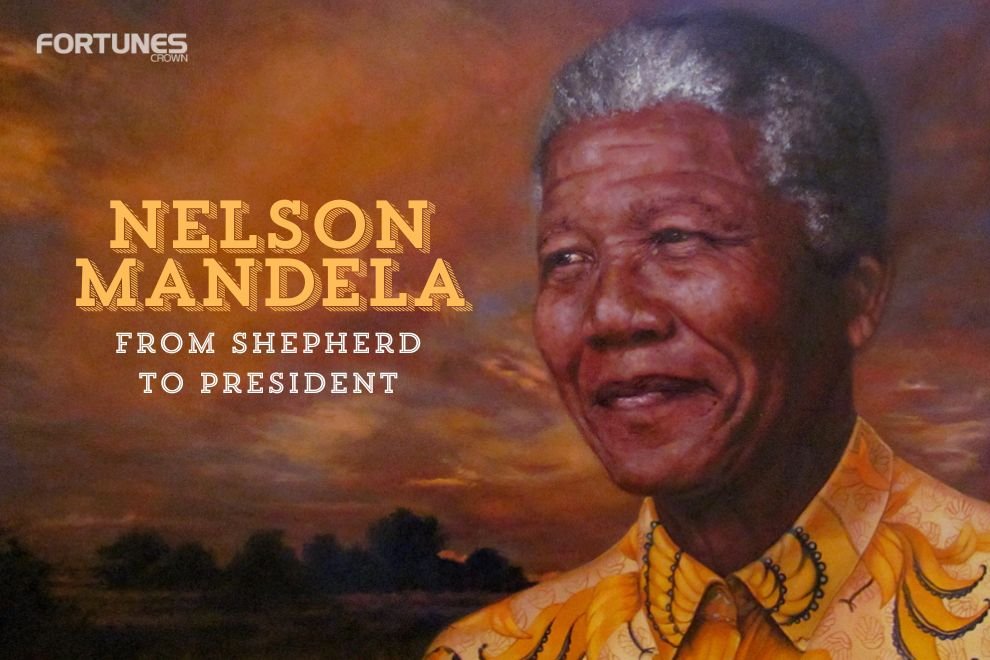
    The Life of Nelson Mandela: From Shepherd Boy to President

    The life of Nelson Mandela revolved around the struggle against discrimination. In this endeavor, he became a champion of righteousness, for which he was imprisoned for 27 years. He stood out as one of the most famous leaders who fought against apartheid in South Africa in the 20th century. He embodied the victory of the human spirit over hate and misfortune. Despite facing immense challenges, Mandela never lost hope for a free and equal South Africa.

    By the year 1964, Mandela, who was 46 years old, had already been actively involved in fighting against apartheid for many years. He was put on trial on various charges related to his anti-apartheid activities, including sabotage and plotting to overthrow the government. While he admitted to these actions, he strongly criticized the unjust laws of apartheid. As a result of his conviction, Mandela was sentenced to life imprisonment, with 18 of those years being served in Robben Island Prison. Nelson Mandela Quotes a lot of his experiences in his years that continue to inspire everyone even today.

    The Dark Reality of Apartheid

    The story of Nelson Mandela played a huge role in fighting against Apartheid. It was a system of racial segregation and discrimination in South Africa by the National Party since 1948.

    In a small village in what was then the Eastern Cape Province of South Africa, Nelson Mandela was born in 1918. It exposed him to the harsh realities of apartheid as he was born with the name Rolihlahla, literally “troublemaker” in the Xhosa language.

    He was sent to a segregated school with white teachers paid to instruct black students. These experiences fueled his determination to fight against apartheid’s injustices and inequality. His activist movements began when Nelson Mandela became a part of the African National Congress. It was a political organization that aimed to destroy apartheid and ensure democratic rule in South Africa.

    The Rivonia Trial and Imprisonment

    These prison years did not stop Mandela from standing in the way of injustice. He resisted mounting pressures to use violence for freedom. Instead, he focused on reconciliation and peaceful negotiation with South African President F.W. de Klerk and other leaders. This strategic process aimed to ensure political power for black South Africans without resorting to violence, despite the huge suffering caused by apartheid.

    The Rivonia trial in 1963-1964 was a significant event in South Africa’s history, where ten leading opponents of apartheid, including Nelson Mandela, were charged with sabotage.

    The accused, faced with the problem of dealing with a legal system they rejected, used the courts as a site of struggle, arguing for a new legal system that represented the values of a non-racial constitution.

    The life of Nelson Mandela in the conditions at Robben Island was extremely harsh, with routine denial of rights based on skin color. Black inmates, for instance, were forced to wear only shorts and sandals during winter while others had trousers and shoes.

    He was almost completely isolated from the outside world. He was allowed only one letter every six months, and a single 30-minute visit every six months. He also had no opportunity to attend his mother’s funeral in 1968 or his son’s funeral after a fatal car accident in 1969. It would be another 21 years before he could see his wife again, and his daughters Zeni and Zindzi were already 16 years old when they saw their father once more.

    The Life of Nelson Mandela: An Image of Sacrifice

    The story of Nelson Mandela was filled with physical assault and torture from the guards. Since he was a political prisoner, he faced the worst treatment. Nelson Mandela quotes about the strong endurance and determination he needed to sustain in that place.

    During visits, there were strict limitations such as glass partitions, supervised phone calls, and heavy censorship of letters.

    By 1964, at the age of 46, The life of Nelson Mandela was occupied with anti-apartheid activist movements. He stood trial for various charges including sabotage and attempting to overthrow the government. While he did carry out these actions, he strongly opposed the unjust apartheid laws. His conviction resulted in a life sentence, with him spending 27 years.

    A Truly Long Walk to Freedom

    For him, courage was an attribute of physical endurance, while it truly meant unwavering faith in justice and equality. Earlier, he had led Umkhonto we Sizwe, a group that emerged intending to mount armed resistance to apartheid. He propped himself into activities where he demonstrated readiness to risk everything for principles. At his trial, Nelson Mandela never hesitated to profess his commitment to a democratic society and a free society, stating that he was ready to die for these ideals.

    The story of Nelson Mandela was published in 1994 in his autobiography, ‘Long Walk to Freedom’, covering his early life, imprisonment for 27 years, and presidency. 

    It vividly describes the painful conditions he underwent at Robben Island and Pollsmoor Prison and narrates relations with prison warder James Gregory and future president Frederik Willem de Klerk.

    Nelson Mandela Quotes that Continue to Inspire

    Throughout Mandela’s years of struggle and experience, Nelson Mandela penned numerous quotes that provided valuable insights into various situations. His words often resonate with our daily lives, inspiring us to strive for better and make meaningful contributions.

    “Education is the most powerful weapon which you can use to change the world.”

    This quote should reassure one that education has the power to transform. According to Mandela, education empowers an individual to understand situations and then change them. Through learning, people acquire knowledge that will help in the struggle for justice, equality, and a positive contribution to the betterment of communities and the world at large.

    “I learned that courage was not the absence of fear, but the triumph over it. The brave man is not he who does not feel afraid, but he who conquers that fear.”

    In this statement, he shows that he understands the concept of courage. What he meant was that courage is not about having no fear but it is about conquering and fighting it in the right manner. Courage for Mandela meant identifying your fears but acting or standing up for what’s justice despite those fears. 

    “If you want to make peace with your enemy, you have to work with your enemy. Then he becomes your partner.”

    The quote epitomizes Mandela’s approach to reconciliation and the building of peace. He firmly believed that real peace could only derive from a process couched in dialogue, understanding, and cooperation with even former adversaries. Mandela himself had set this principle by approaching South Africa’s apartheid government for negotiations that led to the dismantling of the system peacefully. 

    After being released in 1990, Mandela continued to fight for freedom, as he masterminded the negotiations that destroyed apartheid and created a new era of democracy in South Africa. In 1993, the Nobel Peace Prize was awarded to him and President de Klerk as well, for their efforts at gaining this historic transition.

    The legacy of Nelson Mandela remains embedded in people’s hearts all over the world. He stands as an epitome of patience, forgiveness, and principled leadership in the face of adversity. He inspired several generations through his acts of bravery and compassion in his efforts to challenge injustices. He has left an indelible mark on human rights struggles all over the world.

  • Free the Nipple: How Men Fought for Their Right to be Topless?

    Free the Nipple: How Men Fought for Their Right to be Topless?

    Imagine being on a beach. Relaxing under the sun with those cool shades on. Done? Now imagine being at a park jogging or exercising. Icky sweaty bodies everywhere (ew.) Okay. Last! A happening club. With loud EDM music and (again) sweaty bodies everywhere. Do you know what is common in all of these places? Shirtless men chilling around and about with no remorse, regrets, or repercussions.

    Men being topless is sort of “normalized” in today’s culture. Through social media, it is even more popularized to have topless men post photos- of workout routines, outfit checks, or just random experiences. You won’t imagine the scenario being the same for women though. It is considered indecent and even committing a sex offense if a woman posts similar photos or videos on these platforms.

    So has this always been the case? Men being comfortable in their skin and women being prohibited to do the same? As surprising as it sounds, No it has not. In the early 1900s, men and women in the United States were equally frowned upon for wearing no tops. Even men wore swimming costumes with sleeves and a breast cover. 

    Free The Nipple (Men’s)

    Some countries considered it a huge deal to have a man roaming around topless. On beaches, swimming pools, gyms, country clubs, anywhere everyone was expected to dress decently. People would go to great lengths to stop the public display of nipples back then in the case of both men and women. 

    In the 1920s, when they were required to wear full swimsuits with tank tops to cover their nipples and most of them made of wool, males who wished to swim shirtless encountered the same objections. Many swimming pools required swim skirts, so the more excellent versions even had them attached to heighten the mystery of what was happening below the waist.

    Fast forward to the 1930s, when men from Coney Island started to protest for the right to open swimming and bathing. This happened as a result of them being made to wear swimsuits that were nipple-stifling. They worked extremely hard for change and were even detained for the protection of their nipples. …and finally! Men were given the legal freedom to display their nipples in public in 1936. This set the stage for New York to become accepting of guys and their nipples.

    The Men’s “No Shirt Movement”

    Men kept revolting against being taught what they could and couldn’t do with their bodies, especially after noticing how ladies swooned when they saw Olympic swimmer Johnny Weissmuller baring his chest in the 1932 movie “Tarzan the Ape Man.”

    Not all women agreed with the opinions expressed by their non-Olympic peers. According to a June 29, 1936, Associated Press article, a group of pearl-clutching New Yorkers claimed they had “no desire to gaze upon hairy-chested men.”

    The men’s no-shirt movement dominated the summer of 1936, and incidents of dropped straps, protests, and arrests were common.

    However, the next year, in the heart of the male protests and numerous arrests, a protracted encounter with “bareback swimming,” as some dubbed it, caused one significant guy to reconsider his viewpoint.

    In the same year, a judge in New York overturned the ban and the men were allowed to flaunt, highlight and style their upper bodies however they pleased.

    The History of Nudity

    The social perceptions of the human body being naked in many historical cultures are included in the history of nudity. One of the changes that signal the end of the Neolithic and the start of civilizations is the usage of clothing to cover the body. In hunter-gatherer societies in warm climates, nudity (or near-complete nudity) has historically been the social norm for both men and women and is still widespread among many indigenous peoples. Human migration out of the tropics into regions with weather that requires clothing for protection from the sun, heat, and dust in the Middle East; or the cold and rain in Europe and Asia—is linked to the necessity to cover one’s body.

    Complete nakedness in public has become increasingly rare in modern societies as it has come to be linked with lesser status, indecency, or erotica. However, the moderate Mediterranean environment permitted minimal clothes, and in many ancient societies, the athletic and/or cultish nudity of men and women was a natural concept. Even if it may be seen in public baths or sensual art, being completely naked in public was frowned upon in ancient Rome.

    Nudity For Men And Women

    Throughout much of the 20th century, communal nudity was the norm in male-only settings in the United States and other Western nations. Males have historically been more likely than females to be expected to use shared showers in school locker rooms or swim in indoor pools while undressed. 

    These expectations stemmed from cultural assumptions that women require greater privacy than men. Schools, gymnasiums, and other similar establishments frequently required nude male swimming, partly due to sanitary considerations due to the use of wool swimsuits. At the time, social attitudes held that it was healthy and usual for men and boys to be nude alongside each other.

    Free The Nipple (Women’s Version)

    Women have been protesting for their rights for decades – starting from the very basic human rights to rights like voting and ruling countries. The same goes for the “top freedom” movement. There are certain double standards in the public eye regarding men and women. While some view men being topless as a simple expression of relaxation or a reaction to heat, if a woman is seen that way, several frowns and rolls of eyes are seen. Women can serve jail time and pay a handsome amount of fine while also registering as a sex offender if found “indecent.”

    Expanding topless rights is the subject of court cases and town council debates, but advocates are wary of opposition in New York, where discontent over painted topless women soliciting tips in Times Square has prompted state and city officials to consider rolling back hard-won advancements in the bastion of top-freedom.

  • Are Human Rights Really ‘Universal, Inalienable, and Indivisible’?

    Are Human Rights Really ‘Universal, Inalienable, and Indivisible’?

    Where after all, do universal human rights begin? In small places, close to home –so close and so small that they cannot be seen on any maps of the world. Yet they are the world of the individual person; the neighborhood he lives in; the school or college he attends; the factory; the farm, or the office where he works. Such are the places where every man, woman, and child seeks equal justice, equal opportunity, and equal dignity, without discrimination. Unless these rights have meaning there, they have meaning anywhere.

    – Eleanor Roosevelt, National Coordinating Committee, Universal Declaration of Human Rights 50th Anniversary

    On December 10, the world commemorates Human Rights Day. On this day in 1948, the United Nations General Assembly adopted the Universal Declaration of Human Rights. This historic document is regarded as the first major international instrument affirming individual rights. Though this document is not legally binding, its contents have permeated hundreds of international conventions, agreements, and domestic laws from various countries.

    Human rights are defined as certain fundamental or natural rights that are inalienable and necessary for the development of human personality.

    They can also be considered fundamental rights because they cannot be revoked by the government or legislature. Many scholars argue that human rights are not created by legislation because they are natural rights and that the source of human rights is acceptance of the human person’s worth and dignity. The fundamentals of human rights have been incorporated into the American Declaration of Independence, the Bill of Rights, the French Declaration of the Rights of Man and Citizen, and other significant documents.

    Human rights were generally considered to be within the internal sphere of national jurisdiction until the nineteenth century. However, during the twentieth century, international human rights law began to take shape.

    Whence did Human Rights come into the picture?

    Given the history of humanity, we tend to believe that the term “human rights” is a relatively new concept. The United Nations, on the other hand, dates the origin of human rights to 539 BC. Cyrus the Great’s troops conquered Babylon at that time; Cyrus freed the slaves, declared that everyone had the right to practice their own religion, and established racial equality. Nonetheless, history seems to repeat itself, and slavery was legal in the United States for less than 200 years.

    Unfortunately, slavery has not been abolished, and modern forms of slavery continue to exist around the world. Debt bondage, in which a person is forced to work for free to repay a debt, child slavery, forced marriage, domestic servitude, and forced labor, in which victims are forced to work through violence, intimidation, and abuse of vulnerability, are examples of such practices.

    Can we therefore still accept Kofi Annan’s assertion from 2000 that we are living in the “Age of Human Rights”? Or do the global atrocities committed in the last few decades, which continue to occur, speak for themselves? Some academics argue that human rights are merely a vehicle for the White Savior Complex.

    Others argue that the end of the Cold War marked a turning point in human rights, allowing advocates to push for the implementation of international law and the establishment of global courts

    Human Rights as a Universal Principle

    According to universal human rights theory, human rights apply to everyone simply because they are human. The most obvious challenge to the universality factor is ‘cultural relativism,’ which holds that universal human rights are neo-imperialistic and culturally hegemonic. While this viewpoint is appealing, the relativist argument contains a crippling self-contradiction: by assuming that the only sources of moral validity are individual cultures, one is barred from making any consistent moral judgments.

    Human Rights as Inalienable

    Early philosophers and scholars such as Locke, Mason, and Lilburne discussed natural rights in terms of inherentness, natality, and inability to be surrendered, assisting later thinkers in better conceptualizing the core of inalienability by asking who the ‘human’ in human rights is.

    Constant debate on this topic has elicited the best and worst in contemporary philosophers. One scholar, for example, observes that in order to be a person with rights, one must contribute to both self and society in an autonomous capacity.

    Along these lines, against the backdrop, Hannah Arendt articulated one of the most timeless perspectives on inalienability. Noting refugees’ lack of tangible access to rights as a result of their statelessness, Arendt concluded that the only true right was ‘the right to have rights,’ in the sense that modern rights had become inextricably linked to the emancipated national state.

    Given today’s challenges of displacement and statelessness, it appears more helpful to abandon abstract arguments about inalienability and recognize that rights are inextricably linked to statehood and citizenship in the international human rights system. According to Arendt, “inalienability has shown to be unenforceable.”

    Human Rights as Indivisible

    In terms of indivisibility, this concept holds that the simultaneous execution of all rights is required for the human rights system to work properly. Beyond talks of violations, indivisibility refers to the premise that no human right can be completely implemented or realized unless all other rights are fully realized. Those who support indivisibility argue that without a commitment to indivisibility, human rights enforcement is arbitrary and incomplete and that anything less than simultaneous implementation of all human rights may fuel dangerous rights prioritisations by governments (i.e. emphasizing first or second-generation rights while neglecting third generation ones will mean that all rights values suffer).

    Does Human rights stand around its definition?

    As a result, it is clear that several of the most commonly accepted and basic principles of human rights – universality, inalienability, and indivisibility – are very disputed when examined closely. However, rather than undermining the entire notion of human rights, these criticisms just remind us to constantly revise our assumptions about rights in order to make them more inclusive and tangible to those who remain on the outside, looking in.

  • G20 Summit 2023: What World Expects From India’s Leadership?

    G20 Summit 2023: What World Expects From India’s Leadership?

    On September 9–10 of next year, India will host the G20 Summit. Starting on December 1 of this year, India will also assume the leadership of the strategic multilateral forum, which unites established and emerging economies. Previously held by Indonesia, India will have the presidency from December 1, 2022, to November 30, 2023. The country will be hosting around 200 meetings across the nation.

    What is the G20 Summit?

    The “Summit on Financial Markets and the World Economy” is the official name of the G20 Summit. The G20 has consistently worked to achieve strong global economic growth as the “primary forum for international economic cooperation” (as agreed by leaders at the Pittsburgh Summit in September 2009). The G20 represents more than 80% of the global GDP. 

    The recent G20 summits have focused not only on macroeconomics and trade but also on a wide range of global issues that have a significant impact on the global economy, such as development, climate change, energy, health, counterterrorism, as well as migration, and refugees. As globalization advances and various issues become more intricately intertwined, these recent summits have become more and more important. Through its contributions to resolving global issues, the G20 has aimed to achieve an inclusive and sustainable world.

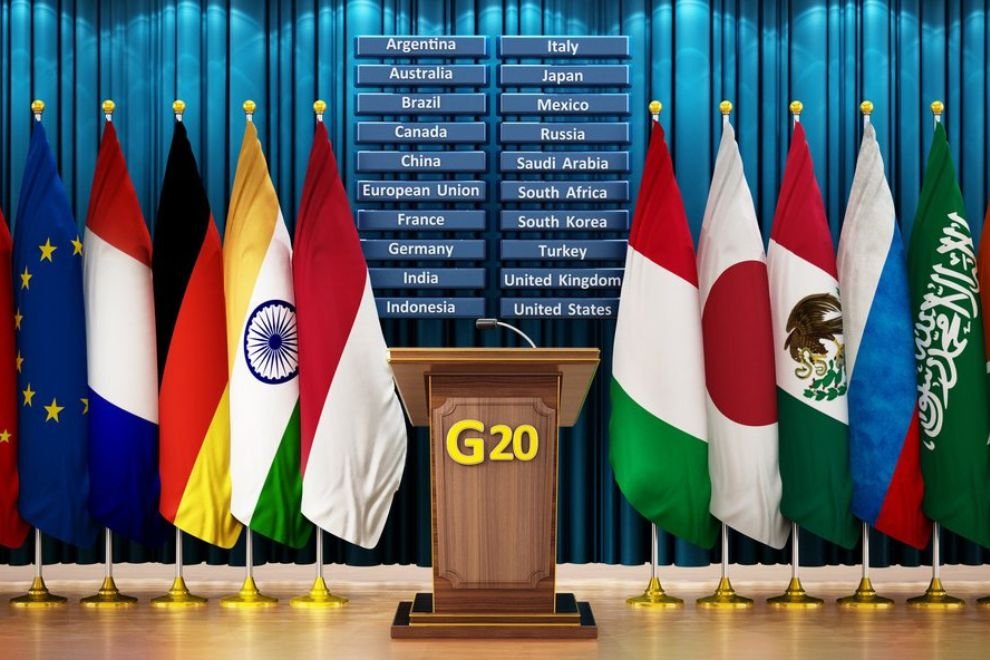
    The members of the G20 are-

    Argentina, Australia, Brazil, Canada, China, France, Germany, India, Indonesia, Italy, Japan, the Republic of Korea, Mexico, Russia, Saudi Arabia, South Africa, Türkiye, the United Kingdom, the United States, and the European Union. 

    The main economies of the world are gathered under the G20. More than 80% of the world’s GDP, 75% of the world’s trade, and 60% of humanity are represented by its members.

    The G20 presidency, which runs from December through the following November, is held by the nation hosting the summit. Additionally, the G20 presidency schedules meetings of pertinent working groups and ministers.

    Negotiations Lead By India

    In her most recent press briefing, White House press secretary Karine Jean-Pierre stated that Prime Minister Narendra Modi “made it clear that today’s era must not be of war,” referring to the Ukraine-Russia conflict that erupted in February of this year. She added that India played a crucial role in the negotiations leading up to the G20 Summit declaration.

     Top world leaders attended the two-day G20 conference, which was held in Bali, Indonesia, and ended earlier this week. Among them were US Vice President Joe Biden and UK Foreign Secretary Rishi Sunak. One of the most important talking points was the conflict in Ukraine.

    G20 Summit and India’s Priorities

    India, Indonesia, and Brazil would make up the troika during our Presidency. Three emerging economies and developing nations would make up the troika for the first time, giving them a stronger voice.

    India has set priorities and key points to discuss and push forward in the summit. These priorities are expected to initiate further conversations, not just at the summit, but throughout the summit in the rest of the world as well. The ongoing conversations have been around inclusive, equitable and sustainable growth. Though these topics have been in talks through the years, the world as a whole still lacks efforts and planning to achieve them. Nothing is set to stone as a “theme” or agenda yet, but the conversations will be around these points. 

    Women’s empowerment will also be discussed at the summit. Following the recent and ongoing movement by the strong women of Iran, women empowerment is still very much a topic that needs discussions and development, despite living in the 21st century. 

    Following the notion of sustainable growth, digital public infrastructure and tech-enabled development in areas ranging from health, agriculture, and commerce education are also on the agenda list. 

    Inclusivity is kept as a crucial conversation with developmental cooperation, the fight against economic crime and multilateral reforms are also on the checklist. 

    Relations And The Summit 

    India would also need to pay close attention to how US-China relations develop. After their one-on-one summit in Bali, leaders Joe Biden and Xi Jinping, stock markets throughout the world rose the following day (helped also in some measure by China dialing down its stringent covid lockdown rules). In addition, though they did not have a bilateral meeting, Xi Jinping and Indian Prime Minister Narendra Modi shook hands. They exchanged pleasantries against India’s tense relations with China over the previous two to three years.

    Twitter And G20 Summit

    Every highly opinionated person exists on Twitter. Ever since the announcement of the summit, there have been bubbling threads and tweets about it. 

    • Through this tweet, the plans of Agenda 30 were highlighted
    • The Indonesian Health Prime Minister suggests a Digital ID to control the movement of people- if you are vaccinated or tested properly, you can move. 
    • Another about the countries Russia and Ukraine

    Although it may be too soon to consider the G20 platform as a replacement for multilateral institutions soon, its influence may undoubtedly be used to improve chances for the Global South. Here is another reality check: it took at least 7-8 years for all of the aforementioned G20 triumphs to materialize.

  • Stranger-Danger? It’s Omegle With Strangers Now! 

    Stranger-Danger? It’s Omegle With Strangers Now! 

    In the age of social media, there doesn’t go a few days without a new app or trend showing up. Social Media is a hub for all bored, lazy, and even work-savvy people. Anything your heart wishes for, Social Media will bring it to you arranged on a golden plate. 

    Instagram, Twitter, and Facebook aren’t the only social media anymore. There are new ways to enter the world of social media, ways that people even a mere decade ago couldn’t have imagined. Apps like Omegle chat have revolutionized social media with new and newer methods. 

    In the last 5-6 years, BeReal, Tumblr, Omegle, and many more have emerged. All have their approach, but the primary purpose is the same- communicating with people and expanding social circles. Centering the conversation Omegle was launched in 2009. 

    What is Omegle?

    Omegle became extremely well-known when no one expected it. Children flocked to this 13-year-old site during the epidemic because of TikTok influencers, oblivious to the risks already present.

    The key selling point of Omegle is the idea of conversing with strangers online, yet this idea is not original. When you stop to think about it, most of us always interact with strangers on websites encouraging discourse, debate, or responses.

    Users can randomly communicate with other users on the free, anonymous website Omegle. Users in a pairing converse with one another via text or video call. Users don’t have to pay to create an account. As a result, age verification is absent.

    Just a smartphone or laptop with a strong internet connection will do. Users have the option of using chat. Five choices are available on Omegle: video, text, moderated, unmoderated, and spy chat.

    Users over 18 can utilize the restricted content, and monitored chat alternatives. Accounts over the age of 18 may also utilize the unmoderated chat. The content is mature and gives users an option to spy on communication that is currently taking place between other users.

    How TikTok Helped Omegle?

    Having been launched in 2009, the app slowly took farewell from being in the limelight. The basic concept could have been more appealing to people. 

    Then came the revolution that is Tiktok. Tiktok gave a new life to songs and fashion trends. Popular TikTokers started going on Omegle and hosting giveaways by joining random chats. This motivated teens specifically to join this app and start their Omegle journey. The app gained even more popularity when celebrities started using app and interacting with their fans. 

    This went ahead and became a challenge on TikTok under hashtags like #omeglechat and #omegleprank where people posted screen-recorded snippets of them pranking, chatting, or joking with random strangers online. More than 9.4 billion people have seen “Omegle”-tagged videos on TikTok alone. 

    Privacy No More Private

    Studies have found that teens and young children make up the majority of Omegle users. In a similar vein, teens make up a more significant portion of social networking app users. For enjoyable online interaction, they use Omegle. Some people use it to meet people and talk about issues they feel uncomfortable discussing with their close friends and relatives. Others claim the fact that the website is uncensored as justification for offensive information.

    Omegle has threats of its own. No matter how much the app claims to be safe and encrypted and other policies, there are online predators everywhere to break each one of those policies. 

    • Inappropriate Content 

    As there is no monitoring and surveillance of the content being shared or requested, there is no restriction on the content. There is pornographic and inappropriate content shared daily on that app.

    • Violence

    Along with predators and sexual content, violence is another risk for Omegle. Children are quite likely to be exposed to the website’s violence. Even adults and children have not yet learned to cope with violence. Omegle exposes children to violent material at a young age, which can lead to fear, trauma, and sadness.

    • Cyberbullying and Blackmailing

    Apps and services like Omegle expose children to texts, videos, and images that can be emotionally scarring to them. Cyberbullying can have long-term effects 

    The exchange of inappropriate content can lead to blackmail and threats. People have to deal with the fear of the receiver exposing the said content.

    Exposing (Literally)

    “Omegle Porn” is another popular issue and is a threat to young people using the app. Some accounts trick young users into exposing themselves on video chats. Some even say “Omegle is just for the genitalia.” The app has its separate section for sharing pornographic content in, at times exchange for money. 

    The accounts interact with youngsters and ask them to engage in activities like dancing or strip tease while portraying it as something to do for fun when they are out there fulfilling some weird fantasies and motives. 

    This parent came out to speak about the experience their kid went through. The statements make one question where mankind is heading. 

    She told the BBC: “My daughter had seen some videos go viral on TikTok about people being on this Omegle, so she explored this site and there’s no log-in or age restrictions or anything.”

    “These people were saying she was beautiful, hot, sexy. She told them she was only eight years old and they were OK with that. She witnessed a man masturbating and another man wanted to play truth or dare with her.”

    “He was asking her to shake her bum, and take off her top and trousers, which she thankfully did not do.”

    The thing is, there are only so many parents or guardians who can do to protect their youngsters from these apps. Nor can the blame be passed to the youth, who are just looking for escape in their leisure time. 

    The hungry predators who want to jump on every boat that sailed off as lighthearted and innocent are to be blamed. Apps like Omegle are corrupted by their twisted strategies and plans to trap others.

  • The Curious Case of India’s Personal Data Protection Bill

    The Curious Case of India’s Personal Data Protection Bill

    We are more than just citizens today. We are netizens. With our digitized lives, we rely on the internet for everything from random queries to daily payments. The country has nearly 450 million Internet users and a growth rate of 7-8%. India is well on the path to becoming a digital economy with a large market for global players. Data being constantly shared and received mustn’t fall into the wrong hands. India’s Personal Data Protection Bill focuses on making data sharing safe and secure.

    What is the Data Protection Bill?

    As India’s first attempt to legislate the issue of personal data protection, the Bill aims —

    “To provide for the protection of the privacy of individuals relating to their data, specify the flow and usage of personal data, create a relationship of trust between persons and entities processing the personal data, protect the fundamental rights of individuals whose personal data is processed, to create a framework for organizational and technical measures in the processing of data, laying down norms for social media intermediary, cross-border transfer, accountability of entities processing personal data, remedies for unauthorized and harmful processing, and to establish a Data Protection Authority of India for the said purposes and matters connected in addition to that or incidental thereto.”

    The Bill mandates users and citizens to provide the government with any non-personal data when demanded. The Bill asks for a Data Protection Authority to form, which will be in charge of definition-making, reviews, and audits.

    The Bill states penalties worth as high as Rs. 5 Crores or 2% of worldwide turnover for minor violations and Rs. 15 Crores, or 4% of worldwide turnover for more severe violations. The company’s executive may also face legal trials and jail time for up to three years under the law. 

    The Bill has three main categories-

    • Personal Data- Data that contains confirmation details like name, address, etc. 

    • Sensitive Personal Data (SPD)- Data that contains critical information like financial status, sexual orientation, biometrics, etc. 

    • Critical Personal Data- If stolen, data can be a national issue of concern like military or national security, confidential information, etc. 

    The Ministry of Electronics and Information Technology gathered a committee to study the issue of data protection. The committee after analysis and discussion submitted the draft for the Personal Data Protection Bill, 2018 in July 2018. The Cabinet Ministry of India after further observations approved the draft as the Personal Data Protection Bill 2019 on the 11th of December 2019. 

    Why is Such A Bill Necessary?

    The reality is that almost every single activity undertaken by an individual involves some sort of data transaction. The data or information gathered should be used for the intended reasons. It became necessary to establish authority for those who collect, store, and process personal data. In addition, rights for people whose data is held. 

    Not quite long ago, external and domestic consumer customers expressed concern about the country’s data protection and privacy regulations as being ineffective. A few incidences have questioned the data protection and privacy regulations in India, embarrassing the outsourcing sector.

    Data Protection Laws can help enforce cybersecurity and give an internet experience without any kind of infringement. Recently, users witnessed many WhatsApp hacks and data leaks have users. One more issue is spreading fake news about national security threats and other instances. Enforcement laws can curb such instances. 

    Data Protection Around The World

    Globally, there are several contrasting and similar Data Protection Laws, models, and approaches. 

    In Europe, the right to privacy is fundamental freedom intended to uphold one’s dignity.  The European Charter of Fundamental Rights (EU Charter), mentions the right to privacy. Along with the right to the protection of personal data. EU GDPR or the General Data Protection Regulation was initially more of global law for data protection. It was for associations that dealt with processed data on a global basis. 

    In the US, privacy protection is essentially a “liberty protection” i.e. protection of the personal space from the government. There are no official laws at the federal level in the country. But, there are some federal legislations that protect data more generally. Several US states have adopted their data-related legislation due to the transfer of power to the state level. The California Consumer Privacy Act (CCPA) provides robust privacy rights and consumer protection. 

    Brazil has the General Data Protection Law ( Brazil’s Lei Geral de Proteção de Dados). It specifies the terms “personal data” and “public data,” and lays down specific obligations, applied to all areas of the nation.

    The United Kingdom’s Data Protection Act 2018 has already implemented the requirements of the EU’s GDPR into UK law from 01 January 2021. It was dissolved thanks to Brexit,  in 2021 and new regulations will apply thereafter. 

    Criticism 

    The Indian Bill tabled in 2019, however, faced a lot of criticism both from companies and the citizens of the country. Critics pointed out that the Bill had a lot of loopholes and open-ended definitions that may result in the state intruding on a person’s private life. 

    Critics observed that through this Bill, the government can “at any time access private data or government agency data. On grounds of sovereignty or public order.” The bill needs to be revised and respect the fundamental Right to Privacy.

    The Government took the criticism into a review which led to withdrawing the Bill in Lok Sabha. The Bill is currently under scrutiny and a revised draft will soon be submitted for the Personal Data Protection Bill. 

    Improvements

    The prime focus of the revised Bill should be to find a balance between securing data and data privacy. Data Localization is a crucial step but should be initiated with organic categorizations and solutions. 

    New Personal Data Protection Bill will be introduced in next Parliament session: Center informs SC during WhatsApp Privacy Policy hearing.

  • International Day of Awareness on Food Loss and Waste Reduction

    International Day of Awareness on Food Loss and Waste Reduction

    “Take action, start something. Stop food loss and waste. For the people. For the planet.”

    On September 29, 2022, the International Day of Food Loss and Waste (IDAFLW) will be observed for the third time. The IDAFLW will issue a clear call to action for public and private entities from across the food system, as well as consumers, to collaborate to reduce food loss and waste (FLW) and support food security and nutrition.

    Stop Wasting Food! For both people and the environment!

    In many countries, the food supply chain is on track to surpass farming and land use as the largest contributor to greenhouse gas emissions (GHGs). Food processing and packaging, as well as transportation and food waste, are pushing the food supply chain to the top of the list of global GHG emitters. Global solutions in food processing, such as cleaner technologies and sustainable manufacturing practices, are being adopted to mitigate these environmental impacts.

    Globally, approximately 14% of food produced is lost between harvest and retail, with an estimated 17% of total global food production wasted (11 percent in households, 5 percent in the food service, and 2 percent in retail).

    The International Day of Food Loss and Waste is an opportunity to mobilize both the public (national or local governments) and private sector (businesses and individuals) to prioritize actions and move forward with innovation to reduce food loss and waste to restore and rebuild better and more resilient food systems.

    The 2030 Agenda for Sustainable Development, specifically SDG 12, Target 12.3, calls for halving global food waste per capita at the retail and consumer levels, as well as reducing food losses along the production and supply chains.

    Why is it critical to reduce food waste and loss?

    Food waste and loss jeopardize the sustainability of our food systems. When food is lost or wasted, all of the resources used to produce it, including water, land, energy, labor, and capital, are wasted. Furthermore, the disposal of food waste and loss in landfills produces greenhouse gas emissions, which contribute to climate change. Food loss and waste can also hurt food security and availability, as well as contribute to rising food prices.

    Our food systems cannot be resilient unless they are sustainable, which is why we must prioritize the adoption of integrated approaches to reduce food loss and waste.

    Global and local actions are required to maximize the use of the food we produce. Technology, innovative solutions (such as e-commerce platforms for marketing and retractable mobile food processing systems), new ways of working, and good practices to manage food quality and reduce food loss and waste are critical to implementing this transformative change.

    With only eight years left to achieve SDG 12 targets 1, 2, and 3, there is an urgent need to accelerate action to reduce food loss and waste.

  • Electric Vehicles: Climate Solution at Cost of Human Lives

    Electric Vehicles: Climate Solution at Cost of Human Lives

    Climate action is the new buzzword. And why wouldn’t it be, one world is all we have and our world is at risk. Countries, Corporates, and Citizens claim to be doing all they can to save the planet from climate change. Green energy is being floated as one of the top solutions. We are replacing coal with hydropower, fossil fuels with solar energy, petrol, and diesel cars with electric vehicles.

    Electric vehicles or EVs are being pitched as a cleaner, greener, and sustainable, but are they?

    What’s clean for the environment may not really be clean. Hidden beneath the shiny exteriors of an EV is a story of blood batteries. These cars drive human rights violations, extreme poverty, and child labor.

    The distribution of Electric Vehicles

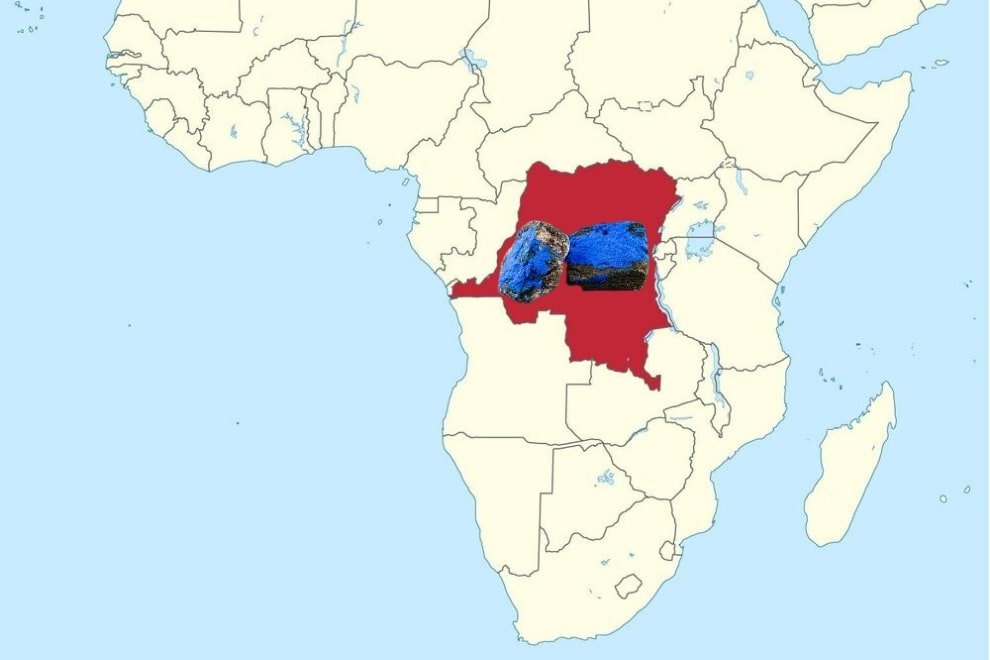
    The Democratic Republic of Congo

    Electric Vehicles run on batteries, you know that. But do you know what these batteries are made of? Rare metals like Lithium and Cobalt. The cobalt gives the battery stability and allows it to operate safely. It’s a bluish gray-colored metal found in the earth’s crust, also called crustal rocks. Cobalt has several like in jet turbine generators, tool materials, pigments, and smartphone batteries but its major use is lithium-ion batteries.

    Half of the cobalt produced goes into electric cars. It needs 4 to 30 kilos of cobalt to manufacture a single car battery. This metal is found all over the world like in Australia, China, Canada, Cuba, South Africa, the USA, Philippines, but 70% of the total supply comes from one country, Congo.

    The extraction

    Electronic Vehicles
    Artisanal mines produce 20 to 30% of Congo’s cobalt

    The Democratic Republic of Congo is the second-largest country in Africa having a GDP of around 49 billion dollars. Congo is synonymous with conflict, poverty, and corruption. Beneath the country’s red earth is the world’s largest deposit of cobalt. The population of the country is 92 million and some 2 million people depend on cobalt production.

    Cobalt mining in Congo is divided into two categories; industrial or large-scale mining and artisanal or small-scale mining.

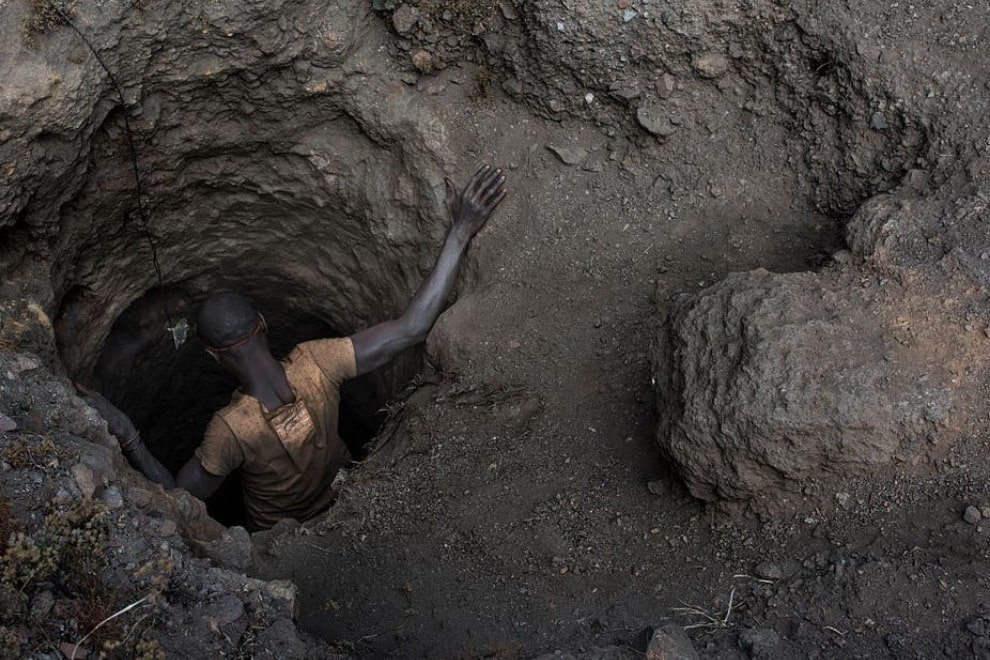
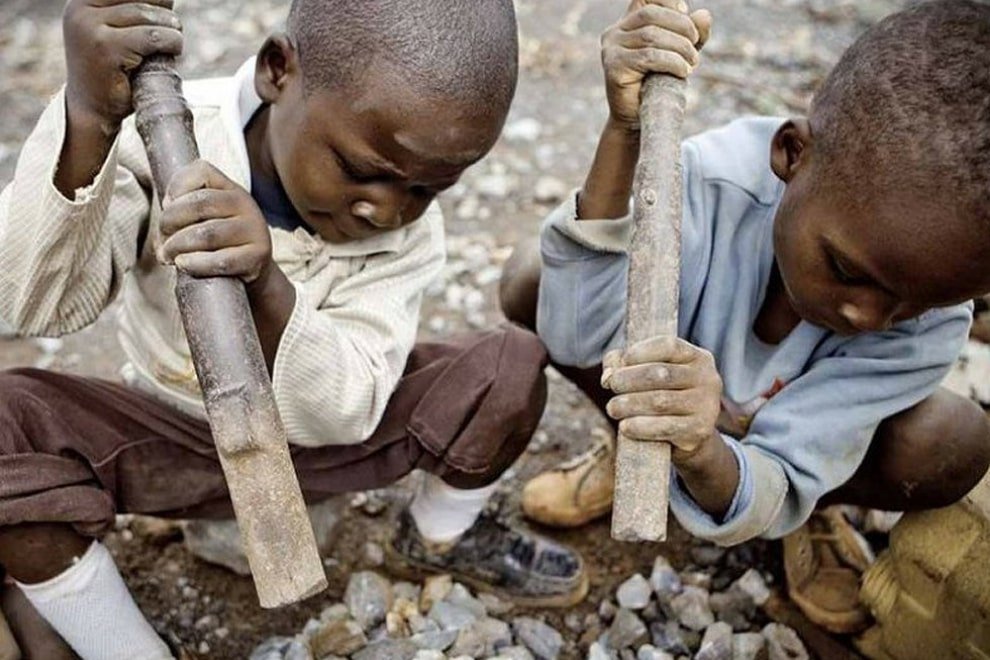
    Artisanal mines are unregulated, and labor laws do not apply here nor do safety protocols. These mines produce 20 to 30% of Congo’s cobalt where over 2,00,000 miners work in these mines and at least 40,000 of them are children, some as young as six. These children flirt with death daily, sometimes they enter vertical tunnels that most of them are too narrow for adults to enter. Inside it’s like a furnace. The children dig for cobalt under inhuman conditions, sometimes they have shovels but mostly they dig with their bare hands with no masks, no gloves, no work clothes, and sometimes just 20 minutes’ worth of oxygen.

    The process and its cost

    Electric cars
    At least 40,000 children work as miners

    These young miners go on for hours, after digging they crush the rocks, wash them, and carry their fines to the market to find a buyer. But how much do these children make? Sometimes, their soft hands barely make as little as 1 dollar!

    Cobalt is a multi-billion dollar industry. It is estimated to be worth 13.63 billion dollars by 2027 but this money never reaches a child who is spotting and extracting the metal. In poverty-stricken Congo, even a dollar is worth risking one’s life where many die trying to make this money.

    ABC News recently profiled a woman who lost her 13 years old son to a mine-related accident. He told his mother he was going to the market to buy coal for her so that she could cook, instead the boy went to a cobalt mine to try and earn an extra buck for the house. The mine embankment collapsed, and the 13-year-old never returned home.

    Between 2014 and 2015, at least 80 artisanal miners died in Congo. In 2019, an accident killed 43 miners. According to one estimate, 2000 illegal miners die in Congo every year. Many suffer permanent lung damage, skin infection and life-changing injuries.

    Green-tech car is miles away

    Scam races to adopt green energy technologies

    In 2019, some families from Congo filed a lawsuit, they named companies like Tesla, accusing them of aiding and abetting in the death and injury of children. The lawsuit spoke about a child, he was referred to as John Doe 1. John has been working as a human mule since the age of 9. He would carry bags after bags of cobalt just for 0.75 dollars a day. One day John fell into a tunnel, and fellow workers dragged him out of it but they left John on the ground. When the child’s parents found out about the accident they rushed to the mining site but it was too late, John was paralyzed. Doctors said, “he will never be able to walk again.”

    The biggest car manufacturers are complicit in these crimes. Companies like Tesla, Volvo, Renault, Mercedes-Benz, and Volkswagen, all source cobalt from Chinese mines in Congo. Sure they claim to have a zero-tolerance policy when it comes to child labor but they too know that there is no way to fully map their supply chains.

    One worker told the media, “people are dying for lack of safety. If a worker dies [the Chinese] don’t report it to the government. They bury the person, hiding the corpse…and bribe the family to keep quiet.”

    That’s your Electric Vehicles killing people even before it hits the road.

    Read More: How Banning Whale Hunt Can Save Us From Global Warming?

  • How Russia’s Theft Legality Will Cost Unfriendly Nations?

    How Russia’s Theft Legality Will Cost Unfriendly Nations?

    After President Vladimir Putin bombarded Ukraine, Russia is increasingly isolated from the western world. The United States, EU member countries, and others recently launched sanctions against Russia and issued trade restrictions. Russia currently meets its supply and demand needs in agriculture, energy, and natural resources. However, Russia’s isolation and growing shortage of skilled manufacturers has led to the fusion of technological manufacturing and innovation.

    Major companies have shut down services in the country either partially or entirely including PayPal, TikTok, Netflix, Spotify, McDonald’s, Starbucks, Apple, Zara, Coca-Cola, etc.   

    In response, Russian officials issued an executive order that could authorize intellectual property (IP) theft legally. Russian companies can now officially violate the intellectual property rights of the list of countries including the United States, Canada, Australia, Switzerland, Norway, Iceland, the United States, United Kingdom, Japan, South Korea, New Zealand, Singapore, Taiwan, and the 27  European Union (EU) member countries.

    What’s on this Russian Decree?

    Unsurprisingly, Prime Minister Mikhail Mishustin of Russia has signed a decree introducing significant changes to the compensation structure for companies that use or produce inventions without the inventor’s consent. Patent holders receive 0% of production profits sale and use of their inventions by Russian companies.

    Patent infringements will have a devastating impact on Western companies and inventors, as Russian companies can now replicate inventions and use patented material without consequences. Above all, this means that Russian companies can access publicly available patent databases and monitor patents to boost the production of pinch technology. This could result in a loss of Western trade efforts, as the proposed measures would completely mitigate the current supply chain disruption.

    As highlighted in a TASS report, such measures would “mitigate the impact on the market of supply chain brakes as well as shortages of goods and services that have arisen due to new sanctions of western countries.”

    Stealing patent is one side and piracy is another i.e., if one user or individual uses pirated windows on their PC, in that case, he/she could use the paid software for free (Piracy) but couldn’t claim the software is his/her (stealing patent).

    What will be the impacts?

    The impact of piracy and intellectual property theft on Western businesses and economies may not be felt immediately, because Russia cannot increase its technological production in the short term, but the effects will become evident over time. Russian companies are likely to take advantage of the IP infringement opportunity to piracy and continue to violate the rights of patent holders even as global tensions ease.

    Due to the lack of skilled labor and technological innovators, the transition to technological innovation will not be easy for Russia. Therefore, Russian companies will most likely pay external contractors and skilled personnel from Eastern European and Asian countries to fill this void. There is a great financial incentive for them to move to Russia to properly use their skills and improve their quality of life.

    What’s now?

    As tensions between the West and Russia increase and new decrees come into force every day, it will be interesting to see how Russian companies use this opportunity to legalize IP infringement and piracy, and how American companies react. One thing is certain: Russia’s activities have violated international rights and continue to do, soon or later Russia will become the world leader in intellectual property theft.

    Why many countries have started supporting Russia?

    Some of the countries that support Russia are Belarus, Pakistan, China, Syria, India, Cuba, Venezuela, Iran, etc. Some argue “Russia has right to defend itself” and a few keep mute.

    Throughout Cold War, several countries had a robust relationship with Russia, and when the collapse of the USSR happened, friendly countries had taken a massive market of Russian arms. Throughout the 19’s Russia was been a huge exporter of iron, steel, and mineral Fuels & oil. After the conflict between Russia and Ukraine, friendly counties expected to be in fuel and iron crisis, and for inevitable purposes allied and friendly countries decided to stay silent about the conflict.

    Read More: Why Russia Legalises Piracy and Steal Patents of Unfriendly Nations?