
Category: Uncategorized
-

Virtual Trade Shows: Ideas, Best Practices, and Tools
The pandemic has transformed and broadened the scope of events conducted over a virtual job fair platform. Contrary to popular belief, these events have attracted large audiences, with some surveys going as far as to suggest an eight-fold rise in registrations. Broader participant reach and wider accessibility have widened the purview of virtual exhibitions. Meticulous management of such events requires the development of a concrete strategy. To aid planning, here are some ideas, tools and practices organizers must keep in mind-
- Consider The Benefits
It is commonly assumed that in-person events boast of more benefits than virtual events. In truth, however, virtual trade shows offer several advantages to organizers. The elimination of constraints on accessibility can lure a global audience. The virtual platform also aids cost reduction because registration prices are not burdened by considerations of travel, accommodation or refreshments. Sponsons can garner greater visibility by being featured on prominent websites, homepages and emails. Video conferencing over virtual platforms can promote face to face interactions between exhibitors and visitors. The former can also consolidate more personal connections and expand their customer base. Readily available statistics also allow for ease in calculating the event’s success as well as measuring returns.
- Deciding On Goals
The first, but perhaps the most important step organizers must take to plan an exhibition over a virtual trade fair platform is to determine and consolidate a list of aims and goals. These should include expected Return on Investment and a defined target audience. The team responsible for the management of the trade show must work according to these objectives.
- Finding The Most Suitable Virtual Fair Platform
Picking the right trade show platform can be possible only if organizers first determine their technological needs. Holistic thinking should guide selections. Important considerations including determining the size of the trade show, deciding on the number of virtual booths being set up and facilitating the use of simplistic technology to aid egalitarian access must be kept in mind.
- Planning Is Key
Planning various facets of a virtual trade show is essential for smooth conduct. Pre-event communication through emails and engagement on social media will allow companies to keep attendees in the loop. Sponsorship collaborations promote the brand value and help improve Return on Investments (ROI). Networking lounges can facilitate interactions among attendees as well as between participants and exhibitors. Scheduling appointments to visit booths can ensure traffic throughout the day and time-mandated follow-ups between collaborators can improve sales efficiently. The use of all these tools can improve the efficiency of any virtual trade show.
- Content Diversity
Conducting a trade show over a virtual exhibition platform can prove to be difficult especially when audiences have the agency to sign out with the click of a finger. Monotonous content will depreciate audience attention. Hosts must avoid using old content and should introduce diversity in presentations. Utilising good content is particularly important to the success of a virtual trade show because it caters to a remote audience across the globe and can help further a positive brand image.
- Finding Features
Incorporating diverse content into a virtual trade fair platform can be made possible through the introduction of technological features. The use of an exhibitor list can provide companies with the opportunity to increase the visibility of their sponsors. Virtual booths can further company branding in addition to allowing the display and sale of products. Through the use of conferencing platforms available on these booths, attendees and exhibitors can interact with each other. Exhibitor leads that provide companies with the contact details of interested attendees as well as exhibitor documents including e-brochures and live videos can also facilitate attendee-exhibitor communication.
- Tech For One, Tech For All
Employing the use of complicated software settings and features may appear lucrative but its allure fades quickly. A seamless experience for all attendees can be ensured by the use of simple, easy to navigate technology. The software must be mobile-friendly and should be accessible to people to all people from wide-ranging physical, geographical and socio-economic backgrounds.
- The Boon Of The Booth
As suggested above, the success of a virtual trade show depends greatly on the booths it presents. Virtual booths can make or break the brand image of a company. Hence, they must be informative and should promote the company’s value. This can be achieved through visible branding and logos. Companies can monitor the traffic at their virtual booths. The use of appointment scheduling apps as well as ensuring proper technologic access can keep the virtual booth occupied throughout the day.
- Take Advantage of Social Media
Even virtual trade shows organized with great efforts cannot be a success unless and until they are marketed to the right audiences. Social media is an impressive way to expand the reach of virtual trade shows. Engagement must, however, move beyond the plain announcement. Through collaborations with sponsors and active attendee involvement, the event can gain more traction.
- In Search For Sponsors
Sponsorship can help organizers earn additional revenue. Sponsors can also improve the image and brand value of the trade show. Sponsor visibility can be accelerated in various ways. Putting the logos and names of sponsors on emails containing formal invites or reminders, drawing attention to them during registration sessions through survey questions, providing sponsors with exposure by allowing them to interact with audiences through sessions or fund high traffic events and playing sponsored commercials before commencing with the virtual trade show can boost their value and visibility.
- Always Test-Run
While some unforeseen technical difficulties cannot be anticipated, running the software in advance will allow organizers to complete and or mitigate any snags that can delay or interrupt the virtual fair platform.
- Always Quantify
Hosting a trade show over a virtual exhibition platform provides organizers with the ability to measure ROI in addition to recording participant engagement and interaction. These statistics can help with quantitative determination of the event’s success and can drive improvements.
Conducting a virtual trade show can prove beneficial for both exhibitors and visitors. The utilisation of the full potential of these events, however, depends on proper planning and organization. Virtual trade shows must be an inclusive and memorable experience for all stakeholders to impress audiences and leave their mark on the Internet.
-

AI For the Future: Top Generative AI Tools to Check Out in 2026
In recent years, artificial intelligence has made remarkable strides in various fields, and one of the most exciting developments is the rise of generative AI tools. These tools harness the power of machine learning and neural networks to create content, from text and images to entire website designs. As we step into 2026, let’s explore some of the top generative AI tools to check out, including both free generative AI tools and paid options. Whether you’re a creative professional, a developer, or just someone curious about the possibilities of AI, these tools offer a glimpse into the future of content generation.
Importance of Free Generative AI Tools
Generative AI tools hold immense importance in today’s digital landscape. They empower individuals and industries to streamline creativity, automate content generation, and enhance productivity. These tools are transforming the way we create text, images, and designs, reducing manual labor and accelerating innovation.
Generative AI tools enable artists to explore new frontiers of creativity, businesses to optimize workflows, and researchers to push the boundaries of AI itself. Their significance lies in their potential to democratize content creation, making advanced AI-driven capabilities accessible to a broader audience. As generative AI continues to advance, its impact on industries and society as a whole will only become more profound.
The Evolution of Generative AI
Generative AI, a subfield of artificial intelligence, focuses on creating data, content, or other outputs using algorithms and neural networks. It has made significant strides in recent years, largely thanks to advancements in deep learning, natural language processing (NLP), and computer vision technologies.
These tools are trained on vast datasets, allowing them to generate text, images, music, and more that closely resemble human-made creations. This has opened up a world of possibilities across various industries, from content creation and design to automation and innovation.
The evolution of generative AI is a remarkable journey marked by rapid advancements. In its early stages, generative AI struggled to produce convincing outputs, but breakthroughs in deep learning, neural networks, and massive datasets transformed the landscape.
The introduction of models like GPT-3 and DALL-E demonstrated the potential of AI to generate human-like text and images. As research and development continue, generative AI tools have become indispensable across industries. They now assist in content creation, design, automation, and more, pushing the boundaries of creativity and productivity. The evolution of generative AI reflects the relentless pursuit of innovation and the ever-expanding role of AI in our lives.
1. OpenAI GPT-4
OpenAI, a pioneering AI research organization, has been at the forefront of generative AI development with its GPT (Generative Pre-trained Transformer) series. In 2024, OpenAI released GPT-4, the latest iteration of its renowned model.
GPT-4 is a powerhouse for natural language understanding and generation. It can generate human-like text in various languages, making it a valuable tool for content creators, writers, and marketers. Whether you need to draft blog posts, generate product descriptions, or create conversational chatbots, GPT-4 can assist you.
While OpenAI offers a commercial API for GPT-4, there are also free versions of GPT-4 available online. These free generative AI tools allow you to experiment with text generation, although they may have limited capabilities compared to the paid options.
2. DALL-E 3.0
If you’re looking for an AI tool to generate images, DALL-E 3.0, also developed by OpenAI, is a must-see. DALL-E uses a variant of the GPT architecture to generate images from textual descriptions.
In 2024, DALL-E 3.0 received a significant update, enhancing its image generation capabilities. You can provide it with a written prompt, and it will produce an image that corresponds to the description. This is incredibly useful for artists, designers, and anyone looking to visualize their ideas quickly.
DALL-E’s paid version offers advanced features, including higher resolution outputs and faster processing times. However, there are free alternatives available for those who want to experiment with AI-generated images on a budget.
3. Adobe Sensei
Adobe Sensei is Adobe’s AI and machine learning platform that integrates with various Adobe Creative Cloud applications. It offers a wide range of AI-powered features, including automatic image tagging, content-aware fill, and more.
One of the standout features of Adobe Sensei is its ability to generate website designs. By analyzing your content and preferences, it can suggest layout options, color schemes, and typography choices. This can save designers and web developers valuable time in the initial stages of a project.
Adobe Sensei is available as part of Adobe Creative Cloud subscriptions, making it accessible to professionals in the design and creative industries. While it’s not a free generative AI tool, its powerful features are well worth the investment.
4. Runway ML
Runway ML is a creative toolkit for artists, designers, and developers that harnesses the power of generative AI. It provides a user-friendly interface and a library of pre-trained models that you can use to create interactive and generative art, design, and animations.
One of the key features of Runway ML is its real-time style transfer, which allows you to apply artistic styles to images and videos in real-time. It also offers tools for text generation, image generation, and more. Runway ML is available on a subscription basis, with both free and paid tiers, making it accessible to a wide range of users.
5. Figma with Uizard
Figma is a popular design and prototyping tool used by designers and teams to create user interfaces and interactive prototypes. In 2024, Figma introduced a powerful integration with Uizard, an AI tool that simplifies the process of generating website and app designs.
With Figma and Uizard, you can start with a rough sketch or description of a design, and the AI-powered tool will turn it into a fully functional Figma file. This can be a game-changer for designers and developers looking to streamline their workflow and reduce the time it takes to create prototypes.
While Figma is not a free tool, its integration with Uizard offers significant time-saving benefits and can be a valuable investment for design teams.
6. Artbreeder
Artbreeder is a user-friendly platform that allows you to generate and manipulate images using the power of AI. It leverages a technique called Generative Adversarial Networks (GANs) to create unique and visually stunning images.
Users can start with an existing image or generate one from scratch by blending multiple images together. Artbreeder provides fine-grained control over various visual parameters, allowing you to create artwork that matches your vision. Whether you’re an artist, photographer, or just a creative enthusiast, Artbreeder offers a fun and accessible way to explore the world of generative art.
While Artbreeder offers both free and paid plans, the paid plans provide additional features and higher-resolution outputs.
7. Deep Dream Generator
Deep Dream Generator is a unique and playful AI tool that applies a neural network’s dream-like interpretations to images. Originally developed by Google, this tool creates psychedelic and surreal visual effects by enhancing patterns and features in photos.
While it may not have as many practical applications as some of the other tools on this list, Deep Dream Generator is a fun and creative way to experiment with AI-generated imagery. It’s also available for free, making it accessible to anyone interested in exploring the artistic side of generative AI.
Generative AI tools have come a long way, and in 2024, they continue to push the boundaries of what’s possible in content creation, design, and art. From OpenAI’s GPT-4 for text generation to DALL-E 3.0 for image creation and Adobe Sensei for design assistance, these tools cater to a wide range of creative and professional needs.
Whether you’re a seasoned designer, a content creator, or simply someone curious about the capabilities of generative AI, there are both free generative AI tools and paid options available to explore. As AI technology continues to evolve, it’s exciting to imagine how these tools will shape the creative landscape in the years to come. So, don’t hesitate to dive in, experiment, and unlock the creative potential of these remarkable AI-driven tools in 2024 and beyond.
-
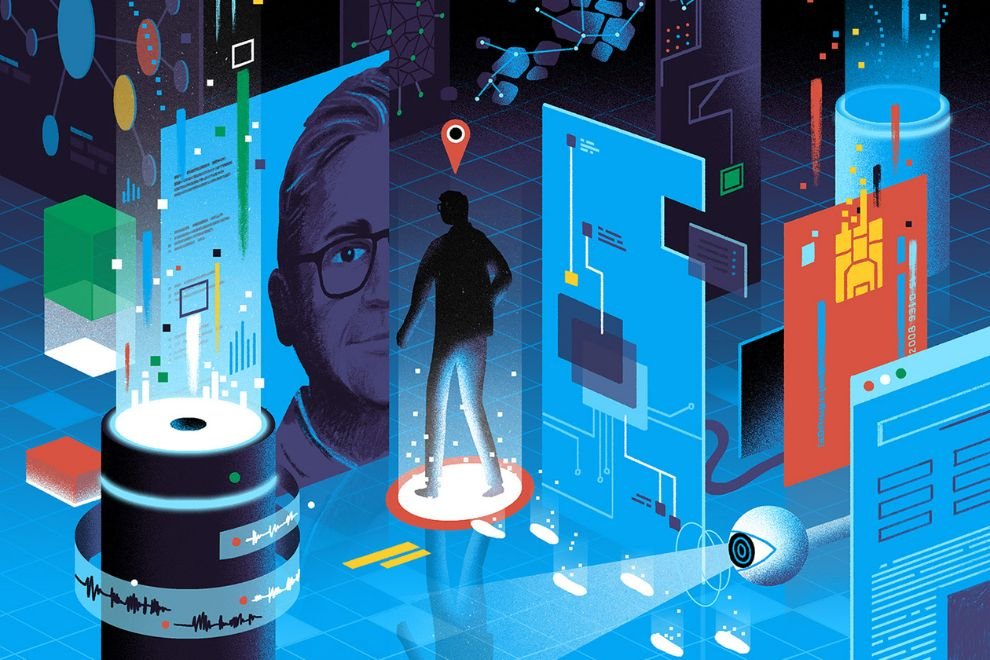
The Curious Case of India’s Personal Data Protection Bill
We are more than just citizens today. We are netizens. With our digitized lives, we rely on the internet for everything from random queries to daily payments. The country has nearly 450 million Internet users and a growth rate of 7-8%. India is well on the path to becoming a digital economy with a large market for global players. Data being constantly shared and received mustn’t fall into the wrong hands. India’s Personal Data Protection Bill focuses on making data sharing safe and secure.
What is the Data Protection Bill?
As India’s first attempt to legislate the issue of personal data protection, the Bill aims —
“To provide for the protection of the privacy of individuals relating to their data, specify the flow and usage of personal data, create a relationship of trust between persons and entities processing the personal data, protect the fundamental rights of individuals whose personal data is processed, to create a framework for organizational and technical measures in the processing of data, laying down norms for social media intermediary, cross-border transfer, accountability of entities processing personal data, remedies for unauthorized and harmful processing, and to establish a Data Protection Authority of India for the said purposes and matters connected in addition to that or incidental thereto.”
The Bill mandates users and citizens to provide the government with any non-personal data when demanded. The Bill asks for a Data Protection Authority to form, which will be in charge of definition-making, reviews, and audits.
The Bill states penalties worth as high as Rs. 5 Crores or 2% of worldwide turnover for minor violations and Rs. 15 Crores, or 4% of worldwide turnover for more severe violations. The company’s executive may also face legal trials and jail time for up to three years under the law.
The Bill has three main categories-
• Personal Data- Data that contains confirmation details like name, address, etc.
• Sensitive Personal Data (SPD)- Data that contains critical information like financial status, sexual orientation, biometrics, etc.
• Critical Personal Data- If stolen, data can be a national issue of concern like military or national security, confidential information, etc.
The Ministry of Electronics and Information Technology gathered a committee to study the issue of data protection. The committee after analysis and discussion submitted the draft for the Personal Data Protection Bill, 2018 in July 2018. The Cabinet Ministry of India after further observations approved the draft as the Personal Data Protection Bill 2019 on the 11th of December 2019.
Why is Such A Bill Necessary?
The reality is that almost every single activity undertaken by an individual involves some sort of data transaction. The data or information gathered should be used for the intended reasons. It became necessary to establish authority for those who collect, store, and process personal data. In addition, rights for people whose data is held.
Not quite long ago, external and domestic consumer customers expressed concern about the country’s data protection and privacy regulations as being ineffective. A few incidences have questioned the data protection and privacy regulations in India, embarrassing the outsourcing sector.
Data Protection Laws can help enforce cybersecurity and give an internet experience without any kind of infringement. Recently, users witnessed many WhatsApp hacks and data leaks have users. One more issue is spreading fake news about national security threats and other instances. Enforcement laws can curb such instances.
Data Protection Around The World
Globally, there are several contrasting and similar Data Protection Laws, models, and approaches.
In Europe, the right to privacy is fundamental freedom intended to uphold one’s dignity. The European Charter of Fundamental Rights (EU Charter), mentions the right to privacy. Along with the right to the protection of personal data. EU GDPR or the General Data Protection Regulation was initially more of global law for data protection. It was for associations that dealt with processed data on a global basis.
In the US, privacy protection is essentially a “liberty protection” i.e. protection of the personal space from the government. There are no official laws at the federal level in the country. But, there are some federal legislations that protect data more generally. Several US states have adopted their data-related legislation due to the transfer of power to the state level. The California Consumer Privacy Act (CCPA) provides robust privacy rights and consumer protection.
Brazil has the General Data Protection Law ( Brazil’s Lei Geral de Proteção de Dados). It specifies the terms “personal data” and “public data,” and lays down specific obligations, applied to all areas of the nation.
The United Kingdom’s Data Protection Act 2018 has already implemented the requirements of the EU’s GDPR into UK law from 01 January 2021. It was dissolved thanks to Brexit, in 2021 and new regulations will apply thereafter.
Criticism
The Indian Bill tabled in 2019, however, faced a lot of criticism both from companies and the citizens of the country. Critics pointed out that the Bill had a lot of loopholes and open-ended definitions that may result in the state intruding on a person’s private life.
Critics observed that through this Bill, the government can “at any time access private data or government agency data. On grounds of sovereignty or public order.” The bill needs to be revised and respect the fundamental Right to Privacy.
The Government took the criticism into a review which led to withdrawing the Bill in Lok Sabha. The Bill is currently under scrutiny and a revised draft will soon be submitted for the Personal Data Protection Bill.
Improvements
The prime focus of the revised Bill should be to find a balance between securing data and data privacy. Data Localization is a crucial step but should be initiated with organic categorizations and solutions.
New Personal Data Protection Bill will be introduced in next Parliament session: Center informs SC during WhatsApp Privacy Policy hearing.