Category: Environment

  • Ahmedabad Plane Crash: Air India Dreamliner Crashes After Takeoff, Over 290 Dead

    Ahmedabad Plane Crash: Air India Dreamliner Crashes After Takeoff, Over 290 Dead

    Ahmedabad, India — June 12, 2025
    In one of the deadliest aviation disasters in recent years, an Air India Boeing 787-8 Dreamliner, operating as Flight AI171 from Ahmedabad to London Gatwick, crashed shortly after takeoff on Wednesday morning. The tragedy has claimed over 290 lives, including both passengers and civilians on the ground.

    What Happened

    The aircraft departed from Sardar Vallabhbhai Patel International Airport and reached an altitude of just 625 feet before losing lift and crashing into a residential area and a medical college hostel in Meghani Nagar, just 3.3 km from the runway.

    Eyewitnesses reported hearing a loud explosion, followed by a massive fire that engulfed buildings and vehicles in the vicinity. Local residents and emergency responders rushed to the scene in a desperate attempt to rescue survivors.


    Casualties and Survivors

    • Total people onboard: 242 (230 passengers, 12 crew members)
    • Confirmed deaths: Over 290 (including at least 204 onboard and 86 on the ground)
    • Survivors: 1 confirmed—identified as Vishwash Kumar Ramesh, a British national currently receiving treatment at a local hospital.

    Five medical students were among those killed when the plane crashed into a college hostel. Emergency workers are continuing to search through the debris for possible survivors or remains.


    Aircraft and Technical Concerns

    The Boeing 787-8 Dreamliner involved in the crash was considered one of the safest and most advanced commercial aircraft. Initial reports indicate the landing gear was still extended and flaps were not fully deployed, suggesting a potential configuration or mechanical failure. The Digital Flight Recorder (Black Box) has been recovered and is being examined.

    This marks the first-ever fatal crash involving a Boeing 787 since the aircraft’s debut in 2009.


    Response and Investigation

    Fire and rescue services arrived within minutes, supported by military and medical teams. Airport operations were immediately suspended, and the crash site was cordoned off for investigation.

    India’s Directorate General of Civil Aviation (DGCA) has launched a formal investigation in cooperation with Boeing, Air India, and international aviation safety bodies, including the UK’s Air Accidents Investigation Branch (AAIB).

    Leaders from around the world, including Prime Minister Narendra Modi and UK Prime Minister Keir Starmer, have expressed their condolences. Boeing also issued a statement expressing “deep sorrow” and pledged full cooperation.


    Global Impact

    This accident has sent shockwaves across the global aviation industry, raising serious questions about aircraft safety, maintenance, and crew training. It is the deadliest aviation accident in India since 2020, and one of the worst worldwide in the past decade.


    Conclusion

    As the investigation unfolds, families mourn the tragic loss of loved ones in what is being called one of the darkest days in Indian aviation history. Flags have been lowered to half-mast, and a national day of mourning has been declared.

    Authorities urge the public to avoid sharing misinformation and to support verified relief efforts for victims and their families.

  • Silicon Labs and Wirepas surpass 10 million chipsets, powering industrial IoT at scale

    Silicon Labs and Wirepas surpass 10 million chipsets, powering industrial IoT at scale

    Austin, Texas / Tampere, Finland – June 3, 2025 – Silicon Labs (NASDAQ: SLAB), the leading innovator in low-power wireless solutions, and Wirepas, a global leader in decentralized IoT connectivity, today announced they have shipped 10 million wireless SoCs running Wirepas’ RF mesh connectivity software, primarily in the Indian market with the Silicon Labs sub-GHz FG23 SoC. These chips power some of the world’s largest and most demanding industrial mesh networks across sectors including smart electricity metering, emergency lighting, industrial monitoring and building automation.

    The two companies have a long history of collaboration enabling robust, ultra-resilient and massively scalable IoT networks that meet the scale, security, and reliability demands of industrial-grade applications. This milestone confirms that their joint solution is not just technically sound, it is market-proven at scale, and ready to support the digital backbone of global infrastructure.

    In December 2024, Silicon Labs and Wirepas announced that four million smart electric meters using Wirepas Mesh software had been deployed in India built on the sub-GHz FG13 and FG23 platforms, helping the country meet the goals of its Advanced Metering Initiative. The solution provides reliable, cost-effective connectivity across dense, complex environments, being a critical enabler for India’s ambitious grid modernization and electrification goals.

    Another standout success is in Norway, where more than one million similarly-equipped smart meters are connected in a single decentralized mesh network, one of the largest of its kind in the world. These types of deployments demonstrate that robust, self-healing mesh connectivity can now support national-scale infrastructure, laying the groundwork for smarter, more efficient, and more sustainable infrastructure powering cities and industries.

    Other segments are also gaining momentum, with some, such as the emergency lighting sector, experiencing very high adoption rates.

    “Our partnership with Wirepas is built on a shared vision: to enable industrial-grade wireless connectivity at scale,” said Ross Sabolcik, Senior Vice President of Product Lines at Silicon Labs. “By combining Silicon Labs’ energy-efficient wireless platforms with Wirepas’ decentralized mesh stack, we help our customers build massive, secure, and resilient IoT networks faster and more cost-effectively. We’re excited to continue driving transformation across industries together.”

    “This 10-million milestone demonstrates the unmatched scalability and resilience of our joint solution,” said Teppo Hemiä, CEO of Wirepas. “With Silicon Labs’ hardware and our mesh software, we’ve enabled massive networks that simply work, even in the most challenging conditions. Our partnership is helping industries solve real problems at the infrastructure level, accelerating the digitalization and electrification of society.”

    More information

    Read more about the collaboration between Silicon Labs and Wirepas to deliver smart meters to India, here and here.

    Learn more about how Silicon Labs and Wirepas are collaborating on the 2.4 Ghz spectrum, here.

    See more features of the FG23 wireless SoC, here.

    About Silicon LabsAbout Silicon Labs Silicon Labs (NASDAQ: SLAB) is the leading innovator in low-power wireless connectivity, building embedded technology that connects devices and improves lives. Merging cutting-edge technology into the world’s most highly integrated SoCs, Silicon Labs provides device makers with the solutions, support, and ecosystems needed to create advanced edge connectivity applications. Headquartered in Austin, Texas, Silicon Labs has operations in over 16 countries and is the trusted partner for innovative solutions in the smart home, industrial IoT, and smart cities markets. Learn more at www.silabs.com.

    About WirepasWirepas is a global leader in IoT connectivity, providing ultra-resilient, infinitely scalable mesh networks for large-scale industrial and commercial deployments. Its technology connects millions of devices worldwide, including the largest network of more than a million smart electricity meters. With proven 99.99% reliability and a team of deep experts guiding projects from planning to maintenance, Wirepas ensures unmatched business continuity. Wirepas is also the main contributor to and first implementor of the first non-cellular 5G standard NR+, purpose-built for massive IoT and using a free global spectrum. Wirepas operates globally across smart tracking, smart building and smart metering sectors. Learn more on www.wirepas.com

  • Adapting to Scrap Metal Prices in the Recycling Market

    Adapting to Scrap Metal Prices in the Recycling Market

    Introduction

    Scrap metal recycling is crucial to environmental sustainability and economic vitality. Navigating the seemingly unpredictable nature of scrap metal prices, populated by many influencing factors, can be daunting. In an ever-evolving market, it’s essential to remain updated on the variables that drive price changes. This comprehensive guide aims to equip recyclers and sellers with the necessary knowledge to manage these market dynamics effectively.

    Understanding the Dynamics of Scrap Metal Prices

    Determining scrap metal prices is not an isolated phenomenon; it’s deeply intertwined with global economic activities. These prices are sensitive to supply and demand metrics, meaning that a surge in demand often results in increased pricing. Conversely, oversupply can lead to a reduction. Geopolitical stability—or the lack thereof—plays a significant role, too. For instance, political tensions can disrupt supply chains, causing price spikes. Moreover, global economic downturns tend to decrease industrial production, reducing demand and thus lowering prices. By appreciating these interconnected elements, recyclers can better anticipate price movements.

    Steps for Assessing Market Conditions

    Remaining competitive in the scrap metal industry requires an astute awareness of market conditions. The key to understanding these conditions is analyzing historical data and current events. Historical pricing trends serve as a crucial resource for identifying patterns while monitoring current events, which helps one stay informed of potential disruptions. They provide a robust framework for forecasting prices and making informed business decisions.

    Common Types of Scrap Metals and Their Market Value

    Understanding the market value of different types of scrap metals is essential for engaging in lucrative trades. Due to their extensive use in buildings and infrastructure, ferrous metals, such as steel and iron, typically find correlations with health in the construction industry. In contrast, non-ferrous metals like copper and aluminum are heavily used in technology and manufacturing, which can make them highly volatile. Changes in industrial policies or technological advancements can lead to significant fluctuations in their prices. As highlighted in ThomasNet’s insights on recycling scrap metal, staying informed about market trends and the demand for various metals can help traders make more strategic buying and selling decisions.

    The Role of Recycling Facilities in the Value Chain

    Recycling facilities form a cornerstone of the scrap metal industry. These establishments purchase, sort, and process scrap for resale or transformative manufacturing use. By efficiently facilitating this transition from waste to valuable resources, they help regulate the market supply, minimizing excessive reliance on virgin metal extraction. This, in turn, helps stabilize prices by ensuring a consistent source of recycled metals, invigorating a sustainable loop in the industry. By fulfilling this pivotal role, they contribute significantly to reducing the ecological footprint of metal consumption.

    How to Leverage Market Predictions

    Utilizing market predictions is an invaluable strategy for any professional in the scrap metal industry seeking to optimize their operations. Economic forecasts provide essential insights into potential future market trends. For instance, according to a recent report, the global recycled scrap metal market is expected to grow at a 4.9% CAGR, reaching USD 149.9 billion by 2035. By carefully considering such predictions, businesses can adjust their purchasing and selling strategies, mitigate risks, and seize opportunities before they become widespread. This proactive approach to market participation can help companies stay ahead of competitors and maximize profit margins in a dynamic industry setting.

    Navigational Tips for Scrap Metal Sellers

    Understanding market timing is crucial for scrap metal sellers aiming to derive maximum value from their resources. Timely selling decisions aligned with market peaks can significantly enhance revenue. Sellers should diversify their sales, avoid offloading all materials at once, and stagger sales strategies to hedge against market volatility. Additionally, they should remain cognizant of seasonal anomalies affecting demand and supply, ensuring they capitalize on favorable pricing windows while minimizing exposure during downturns.

    The Environmental Impact of Scrap Metal Recycling

    Recycling scrap metal surpasses its economic utility, offering profound environmental benefits. By mitigating the need for new metal production, recycling reduces the energy consumption significantly associated with mining and processing raw materials. Further, it contributes to substantially reducing greenhouse gas emissions, affirming its role as a key component of modern sustainability efforts. As global consciousness of environmental concerns increases, the recycling industry is ready to play a crucial part, leading to a more sustainable economy and highlighting the concrete advantages of systematic metal recycling.

    The scrap metal recycling industry is on the brink of transformative changes driven by technological advancements. AI-powered sorting systems and automated processing facilities promise enhanced efficiency and reduced costs, transforming traditional recycling practices. Moreover, as global policies increasingly incentivize sustainable practices, the recycling market will likely experience increased government support. These trends suggest a dynamic and evolving future for the industry, promising new opportunities and challenges that stakeholders must prepare for to remain relevant and prosperous.

  • Great Reasons to Purchase a Grid-Free Solar Energy Kit to Power a Property

    Great Reasons to Purchase a Grid-Free Solar Energy Kit to Power a Property

    Wherever their location across Australia, homeowners are very similar. They want their properties to be as comfortable so that their investment can be enjoyed to the max. There might be additions made when money becomes available, along with maintenance being carried out to ensure that it maintains its value.

    Any money-saving tips are always appreciated, as new appliances and energy-saving options become available. An increasing number of the population is also keen to help the environment wherever they can so that future generations feel the benefit. This is why the popularity of solar electric kits continues to rise so a property owner isn’t reliant on the electricity grid to provide them with power. Here are some of the reasons that having one’s own solar energy makes great sense.

    • Fitting the system is not a difficult task, especially for those with some electrical knowledge and skills, with a leading supplier being able to install as well as provide the perfect system depending on the demand that it will be put under. Like any purchase, it is wise to speak to experts in advance of buying so that the correct guidance can be provided which can save money. A solar energy kit is less expensive than many think and will offer value for money especially when the household bills suddenly reduce drastically.
    • The independence that a kit provides offers peace of mind that there is no longer a reliance on the big energy suppliers, who can increase their charges on a whim. There is also the comfort in knowing that a big moment in a sporting encounter on TV will not be interrupted by a fault to the grid, or an oven suddenly stalling halfway cooking dinner. Those who care about the environment and have chosen solar energy might also be interested in how radioactive isotopes can stop rhino poaching.
    • The installation of a solar energy kit broadens the knowledge about the subject and can often lead to finding more energy-saving ideas which are not just good for the environment but also the homeowners’ bank balance. The kits are made to the highest standards, ensuring reliability while being able to withstand the many weather conditions that it might face. Living in a country where the sun shines regularly is enjoyable, but even more so when being able to take advantage of the rays. Those who decide to buy a kit can have it delivered anywhere, while the installer must carry out tests to ensure it reaches the relevant standards.
    • Support and further advice will be available, and a kit can be added to if required to provide even more power, maybe to supply a shed or other outside building. Being able to help to lower the carbon footprint can provide great satisfaction and set an example that neighbours may follow.

    There are many benefits to be gained from receiving power through solar energy, not least the good that it does the environment, its reliability, and the money that it can save.

  • Chinese Drone Captures Breathtaking Footage of Mt. Everest

    Chinese Drone Captures Breathtaking Footage of Mt. Everest

    A Chinese drone, the DJI Mavic 3, has accomplished an extraordinary feat by capturing breathtaking aerial footage of Mount Everest. This achievement highlights the drone’s advanced capabilities, showcasing the highest mountain in the world in stunning detail.

    The DJI Mavic 3 drone captured high-definition 4K footage, offering spectacular views of Mount Everest’s ascent from base camp to the summit. The footage includes panoramic shots of the Khumbu Icefall, rugged slopes, and the challenging Western Cwm glacier valley. This achievement underscores the drone’s ability to operate in extreme conditions, where even helicopters may not venture.

    Joint Operation B/w DJI and 8KRAW

    This great footage came from the collaboration of DJI and 8KRAW. The collaboration puts on display the exemplary capabilities of the DJI Mavic 3 drone, which braved Mount Everest’s harsh environments to shoot these great visuals. It was a collaborative effort that received wide acknowledgment to the extent that the footage has gone viral and is highly commended.

    The journey of the drone over Mount Everest was like a strong oxide that tested its advanced technology and resilience. Key highlights include:

    Aerial Footage of Ascent: It captured in 4K high definition the ascent of the mountain, showcasing the majestic peaks and views of valleys no one has ever seen.

    Views of the Khumbu Icefall: The arrestingly beautiful views show a stretch of climbing that is famous and daunting, the Khumbu Icefall—it’s about the most dangerous part of the climb, which is famous for huge crevasses and moving ice.

    Slopes and Western Cwm Glacier: Following this, the drone turned out rugged slopes and difficult ground on the western flank, occupied by the glacier valley of the Western Cwm—offering rare vistas of these remote areas.

    Extreme Operating Conditions: This simply goes to prove the solid design of the DJI Mavic 3 and technological advancements to be able to capture footage where even pilots consider it too dangerous to fly helicopters.

    Viral Sensation and Public Awe

    Since it was shared, the footage has gone viral, captivating audiences worldwide. Viewers were in awe of the breathtaking views and how the drone could capture them so clearly and in detail. The success propelled this undertaking to not just an example of the potential of a drone’s technology but also inspired people with the stunning presentation of one of the world’s most iconic natural wonders.

    That Moment when DJI Mavic 3 got high-definition 4K footage of Mt. Everest was a real milestone for drone technology. In this collaboration between DJI and 8KRAW, the standard for aerial footage is reset. Drones prove to fly in extreme conditions and show scenes that had been inconceivable before. Underlining its virality, it shows the ever-growing potential and impact of drone technology in the exploration and documentation of our world.

  • Bill Gates Backs Startup Savor for Sustainable Lab-Made Dairy

    Bill Gates Backs Startup Savor for Sustainable Lab-Made Dairy

    Bill Gates invested in a California-based startup called Savor that works on manipulating a new process for making butter-like spreads and other dairy products using only carbon dioxide and hydrogen. This would hopefully provide a solution for more sustainable production other than traditional dairy and plant-based products.

    Savor runs a thermochemical process for synthesizing fats that are identical to those found in animals. The environmental cost, however, is minimal compared to dairy farming or the production of many plant-based alternatives. It extracts carbon dioxide from the air and hydrogen from water, heats and oxidizes them to form fatty acids, and then fat.

    Environmental Benefits and Global Impact

    In a blog post, Gates emphasized how important Savor’s approach is in reducing carbon footprints. Traditional livestock farming accounts for a great deal of global greenhouse emissions, while alternatives like palm oil lead to deforestation and biodiversity loss. Savor’s method eliminates these impacts, promising a more sustainable solution.

    Only a more significant challenge exists: convincing consumers to embrace lab-made fats and oils in favor of the environment. Traditional dairy has tastes and textures that humans are used to. Although he heralded this problem, himself, he had high hopes for a paradigm shift in consumer perception towards healthier choices.

    Scalability and Affordability

    Savor’s technology is designed to be modular and low-cost. But the challenge will be trying to make a lab-produced product cheap enough to reach the mass market. For broad acceptance, one needed to drive down the costs to meet and even beat traditional animal fats, he said.

    Looking towards the future, Gates himself imagines Savor succeeding commercially. This process has zero greenhouse gas emissions, requires minimal water compared to agriculture, and promises a taste quite similar to real dairy. This places lab-made fats as a very exciting path towards sustainable food.

    Savor’s innovation is quite a forward step in making sustainable food production possible. With advanced technology in the manufacture of fats and oils from carbon dioxide and hydrogen, the company provides a route to cut the environmental impacts. This is particularly significant when compared to traditional agriculture. If consumer acceptance and cost are still among the problems in the way, the potential for change that lab-made foods hold on global climate goals will be strongly showcased with an endorsement from Gates. The future of dairy, or any other plant-based food products for that matter, could very well become mainstream with continuous innovation.

  • Breakthrough in Textile Recycling: Separating Nylon from Cotton

    Breakthrough in Textile Recycling: Separating Nylon from Cotton

    A research team comprising material engineers at the University of Delaware has developed a method of chemical recycling to separate synthetic fibers like nylon from natural fibers such as cotton. The ‘textile recycling’ invention may revolutionize the process of recycling clothes.

    Fashion and textile industries account for about 10% of global landfill waste. Most of such wastes are not recyclable, especially polyester, spandex, and nylon garments. These materials release microplastics into the environment and are challenging for municipal recycling facilities to manage.

    Complexity of Mixed Fiber Garments

    Among the major problems in textile recycling are blends of artificial fibers with cotton or wool, which combination makes it hard for such garments to be recycled using any traditional methods of recycling. 

    Now, chemical engineer Erha Andini, who leads the research at the University of Delaware says innovative recycling procedures are needed. “We need a better way to recycle modern garments that are complex because we are never going to stop buying clothes,” Andini says.

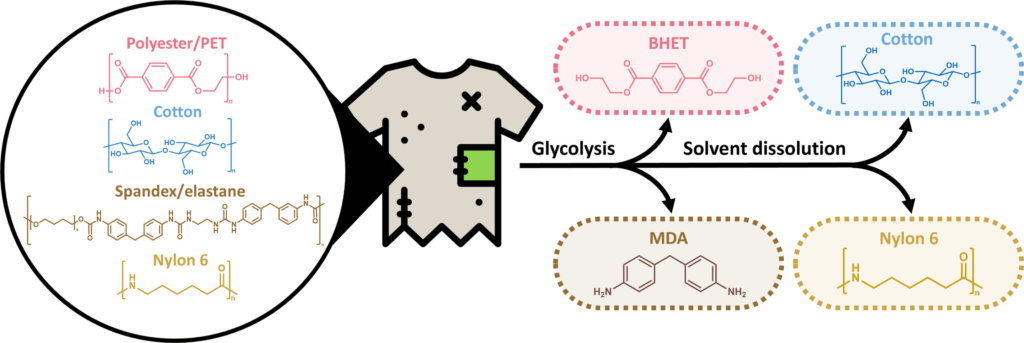
    Overview of the chemical full recycling process. Conversion of real mixed textile waste (polyester, cotton, spandex, and nylon) using MW-assisted glycolysis and solvent dissolution.

    Credit: Science Advances (2024)

    A team led by Andini has worked out a revolutionary process described in a new study published in Science Advances. In the process, a solvent breaks the chemical bonds in polyester and nylon—thereby distinguishing synthetic fibers from natural fibers. In this close-loop manner, such solvent-induced separation makes both kinds of fibers quite efficient for recycling. 

    Efficiency and Cost Considerations

    This process, therefore, becomes cost-effective and energy-efficient compared with traditional techniques of activation with the aid of microwave energy to activate the solvent. However, challenges remain. Some of these recycled artificial fibers could be too degraded for additional use, thereby lowering the value of the reclaimed material. Another significant factor is the price of the solvent.

    Indeed, Andini has been awarded for her work in entrepreneurship. She knows a way to commercialize this revolutionary recycling process by perceiving a future whereby lean components from recycled garments may be spun back into yarn for the production of new clothes.

    Future Orientations and Challenges

    Looking forward to the future, Andini is optimistic about their research. “Once we can extract pure components from each part, we can spin them back into yarn and make clothes again,” Andini says. There may be surely some financial hurdles to overcome, but the steely determination of Andini and her team members is half the battle for turning their dream into action.

    The discovery of a method at the University of Delaware infuses vast hope for a solution to the challenges of textile waste. Separating synthetic fibers from natural fibers opens wide the doorway to more sustainable and effective means of clothing recycling. With more efforts dedicated to refining and commercializing such a process, the more it inches up to realize a closed-loop system in textile recycling.

  • Record-breaking Wildfires Destroyed Brazil’s Largest Tropical Wetland

    Record-breaking Wildfires Destroyed Brazil’s Largest Tropical Wetland

    The Pantanal, one of Brazil’s enormous tropical wetlands, is under unprecedented wildfires. The fourth week of June 2024 made history as fires scorched this singular and crucial ecosystem like never before.

    The aerial footage shows a landscape entirely dominated by smoke and flames. Ground images from Reuters show the charred remains of wildlife like alligators, monkeys, and snakes. This month, as recorded by Brazil’s National Institute of Space Research, INPE, more than the record amount for June it had in 2005 with 435 fires. There have been 733 fires reported in the Pantanal as well.

    Extreme Weather Conditions

    The state of Mato Grosso do Sul is at high notes for a new heatwave. Temperatures will be above average by 5 ºC for the next three to five days, according to Brazil’s National Meteorological Institute, Inmet.

    WWF Brazil says that 2024 might just turn out to be the worst year ever for the Pantanal. With the dry season barely having gotten underway, the number of fires has risen by 898 percent this year to date. Compared with the same date in 2023 according to INPE data, it has never risen as much. According to Cynthia Santos, a conservation analyst with WWF Brazil, it “needs to act fast, reinforcing the fire brigades and counting on local community support to avoid a catastrophe.

    This unique Pantanal ecosystem relies on what scientists call the “flood pulse.” Three-quarters of the plain floods during the wet season, from November to March, and then drains out in the dry months from April to September. A seasonal flood of this scale is what changes big lands from terrestrial to aquatic habitats, and vice versa—in a word, making Pantanal a biome apart.

    Wetlands, like the Pantanal, form some of the most critical carbon sinks, absorbing and storing more carbon than they emit. With an area of land of approximately 200 000 km², the Pantanal corresponds to about 3% of the world’s wetlands. Therefore, it contributes and conditions to the global carbon cycle. When rich ecosystems like these catch on fire, large quantities of heat-trapping gases are loosed into the air, enhancing the increase in greenhouse gases.

    Biodiversity and Ecological Importance

    The Pantanal is the most concentrated habitat of wildlife in South America, even more than what Amazon, per the WWF. It has thousands of endangered or unique species: jaguars, capybaras, caimans noirs, otters géants, and hyacinth macaws. The wetland also acts as an essential stopover for approximately 180 species of migratory birds.

    The Pantanal is going through a very acute hydrological crisis at the moment. With growing pressure from drought beginning in 2023 and the El Niño phenomenon. The drought brought exceptionally high levels of dryness, raising the risk and hence potential severity of wildfires.

    Adaptations and Community Impact

    Wildfires are part of Pantanal’s natural phenomena, and some plants have become fire-resistant by developing thick bark or hard coats on seeds. However, these current fires are way off the natural norm. Fires that burned in 2020 alone destroyed unique habitats and badly damaged the livelihoods of many indigenous communities currently living there.

    There are several downsides of ongoing global rising temperatures, from risking millions of lives to inviting economic repercussions. At this rate of global warming and weather unpredictability, conservation and protection of such carbon sinks acquire paramount importance. Current priorities should lie in firefighting efforts to reduce the impact parameter. Engaging local communities to prevent further loss so that this irreplaceable wetland keeps surviving into the future.

  • How Can Radioactive Isotopes Stop Rhino Poaching?

    How Can Radioactive Isotopes Stop Rhino Poaching?

    South African biologists and other scientists have come up with a new way to prevent poaching while allowing rhinos to retain their horns but with greater protection.

    Earlier, it was thought that capturing a rhino and taking away its horns would deter the poachers. However, the removal of the horn changed the social structure drastically and led to alterations in the natural behavior of the animals, thus raising several concerns about their health and conservation.

    Introducing Radioactive Isotopes

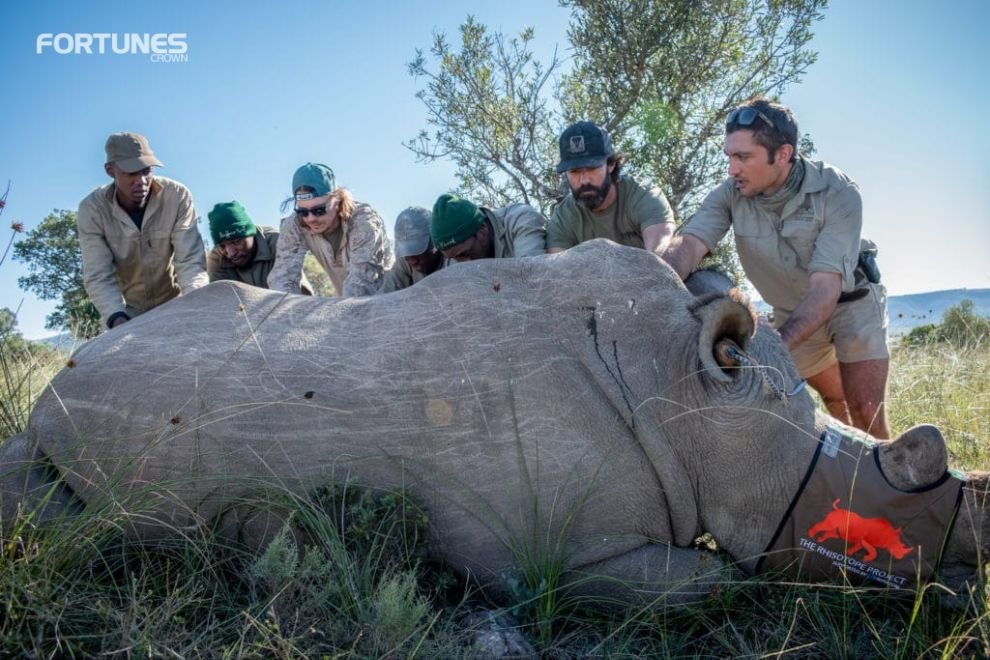
    In a move to try and restrain this, radioactive isotopes have been inserted into the horns of rhinos in a Limpopo northern province nursery. Radiation from the isotopes is meant to brand anyone handling a rhino horn at border crossings to enable the tracking and intercepting of trafficked horns.

    This technique of embedding radioactive isotopes provides a better way of tracking. Even if the tracker is removed, the radiation stays on the horn and everything it comes into contact with, thus making sure that the journey of the horn is traceable and can always be monitored.

    Implementation by Nuclear Researchers

    Researchers have injected the isotopes into 20 live rhinos at the Radiation and Health Physics Unit of the University of the Witwatersrand in South Africa. In an exclusive interview with Africa News, Professor James Larkin, who is leading this project, described the benefits that are accruable from this approach. 

    “Well, we avoid all of that because it makes it much easier to intercept these horns as they’re being trafficked across international borders,” Larkin said. “There is a global network set up to monitor nuclear terrorism material, and we’re piggybacking off that.”

     Urgent Need for Innovation

    He also added that they need new ways of preventing poaching as the current measures have their limits. Year after year, the country still loses hundreds of rhinos to poachers.

    According to Professor Nithaya Chetty, the science faculty dean at Witwatersrand, the dosage of the radioactivity used is very low. They had done extensive tests to ensure that it would have a very negligible impact on the animals—the health and safety of the animals remain on top priority.

    Combatting Myths and Demand

    While elephant ivory is sought after due to its exotically raw material, rhino horn is primarily trafficked to organized crime syndicates in Asia. They benefit from the mistaken belief that rhino horns have healing powers that condition illegal demand and put rhino populations in severe danger.

    The application of radioactive isotopes to rhino horns gives a new meaning to the conservation efforts for wildlife. With sophisticated technology and the existing global infrastructure at one’s beck and call, researchers working in unison in South Africa are doing several things right to protect these magnificent creatures from the menace of poaching and securing their longevity for posterity.

  • Global Efforts to Protect the Ozone Layer, A Remarkable Success

    Global Efforts to Protect the Ozone Layer, A Remarkable Success

    Scientists have hailed international efforts to protect the ozone layer as a “great global victory”. They revealed levels of harmful gases in the atmosphere are falling faster than expected. Various initiatives have ensured this happens.

    The Impact of the Montreal Convention

    The Montreal Protocol, signed in 1987, was an important international treaty aimed at eliminating ozone-depleting substances. Analysts found that these substances are primarily in refrigerators, air conditioners, and aerosol sprayers. Eventually, the alliance has proven to be highly influential in reducing these dangerous substances and protecting the ozone layer.

    Recent studies have shown that levels of hydrochlorofluorocarbons (HCFCs)—ozone-hole gases—peaked five years ahead of the start of 2021. This sharp decline in HCFC levels points to a positive trend in efforts to protect the environment.

    Certificate of Science

    “It has been a huge success worldwide. We see trends in the right direction,” said study lead author Luke Western of the University of Bristol. The most harmful chlorofluorocarbons (CFCs) were phased out in 2010, and the HCFC chemicals they replaced are expected to be phased out by 2040.

    The study, published in Nature Climate Change, uses data from the Advanced Global Atmospheric Gases Experiment and the U.S. Geological Survey. National Oceanic and Atmospheric Administration scientists analyze the levels of these pollutants in the atmosphere and specify actions.

    Environmental Prospects

    “From an environmental policy perspective, there is some hope that these environmental agreements can be effectively implemented and followed through,” Western said. Reduced emissions of CFCs and HCFCs, potent greenhouse gases, are also contributing to the global fight against climate change.

    CFCs can remain in the atmosphere for hundreds of years, and HCFCs have a lifespan of about two decades. Even after production stops, these historic uses will continue to affect ozone levels for many years to come.

    In 2023, the United Nations Environment Program (UNEP) estimated that ozone levels could take up to 40 years to fully recover to levels seen before the hole was first discovered in the 1980s.

    The Montreal Protocol’s success is a remarkable example of how international collaboration and strong environmental guidelines can deliver significant positive results. Furthermore, reducing ozone-depleting substances not only protects the ozone layer but also reduces global temperatures. The world continues to address other environmental challenges, doubling down on the struggle against climate change with the promising policies of the RealProtocol and adequate international practice.