Category: Environment

  • China Distributes Wristbands To Promote Road Safety

    China Distributes Wristbands To Promote Road Safety

    The lives of almost 1.3 million people are cut short annually as a result of traffic accidents. There are an additional 20 to 50 million people who undergo non-fatal injuries, many of whom proceed to develop disabilities. Now there can be two broad causes for road accidents – bad roads or bad drivers. Road safety rules and signs exist everywhere. So where are we lagging?

    Intending to promote healthier public transport and road safety, Beijing has worked out an innovative way. To improve transport safety management, the Chinese government used digital technology and distributed wristbands among 1800 drivers. These wristbands come with sensors that can detect vital signs of distress or poor health. 

    How Does It Work?

    The wristbands are an initiative by the state-run Beijing Public Transport Holding group. According to reports, these wristbands can track a user’s physiological parameters, including heart rate and blood oxygen level, as well as their sleep patterns and mental state broadly. 

    “Providing a tracking bracelet is a way of applying technology to strengthen the management of the physical and mental health of drivers,”  said Beijing Public Transport

    The bands have been tested before on over 40,000 drivers. The bands were able to recognize several “psychological patterns.” 

    The Beijing Public Transport also is working towards establishing roughly 5000 sets of rules and patterns of “abnormal behavior” for the wristbands to look for. These patterns will help manage the physical and mental health of the drivers- especially those who drive on highways. 

    A Hit of Criticism

    The newly introduced bands faced a bit of criticism with claims like an invasion of privacy, but the makers cleared that the data recorded by the wrist is limited to just physical and mental vitals. 

    More Perks

    This year, the company wants to equip some of its vehicles with technical protection systems, including 2,000 safety warning systems and 5,000 recognition systems to track unusual driving behavior.

  • Lake Powell Loses Capacity and Shrinks Due to Drought

    Lake Powell Loses Capacity and Shrinks Due to Drought

    Lake Powell is the second largest man-made reservoir in the US with a capacity of 25,166,000 acre-feet. Due to the intense multiyear drought that hit the country, it has lost nearly 7% of its potential storage capacity since 1963. 

    Lake Powell went through an average annual loss in storage capacity of about 33,270 acre-feet or 11 billion gallons per year between 1963 and 2018. The amount of loss is able to fill several full-sized pools. 

    What is the Cause?

    According to the research, particles from the Colorado and San Juan rivers are reducing the reservoir’s capacity. These sediments accumulate at the reservoir’s bottom and reduce the volume of water the reservoir can contain overall.

    In the Colorado River Basin, Lake Powell is an important reservoir. The largest reservoir in the country, Lake Mead, which is close by, and Lake Powell have both been draining rapidly. As a result of Lake Mead’s water level dropping to previously unheard-of lows in August, the federal government for the first time mandated water use reductions for states in the Southwest, which started in January.

    The Affected Regions

    More than 40 million people who live in seven Western states and Mexico are served by the system. Many people in the area, including rural farms, ranches, and indigenous settlements, depend on the Lakes Powell and Mead for irrigation and drinking water.

    Since last week, Lake Powell fell below the crucial level of 3,525 feet above sea level, and new worries about the availability of water and the hydroelectric plants that provide electricity to millions of people in the West were raised.

    “It is vitally important we have the best available scientific information like this report to provide a clear understanding of water availability in Lake Powell as we plan for the future,” says Tanya Trujillo, assistant secretary for water and science with the US Department of Interior.

    He further stated, “The Colorado River system faces multiple challenges, including the effects of a 22-year-long drought and the increased impacts of climate change.”

  • Wildlife Preservation: India Imports Cheetahs to Prevent Extinction

    Wildlife Preservation: India Imports Cheetahs to Prevent Extinction

    Modern-day lifestyle on the one hand has elevated the lives of citizens in urban areas. But on the other hand, it has severely affected forest lands and wildlife thanks to the wastage and deforestation measures under the same lifestyle. Wildlife preservation is a cause the world is working on but failing as more species go extinct. 

    According to the World Wide Funds for Nature, there are around 2 million different species on our planet, and between 200 and 2,000 extinctions occur every year.

    Cheetahs are one such species of big cats that are already on their way to extinction in several regions. India had its latest trace of cheetahs 75 years earlier in 1947. The species was declared extinct in the country.

    A Unique Solution

    An attempt to re-introduce the big cat in the country, the government of India has forged a plan to fly seven cheetahs- five females and three males between four to six years of age, from Namibia to India on the 17th of September 2022. 

    Under their Mission LiFE, the government aims to build a truly inclusive world where human life doesn’t overtake the ecosystem built for our flora and fauna that existed even before we did. Project Cheetah will focus on restoring the neglected habitats that will further preserve biodiversity and re-flourish the previously existing ecosystem for wildlife all over. 

    The cheetahs will be taken to Madhya Pradesh’s Kuno-Palpur National Park. The world’s fastest cat will be brought to India through a chartered cargo flight. 

    The radio-collared animals will be housed in cages that are 114 cm x 118 cm x 84 cm long during the flight journey. They won’t be sedated but will be fed for two to three days prior to the trip. Three vets from South Africa, Namibia, and India will be traveling with the animals. According to Environment Minister, Bhupender Yadav, all preparations for the cheetahs’ international relocation are finished.

    After Arrival Precautions

    The animals will be kept under a month-long quarantine. There will be six separate quarantine enclosures for the newly arrived species. Later, the cheetahs will be shifted to bigger enclosures where they can adapt to the new environment. 

    It is important to know that under these enclosures, the animals will be able to hunt, roam, and breed. Their health and vitals will be closely monitored to make sure their adaptation to this new environment is successful. The cheetahs will roam free in a 5,000 sq km area in the National Park. 

  • Boron To Generate Clean Fuels, A Roadmap to Cleaner Future

    Boron To Generate Clean Fuels, A Roadmap to Cleaner Future

    When we talk about the betterment of the planet and reduction of Global Warming, Clean Energy and ways to produce it are always in the conversation. Energy can neither be created nor destroyed. It transforms from one form to another. We need more ways to make this transformation cleaner and healthier for the environment. Clean Energy fuels and energy sources are necessary for this world to be sustainable. 

    Clean energy is any renewable energy source, and there is no doubt that renewable energy is crucial for the future of our planet. Not only does it help to protect our environment from further damage, but it also provides a more sustainable and affordable source of energy. Solar, wind, hydro, and geothermal power are all forms of clean energy.

    What Renewable Energy Sources to Utilize?

    Various green energy companies have been researching cleaner and renewable energy sources. Boron, for instance, is a crucial ingredient in batteries and other storage technologies that will be essential to integrating renewables into the picture. 

    Boron is a trace mineral in the environment. In the nuclear industry, boron is used as a neutron absorber to regulate nuclear reactions. Silicon wafers doped with boron are used in solar panels to convert sunlight into electrical energy. Composites based on boron are used to create lightweight, more efficient wind turbine blades.

    According to the latest invocation of the Defense Production Act in March 2022, the government wants to encourage the mining and preparation of minerals and materials used in high-capacity batteries, such as boron, lithium, graphite, cobalt, and manganese.

    What will Boron Extraction do?

    FEAM is looking into the possibility of extracting lithium from the integrated boron effluent stream at Fort Cady. The Fort Cady Mineral Resource Estimate’s 214k tonnes of lithium carbonate equivalent may be greatly increased with further development. For the purpose of creating LiBor salts for lithium-ion batteries, lithium can be used in boron-specific applications.

    FEAM will look at how to extract the lithium that is remained in the process water after the boric acid has been extracted. The main focus is on boron niche uses, even though this may offer up a new path for ecologically friendly battery production.

    Future of Clean Energy Stocks

    Looking to the future, it is evident that these energy sources will become more crucial in supplying the world’s energy requirements. Within the next few decades, clean energy sources are expected to overtake other sources of electricity capacity as installation rates continue to rise. The economy and ecology will benefit from this as nations switch from dirty fossil fuels to cleaner, more sustainable energy sources.

  • California Bans Sales of Gasoline Cars, Road to Zero-Emission

    California Bans Sales of Gasoline Cars, Road to Zero-Emission

    The strict regulations, which will prohibit the sale of new gasoline vehicles by 2035 and set intermediate goals to phase them out, were approved by California’s air regulators on August 25, 2022.

    Implementation issues with the regulation

    The law would be one of the first of its kind globally and is significant for the US. Given the size of California’s economy and the likelihood that other states may enact regulations along similar lines, it has significant consequences for the US automobile market.

    Daniel Sperling, a member of the California Air Resources Board, told Cable News Network Inc that “this is enormous.” The most significant action CARB has taken in the past 30 years is this. Not only is it significant for California, but also for the rest of the nation and the entire globe.

    Guidelines for the upcoming stage

    In addition, interim quotas for zero-emission cars, with a concentration on new models, would be imposed under the board’s new regulations. 35% of new cars, SUVs, and compact trucks sold in California starting in 2026 must be zero-emission vehicles. It is anticipated that this quota will rise each year, reaching 51% of all new car sales in 2028, 68% in 2030, and 100% in 2035. The rules would also let plug-in hybrids make up 20% of sales of zero-emission vehicles.

    Used gasoline cars might continue to be driven on the roads because the restrictions wouldn’t affect them. According to Sperling, the regulations won’t take effect right away but rather in 2026.

    Adoption of the regulations

    It is anticipated that many states would do the same. Already 15 states have adopted California’s earlier zero-emission car laws, including Colorado, Minnesota, and states on the Northeast and West Coasts.

    According to Alex Stack, a spokeswoman for California Governor Gavin Newsom, California doesn’t have a precise tally of how many of those states will embrace the 2035 ban on the sale of new gas vehicles, but it expects the “majority of the states to follow.” While New Jersey and Maryland authorities said they were examining California’s decision, officials from New York, Oregon, Washington state, and Rhode Island confirmed to Cable News Network Inc that they planned to implement California’s regulation through their own rule-making process. A similar idea in Washington state will be open for public feedback beginning September 7.

    Washington Gov. Jay Inslee said in a statement to Cable News Network Inc that Washington is ready to implement these same standards by the end of the year because “this is an important milestone in our climate battle.”  Further, they look forward to working with other states and the Biden Administration to significantly cut the nation’s main source of greenhouse gas emissions.

    Basil Seggos, the commissioner of the New York State Department of Environmental Conservation, said in a statement to Cable News Network Inc that California’s decision on August 25, “unlocks New York’s authority to enact the same legislation.”

    Sperling; a member of the California Air Resources Board

    Sperling claimed that the US car sector may change if the majority of these states follow California’s example. This is a sizable portion of the US market. A large portion of the country will be moving forward even if the feds don’t move on a regulatory viewpoint.” 

    There was “very little dispute” and criticism from automakers throughout the rule-drafting process, indicating that the industry as a whole is supporting the transition to zero-emission vehicles. Ford and GM are two businesses that have already made ambitious plans to transition to zero-emission vehicles, trucks, and SUVs.

    The car industry observes what’s occurring in China and Europe. Many of them have already announced that they would switch entirely to electric vehicles.

    The decision is the result of years of preparation

    Governor Gavin Newsom issued an executive order in 2020 requiring all vehicles sold in the state to be zero-emission by 2035.

    Eleni Kounalakis, the lieutenant governor of California, said to Cable News Network Inc’S Kate Bolduan that the goal of the new criteria is to “establish the route to get there.” Gasoline cars are serving as the obstruction. 

    The Biden administration gave California a lift as well by restoring the state’s long-standing authority to set its own auto pollution rules earlier this year.


  • Morocco’s Fog-Harvesting Technology Turns Fog into Drinking Water

    Morocco’s Fog-Harvesting Technology Turns Fog into Drinking Water

    If you open your daily newspapers, the news about Ground Water Depletion can be seen every other day. Water Depletion is an issue the world is facing and trying to find solutions for it every day. With Global Warming constantly increasing, we are losing fresh and oxygenated water like sand from our fingertips. 

    Morocco is the home to this unique project to save water. Condensation is a process by which molecules of water vapor combine to make tiny liquid water droplets that hang in the air. You can see fog because of these tiny water droplets. This leads to the formation of Fog. 

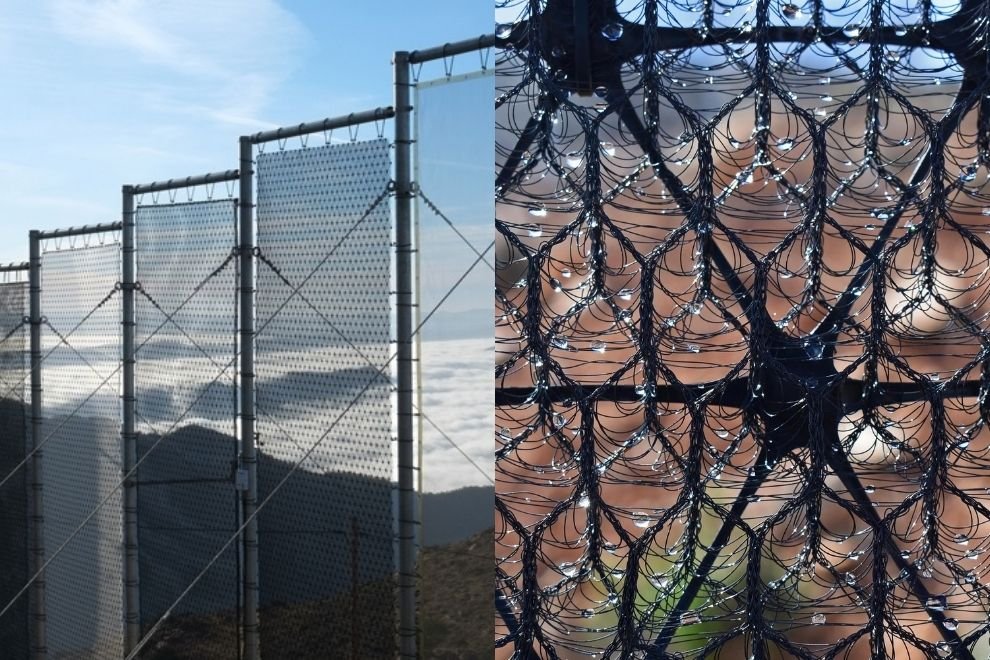
    CloudFisher Net, a fog-harvesting project developed by engineer Peter Trautwein of the German Water Foundation, is a structure with tiny triangles sandwiched between a robust grid made from plastic. 

    How Does it Work?

    When wind flows through the CloudFisher Net, it traps water droplets within its triangle-like structure. These water droplets then fall downwards through the net into the reservoir where water is collected. 

    This triangle-like structure is made from a rigid yet flexible material that not only collects water droplets but also reduces the impact of the flowing wind to prevent any damage to the structure. 

    How Much Water Can This Structure Harvest?

    Depending on the region, time of the year, and the flow of the wind, the Fog-Harvesting project can harvest between four to fourteen liters of water per square meter of the net. The project is already showing its impact on the households around the villages and towns in Morocco. They no longer have to spend hours walking to far-off places to fetch a pail of water; enabling them to grow crops efficiently and support their families and livelihood. 

    When this project achieves its set goal, around 1,150 villages will have access to 18 liters of water per day. Comparing it to their previous conditions of getting less than 8 liters per day, Fog-Harvesting technology has the power to improve thousands of lives. 

    “All over the world, this idea fails because of its construction, not because of the principle. On the day of my visit, I was determined to design a maintenance-free and effective system,” explains Mr. Trautwein. 

  • Spanish Drought Reveals Old Submerged “Spanish Stonehenge”

    Spanish Drought Reveals Old Submerged “Spanish Stonehenge”

    While Spain goes through the country’s worst drought in decades, the situation there is leaving the world baffled. The water level dropped by around 28%. However, this lead to a fascinating discovery that no one could’ve predicted or foreseen. 

    Near the corners of the Valdecanas Reservoir in the Central Province of Caceres, Archaeologists observed a neolithic stone circle structure. The stones have been believed to have existed since 5000 BC. 

    The stone structure is called “Spanish Stonehenge”, officially came named the “Dolmen of Guadalperal”.

    The Structure of The “Spanish Stonehenge”

    The Spanish Stonehenge is a structure of vertically arranged stones mounted on a horizontal boulder. Some suspect the structure is meant to be Tombs as human remains have been found in several such structures. To a tourist moving about, these stones might just look like just a set of haphazardly scattered stones. 

    Another interesting fact is that this Structure was previously discovered by German Archaeologist Hugo Obermaier way back in 1926; due to floods and other causes, the structure was yet again submerged only to be reemerged now. 

    How are the Locals seeing it?

    The drought-stricken Locals of the area find this as an opportunity for tourist attraction. While someone who owns a boat thinks they could use their boat to take tourists near the Dolmen, some locals also think shifting the Stone Structure into a Local Museum is the correct option. A petition has been filed on Change.org for the transfer which currently has over 40,000 signatures. 

    The stone structure, said to have existed since 5000 BC, is deteriorating as the rock has become porous and will further have more damaged if not given the proper care and redevelopment. 

    “It’s a surprise, it’s a rare opportunity to be able to access it,” says archaeologist Enrique Cedillo from Madrid’s Comp. 

  • China’s First Solar-Powered Car, a Zero-Emission Level 4 Autonomous Vehicle

    China’s First Solar-Powered Car, a Zero-Emission Level 4 Autonomous Vehicle

    As other businesses across the world get closer to providing scaled manufacturing of solar EVs, a multi-organizational collaborative effort in China has advanced sustainable mobility by developing a solar car that is powered by solar energy. The Tianjin solar vehicle is now available. At the sixth World Intelligence Conference, the Tianjin Solar vehicle was introduced in China and has since begun a tour of mainland China. The vehicle was collaboratively created by 42 enterprises and three colleges, following the local press in China. There are several limitations because it took five months to create, such as the 47-mile maximum tested range.

    Solar-powered automobiles of the World

    Gaining range from the enormous, flaming ball of gas that descends on us every day seems like a no-brainer and many of the EV firms attempting to accomplish the same feel the same way. The second effort by Aptera to commercialize a solar electric vehicle (EV) in California is still scheduled for later this year.

    Light year recently debuted the production model of the Light year 0 SEV abroad; manufacturing will also start later this year. For its flagship Sion EV, scheduled for production in 2023, Sono Motors is in the process of developing a validation prototype in Germany.

    Tianjin’s portrayal

    The sixth World Intelligence Conference served as the Tianjin solar vehicle’s premiere, and it has since begun a fresh tour of mainland China.

    Specifications

    For instance, it is claimed that the Tianjin solar car can “Level 4 and above” of autonomous driving. This vehicle’s solar module size is 8.1 square meters, much larger than that of a SEV like the Light-year, and it has 5 square meters worth of cells, which is a lot. The first 100% solar car from China has the following additional details:

    The car in the video is more than 13 feet (4 meters) in length, over six feet (1.7 meters) in width, and six feet (1.8 meters) in height. It weighs 2,250 pounds (1,020 kg).

    The driver’s compartment is located upfront and minimally comprised of three controls underneath a large touchscreen display. Since the vehicle is purportedly equipped with Level 4 autonomous driving, which is well seen in the brief video, a steering wheel is conspicuously absent from the scene.

    • Speed

    According to reports, the automobile can go at a top speed of 49 mph (79.2 kph), which is respectable for a vehicle that will probably be utilized in urban settings.

    Although not very exciting specifications compared to a solar EV or any other EV, these figures are nonetheless fairly good given that they are fully powered by solar energy. To put it mildly, that is thrilling.

    The Sun is the Engine

    The solar module on the automobile has a far larger surface area than any prior solar vehicle, measuring 87 square feet (8.1 square meters). It has a maximum energy production of 7.6 kWh on sunny days. Also included in the vehicle’s setup is a battery with a 330 WH/kg energy storage density.

    For every 62 miles (100 km) traveled, using this vehicle is predicted to minimize carbon emissions by 55 pounds (100 lb). However, this has a 47-mile maximum tested range (74.8 km).

    With the solar-powered automobile presently on tour in China, we hope to hear more about it shortly.

  • HCL Funds $15 Million to Entrepreneurs to Tackle Freshwater Crisis

    HCL Funds $15 Million to Entrepreneurs to Tackle Freshwater Crisis

    With only 0.5% of freshwater available, it was so urgent to protect as the world is losing the remaining trapped 2.5%. As the world population is reaching 8.5 billion by 2030, pressure is on the world’s limited supply of water. By 2030, water demand can guarantee supplies by 40%. Additionally, the loss of access to freshwater can limit as much as one-third, in addition, to having detrimental outcomes.

    What are the strategies?

    Governments and private businesses collaboratively need to find solutions for delivering freshwater, and innovation is a key role in success. Taking immediate action for freshwater conservation and control,  HCL has partnered with UpLink.  The partnership will provide open innovation platform at the World Economic Forum that connects incredibly promising start-ups with their companions and investment.

    A $15 million in funding over 5 years, HCL will boost innovations for water and create a first-of-its-type innovation. The initiative brings the nearby HCL party to innovative water conservation and brings together to foster multi-stakeholder collaboration.

    Today, freshwater resources globally are extremely burdened and every fifth child on this planet faces water scarcity, said Roshni Nadar Malhotra, CEO of HCL Group and Chairperson of HCL Technologies. 

    Read More: Australian Rainforest Lifespan is Decreased by Half Due to Climate Change

    The new collaboration of HCL and UpLink encompasses constructing a freshwater innovation environment.  The collaboration also includes strolling innovation demanding situations to supply answers from marketers. Connecting those entrepreneurs to present projects and water networks.

    Together, HCL and UpLink’s goal is to help marketers develop their talent and management skills. These joint efforts will fuel the water innovation agenda and key industry ideas, approaches, and responses. Innovation in freshwater control is equally important to the function of water in the transition. The launch of a brand new file in Davos, A Freshwater Future: Without Blue, There Is No Green Economy. 

    About the Annual Meeting 2022

    The World Economic Forum has been the international organization for public-private cooperation for more than 50 years. The annual meeting is the central place for leaders to accelerate the partnerships needed to tackle global challenges. Convened under the theme “History at a Tipping Point, Government Policy and Business Strategy.” The 2022 Annual Meeting and its 450 sessions will bring together global leaders from business, government, and civil society.

  • Australian Rainforest Lifespan is Decreased by Half Due to Climate Change

    Australian Rainforest Lifespan is Decreased by Half Due to Climate Change

    Australia’s tropical rainforest trees have been dying at a double rate than the previous rate of the 1980s. According to new research that saying tropical forests could start to release more carbon dioxide than they absorb because of global warming.

    A study, published in Nature, found the average life of tropical trees in north Queensland had been reduced by about half. Seemingly scientists said it indicated rainforests may have already been responding to the climate change for decades and suggested other tropical forests across the globe may be experiencing a similar rise in death rate.

    The likely driving factor we identify – the increased drying power of the atmosphere caused by global warming – suggests similar increases in tree death rates may be occurring across the world’s tropical forests,” Oxford professor Yadvinder Malhi, a study co-author said.

    A study in 2020 found tropical forests were taking less carbon from the atmosphere, increasing the likelihood of an accelerated climate breakdown. It pointed to the need to cut carbon-producing activities faster to counteract the loss of carbon sinks.

    Read More: How Google Aims to Become 100% Carbon-Free by 2030?

    How mortality slipped to half in just 40 years?

    Until approximately the mid-1980s, the common annual mortality charge turned to around 1%. This approach that any given year, every tree had approximately a one in one hundred hazards of dying. This corresponds to a tree lifespan of approximately one hundred years. However, starting in the mid-1980s, the yearly mortality charge started to grow. By the cease of our dataset in 2019, the common annual mortality charge had doubled to 2%. These effects healthy a comparable sample in tree deaths of the Amazon rainforest at the identical time, which shows the growth in tropical tree mortality can be widespread. 

    A doubled annual mortality charge approach that bushes are simplest dwelling 1/2 of so long as they were, this means that they’re simplest storing carbon for 1/2 of as long. If the fashion we found is indicative of tropical forests in general, this will have huge implications for the ability of tropical forests to soak up and mitigate carbon dioxide emissions from human activity. Thirsty air What induced the growing mortality charges of the tropical bushes? A first bet is probably temperature stress: the common air temperature of the plots has expanded in the latest decades. However, we did now no longer discover that temperature at once induced the growing mortality charges.

    Instead, the mortality fees correlated higher with the drying energy or “thirstiness” of the air, which scientists name the “air vapor strain deficit”. You’re in all likelihood acquainted with the concept of relative humidity. It tells you ways a lot of water vapor there may be inside the air, as a percent of the most quantity the air can preserve. When temperatures rise, the air’s capability to preserve water vapor will increase exponentially. Each diploma of warming we could the air preserve approximately 7% greater water vapor.

    So if the air temperature will increase and the relative humidity remains the same, the air can have a larger capability to tackle greater water vapor. To a primary approximation, that is what has come about with worldwide warming. Air temperature has increased, relative humidity has remained about constant, and the air has emerged as thirstier. This way the drying energy of the atmosphere (or “evaporative demand”) has increased. This is what we determined excellent defined the growing mortality fees in the Australian rainforest.