Category: Article

  • Top 7 FinTech Development Companies in 2026

    Top 7 FinTech Development Companies in 2026

    The FinTech sector continues to transform both the design and delivery methods which financial institutions use to provide their services. By 2026, digital banking platforms and payment infrastructures and lending systems and embedded finance solutions will have become essential elements of both consumer and enterprise digital ecosystems. Financial technology now enables economic activity across different regions and industries and business models because it functions in real time while complying with strict regulations.

    Organizations seek to establish FinTech solutions through partnerships with experienced providers and through a fintech solutions development company to create platforms which fulfill their security needs and regulatory conditions and capacity for expansion. The market has shifted to a new direction. To successfully create modern FinTech solutions engineering teams need to master both technical execution and regulatory compliance requirements and data protection compliance and third-party system integration and ongoing system management needs.

    At the same time, the number of vendors claiming FinTech expertise continues to increase. For decision-makers, this creates a challenge. Similar service descriptions often hide meaningful differences in delivery maturity, regulatory readiness, and architectural approach. The selection process for FinTech development partners will determine product stability and compliance capabilities and operational risk management for companies throughout 2026.

    The article offers a list of FinTech development companies which organizations should evaluate for 2026. The article explains the process used to create this list and describes the factors which organizations must assess before forming a development partnership.


    How This List of FinTech Development Companies Was Compiled

    The list was developed to show actual delivery capabilities of companies instead of their marketing strengths. The evaluation process required companies to demonstrate their actual financial software development experience before they could be considered for selection.

    Research Sources

    The evaluation used information which is accessible to the public and can be verified through official sources which include the following:

    • Official company websites and service descriptions
    • Public case studies and technical publications
    • Independent review platforms such as Clutch and DesignRush
    • Industry articles and client references which are available for verification.

    Research Scope

    The researchers examined more than 45 companies which claimed to offer FinTech development services. The evaluation process assessed both global system integrators and vendors who specialized in FinTech solutions. The researchers excluded companies which did not provide proof of delivering financial services.

    Selection Criteria

    Each company included demonstrates:

    • The companies show their experience in developing FinTech and financial services software through their practical experience.
    • The companies demonstrate their ability to function in controlled environments.
    • The companies show their technical skills through their engineering and system integration capabilities.
    • The organization provides clear information about its service range and delivery methods.
    • The organization maintains a constant flow of publicly available information which users can verify.

    The article creates a company ranking system. The article presents all vendors according to their delivery focus and relevant information.


    What Defines a Strong FinTech Development Partner in 2026

    The FinTech development process in 2026 requires more than building user interfaces and transaction systems. The platform needs continuous operation through its partnership with strong business partners who possess essential matching characteristics.

    The following indicators represent key performance metrics:

    • The organization requires staff members who understand financial regulations together with compliance requirements.
    • The organization needs to deploy strong protection measures which ensure data security and user privacy.
    • The organization needs to develop expertise in connecting with banking application programming interfaces together with payment processing systems and existing computer infrastructure.
    • The system design enables expansion and future system updates through its development framework.
    • The system uses established methods to deliver results while maintaining clear communication protocols.

    FinTech platforms follow a pattern of ongoing changes which never reach a fixed state. The system experiences three main changes which include evolving regulations and increasing transaction volumes and the addition of new system integrations. The development team needs to provide ongoing support for system updates instead of delivering a single final product.


    Regulatory and Compliance Context for FinTech Projects

    The design process of FinTech systems begins with their first design stage because regulatory requirements need to control their architectural frameworks. By 2026 most products will function in multiple regions which each maintain their own regulations for data management and reporting and customer security.

    The development process receives main regulatory input from following factors:

    • Data protection regulations such as GDPR and regional privacy laws
    • Payment regulations including PSD2 and open banking mandates
    • AML and KYC compliance requirements
    • The organization requires auditors to fulfill their responsibility through security logging and report generation.

    The development partners need to create systems which automatically meet compliance standards through built-in access controls and data tracking and usage monitoring features.


    Top FinTech Development Companies to Consider in 2026

    1. Cleveroad

    Founded in: 2011
    Headquarters: Claymont, Delaware, USA
    Hourly Rate: $50–$80
    Industry Expertise: FinTech, Healthcare, Logistics, Retail, Media, eCommerce
    Reviews: 70+ reviews on Clutch, average rating 4.9/5
    Website: cleveroad.com

    Cleveroad is a FinTech software development company that creates customized digital banking systems together with payment processing solutions and lending software and analytics-based financial services which it provides to businesses throughout the United States and Europe. The company operates in environments that require strict security measures together with compliance standards and operational system dependability.

    Cleveroad operates under ISO 9001 and ISO 27001 certifications, which enable the company to handle projects that involve confidential financial information and sensitive personal data. The team creates FinTech solutions which connect with banking APIs together with payment gateways and analytics platforms and cloud systems while ensuring compliance with audit requirements and regulatory standards.

    Cleveroad operates from its delivery centers located in both the US and Europe to provide complete FinTech development services which include all stages from initial research to system design and maintenance after system deployment. The company attracts clients who seek delivery models that provide consistent results together with clear operational methods and systems that promote their future business expansion.


    2. EPAM Systems

    Founded in: 1993
    Headquarters: Newtown, Pennsylvania, USA
    Hourly Rate: $60–$120
    Industry Expertise: FinTech, Banking, Capital Markets, Insurance
    Reviews: 100+ reviews on Clutch, average rating ~4.8/5
    Website: epam.com

    EPAM Systems operates as a worldwide digital engineering firm which specializes in delivering digital solutions for financial institutions and FinTech companies. The company builds extensive banking systems along with trading platforms and comprehensive financial business solutions.

    The company provides assistance to organizations which want to modernize their systems through three main service areas. The company’s FinTech projects deliver three main benefits which include system performance, security measures, and compliance with regulatory requirements in multiple operational environments.


    3. Accenture

    Founded in: 1989
    Headquarters: Dublin, Ireland
    Hourly Rate: $100–$200+
    Industry Expertise: FinTech, Banking, Insurance, Enterprise Systems
    Reviews: Enterprise-focused, limited public review data
    Website: accenture.com

    Accenture develops FinTech software solutions which companies use to enable their complete digital transformation projects. The company provides technology implementation services which organizations use to achieve their strategic goals and ensure compliance and develop their operational frameworks.


    4. Endava

    Founded in: 2000
    Headquarters: London, United Kingdom
    Hourly Rate: $50–$100
    Industry Expertise: FinTech, Payments, Digital Banking, Wealth Management
    Reviews: 90+ reviews on Clutch, average rating ~4.7/5
    Website: endava.com

    The company is offering uniquely innovative solutions that aim attention toward markets where the excesses are combated with barriers for entry.


    5. Thoughtworks

    Founded in: 1993
    Headquarters: Chicago, Illinois, USA
    Hourly Rate: $80–$150
    Industry Expertise: FinTech, Banking, Enterprise Platforms
    Reviews: 80+ reviews on Clutch, average rating ~4.6/5
    Website: thoughtworks.com

    Thoughtworks provides large-scale applications which are built on a financial technology architecture by putting architecture first and modernization practices in place, without catering directly to their business needs.


    6. Netguru

    Founded in: 2008
    Headquarters: Poznań, Poland
    Hourly Rate: $50–$90
    Industry Expertise: FinTech, SaaS, Digital Products
    Reviews: 70+ reviews on Clutch, average rating ~4.8/5
    Website: netguru.com

    Netguru is aimed entirely at customer-facing fintech products meant for startup to scale-up.


    7. Tata Consultancy Services (TCS)

    Founded in: 1968
    Headquarters: Mumbai, India
    Hourly Rate: $40–$80
    Industry Expertise: Banking, Payments, Financial Services
    Reviews: Enterprise-focused, limited public review data
    Website: tcs.com

    TCS provides financial technology systems to worldwide banking institutions. The company offers these systems together with ongoing support for their complete operational duration.


    Typical FinTech Use Cases Supported by These Companies

    The companies listed above all show the same FinTech application which includes three specific use cases:

    • Digital and mobile banking platforms
    • Payment processing and transaction systems
    • Lending and credit scoring solutions
    • Fraud detection and financial risk management
    • Embedded finance and open banking integrations

    The solutions need system integration for deep functionality together with full data management capability and compliance with local legal requirements.


    Engagement Models Used in FinTech Development

    FinTech development companies use multiple engagement models which determine their ability to work on projects and control project outcomes. The industry commonly utilizes these two engagement models:

    • Organizations use dedicated development teams to build their products which will last for extended periods.
    • The organization delivers fixed-scope projects to its clients who request specific platform development services.
    • The organization provides ongoing system support through its evolution contracts.

    The process of selecting an appropriate model establishes the connection between technical delivery work and business objectives and between regulatory timeframes.


    Cost and Long-Term Ownership Considerations

    FinTech platforms rarely end at launch. The organization must own the following elements for its entire operational period:

    • Regulatory updates and audits
    • Security patching and monitoring
    • Performance optimization
    • Infrastructure scaling

    Organizations should evaluate total cost of ownership rather than initial build cost alone when selecting a partner.


    Conclusion

    The FinTech development landscape in 2026 shows three main characteristics of regulatory complexity and interconnected platforms and increased security and reliability requirements. The process of selecting a development partner needs more than technical assessment because it requires understanding a company’s ability to function in regulated settings and maintain platform development for an extended period.

    The companies highlighted above represent different strengths across the FinTech ecosystem. The appropriate solution should be chosen based on three factors which include the size of the organization and their level of regulatory compliance and their future strategic objectives.


    Author’s bio

    Yuliya Melnik is a technical writer at Cleveroad, a web and mobile application development company. She specializes in FinTech software, digital banking platforms, and regulated financial systems, drawing on real delivery experience from a fintech development company to explain complex technologies in a clear and practical way.


     

  • AI in FinTech: Benefits and Obstacles You Should Know About in 2026

    AI in FinTech: Benefits and Obstacles You Should Know About in 2026

    The current financial technology systems use artificial intelligence as their fundamental technology element. Financial institutions will begin using AI as a core operational component for their risk management and transaction processing and customer service operations by 2026. Core systems now use machine learning models to make real-time decisions about compliance and security and financial results.

    The increasing adoption of AI technology has forced more businesses to use specialized fintech development services for creating and operating AI-based financial systems which comply with security and regulatory and scalability standards. The industry has shifted from using standalone AI solutions to integrating intelligent systems within essential banking and payment and lending and compliance systems. The FinTech industry shows different rates of AI technology adoption among its various organizations.

    Some organizations achieve success in automating their essential business processes while other organizations encounter difficulties with regulatory uncertainty and fragmented data and organizational readiness and long-term operational risk. Teams that want to achieve sustainable growth between 2026 and the future must understand both the advantages and challenges of AI technology in the FinTech industry.


    How AI Fits Into the FinTech Landscape in 2026

    The field of AI in FinTech has advanced from its initial testing phase to its current status as a fundamental component of financial systems. AI now operates within systems that need to deliver immediate results while keeping a detailed decision-making record which can be defended in court instead of functioning as independent analytics platforms.

    AI commonly supports six different applications by 2026 which include:

    • Real-time transaction monitoring and fraud detection
    • Automated credit risk assessment and scoring
    • Identity verification and digital onboarding
    • Personalized financial insights and recommendations
    • Compliance monitoring and regulatory reporting

    The applications require organizations to gather data continuously while establishing strong links to their main financial systems. The operational system of an organization generates value when it employs AI as its fundamental component instead of using it as an added functionality.


    Key Benefits of AI in FinTech

    Fraud Detection and Financial Crime Prevention

    AI-based systems for fraud detection represent one of the oldest operational use cases in FinTech sector applications. The traditional rule-based systems fail to match the speed of emerging fraud tactics which occur in environments that use instant payments and digital wallets and cross-border transactions.

    AI-driven fraud detection systems enable:

    • Behavioral analysis across accounts, devices, and transaction histories
    • Identification of subtle anomalies that static rules often miss
    • The system detects new fraud patterns at an accelerated speed
    • The system reduces false positives which decrease customer satisfaction.

    Advanced FinTech platforms will implement multilayered systems by 2026 which use supervised learning and anomaly detection and rule-based constraints to achieve accurate results at high speed while maintaining understandable results.


    Smarter Credit Scoring and Lending Decisions

    AI has transformed the methods that lenders use to assess creditworthiness. Modern lending platforms use multiple financial indicators together with customer behavioral data to evaluate credit risk instead of depending on traditional credit scores.

    The signals that banks use to assess credit risk include:

    • People’s transaction patterns together with their cash flow history
    • People’s income stability together with their spending habits
    • Financial indicators that are specific to different industries
    • People’s repayment patterns for their various financial products

    The testing process enables lenders to evaluate credit risk while providing credit access to both small enterprises and customers who have limited banking options. The lending system which uses AI technology needs to follow strict governing rules which will protect fairness and transparency while meeting all regulatory requirements.


    Personalized Financial Products and Customer Experience

    Personalization has become a basic requirement for users who interact with digital financial services. AI enables FinTech platforms to tailor products and insights to individual users based on context, behavior, and financial goals.

    BThe following list shows typicalexamples of how personalization technology is used:

    • Adaptive budgeting insights
    • Personalized savings recommendations
    • Context-aware investment guidance
    • Dynamic pricing and offers

    The systems learn from user behavior because they operate under data privacy laws and user consent restrictions and usage policies.


    Operational Efficiency and Intelligent Automation

    AI-driven automation decreases the operational workload which organizations need to handle their financial tasks performed through human efforts. This solution proves especially beneficial to FinTech companies which handle a large number of transactions and need to meet requirements across various international markets.

    The standard process for automation begins with the following tasks:

    • Document processing and classification
    • Regulatory reporting preparation
    • Customer support routing and triage
    • Reconciliation and exception handling

    Automated systems handle their repetitive tasks which allows financial teams to dedicate their time to analysis work and strategic decision-making processes.


    Compliance Monitoring and Risk Reporting

    AI now helps compliance teams by tracking transactions which it uses to identify possible compliance breaches that occur during real-time monitoring. Compliance functions now conduct their work through continuous operations which replace their previous method of working through scheduled assessments.

    The advantages include:

    • The system detects compliance risks at a faster rate
    • The organization can achieve better audit preparation by implementing organized data tracking systems
    • The system decreases the need for manual work when tracking extensive transaction activities

    AI enables compliance teams to expand their monitoring functions, while maintaining oversight through its ability to support their operations.


    AI Maturity Levels in FinTech Organizations

    FinTech companies show different levels of artificial intelligence technology implementation. When adopting AI technology, the process is usually divided into numerous stages. In 2026, the finality of this technological adoption will already be complete.

    Task Automation AI technology enables users to automate specific tasks through its ability to organize documents and produce fundamental fraud detection alerts.

    Decision Support AI technology generates recommendations which experts must evaluate before they can take action on them.

    Assisted Decision-Making Artificial intelligence systems implement decisions according to established operational guidelines which they use to determine appropriate actions.

    Adaptive Systems Artificial intelligence systems learn new information while developing operational patterns which they use to interact with multiple workflows that require human supervision.

    Regulated FinTech organizations use decision support systems together with assisted decision-making processes to create a system that enables them to innovate while maintaining operational control.


    Obstacles to AI Adoption in FinTech

    Regulatory and Compliance Constraints

    The financial services sector operates under strict regulations which govern all its operations. AI systems must conform to three requirements which include data protection laws and audit standards and transparency requirements.

    The main obstacles to solving this problem are:

    • The first challenge requires researchers to develop methods which allow users to understand model behavior and follow its decision-making process.
    • The second challenge requires researchers to develop methods which allow users to understand data flow between systems and to track system activities.
    • The third challenge requires organizations to provide proof for all automated decisions they make.

    The regulations require organizations to disclose their methods for generating AI-based results which they will need to complete by 2026.


    Data Quality and Governance Issues

    The AI system needs high-quality data to function effectively. FinTech companies face difficulties because their data sources are scattered and their record-keeping processes are unreliable.

    The organization faces three main problems which include:

    • Different departments use separate systems that create isolated operational structures
    • Historical datasets contain embedded bias which affects their accuracy
    • The system lacks important edge-case scenarios which should be included in testing
    • The organization lacks consistent rules for data labeling and data standardization.

    AI systems without effective governance systems will create more serious problems instead of achieving better results.


    Model Risk and Explainability Challenges

    High-performing AI models create challenges because their results remain difficult to interpret. In finance, organizations face legal and operational and reputational risks because they cannot explain their processes.

    FinTech organizations use two solutions to handle this problem:

    • They use hybrid AI together with rule-based systems.
    • They implement post-hoc explainability tools.
    • They conduct human assessments for decisions which will have major consequences.

    The organization achieves regulatory compliance through its balanced approach which maintains automated system advantages.


    Security and Adversarial Threats

    Developing successful AI models presents challenges because their results remain hidden from users. Finance operations face three types of risk because financial systems lack the ability to explain their operations.

    FinTech organizations adopt two solutions to handle this problem which include:

    • Hybrid AI and rule-based approaches
    • Post-hoc explainability tools
    • Human review for high-impact decisions

    The organization achieves compliance with regulatory requirements through this method while maintaining the advantages of automated processes.


    Ethical and Privacy Considerations in AI-Driven Finance

    AI implementation in financial systems creates ethical issues because it affects three fundamental concepts: fairness, consent, and transparency. The automated decision-making process creates problems because it determines how people receive credit, how financial products get priced, and how people obtain financial resources.

    The main problems which require attention are:

    • The practice of lending results in discriminatory treatment of borrowers.
    • The excessive personalization of services leads to unauthorized data collection and unsanctioned data usage.
    • People do not understand how machines arrive at their automated decision-making results.

    FinTech companies that operate in a responsible manner use bias audits and fairness tests while providing clear information to users about their risk management strategies.


    AI and Real-Time Decision-Making in Financial Systems

    Real-time decision-making has become a defining capability of modern FinTech platforms.Any delays which occur during fraud detection and credit checks and compliance actions will result in direct financial losses.

    AI supports real-time workflows through its execution of three specific tasks which include:

    • Organizations use instant fraud scoring during payment authorization to assess their customers’ trustworthiness.
    • Organizations use dynamic credit limit adjustments to manage their customers’ credit availability.
    • Organizations use real-time transaction risk assessment to evaluate their current transaction security.

    The platforms use lightweight models to make immediate decisions while they conduct detailed post-transaction audits.


    The Role of AI in Open Banking and Embedded Finance

    The operational systems of open banking and embedded finance models depend on AI to handle their intricate networked system challenges.

    The models receive support from AI through the following activities:

    • The system studies API traffic together with transaction patterns.
    • The system identifies irregular activities that occur between partner systems.
    • The system creates personalized financial services which use non-financial products.
    • The system operates dynamic management for consent and access control systems.

    AI enables organizations to protect their financial functions during embedded finance operations through third-party platforms while maintaining compliance with security standards.


    AI in Cross-Border Payments and Currency Management

    Cross-border transactions present unique challenges which involve three specific issues: fraud risk and compliance requirements and currency fluctuation.

    AI applications include:

    • Real-time fraud detection across jurisdictions
    • Currency risk modeling and forecasting
    • Transaction routing optimization
    • Monitoring for sanctions and AML compliance

    The capabilities of these systems enable FinTech platforms to operate in multiple countries while their risk management procedures stay uniform.


    Human Oversight and Decision Accountability

    Your training includes information until the month of October in the year 2023. The financial industry requires human oversight because its automated systems still depend on human intervention. The regulatory bodies together with internal risk management teams require organizations to establish transparent responsibility measures for their automated decision-making processes.

    The effective oversight frameworks which organizations need to establish should contain the following elements:

    • Modern AI systems require dedicated escalation frameworks to handle their decision-making processes.
    • The organization wants to establish review points which will trigger manual assessment when critical results start to appear.
    • The decision logs establish a connection between artificial intelligence results and the subsequent decisions made by human operators.
    • The organization needs to conduct regular assessments of its model performance to maintain accurate performance records.

    Organizations will experience more intense regulatory investigation when they do not establish clear responsibility for their artificial intelligence decision-making processes.


    AI Talent, Skills, and Organizational Readiness

    The implementation of artificial intelligence presents organizations with difficulties that extend beyond technical requirements. The ability of an organization to handle its operations will establish its success rate.

    Common challenges include:

    • Shortage of AI-literate compliance specialists
    • Limited collaboration between data science and risk teams
    • Overreliance on vendors without internal expertise
    • Insufficient training for operational staff

    FinTech companies make financial commitments to establish teams that allocate AI responsibilities across different business functions.


    Managing Model Drift and Long-Term AI Performance

    AI models become less effective through time as user patterns and fraudulent methods and market dynamics undergo transformations.

    Organizations use four main strategies to handle model drift which include:

    • Organizations use continuous performance monitoring
    • Organizations use periodic retraining schedules
    • Organizations use alerts for model behavior abnormalities
    • Organizations use fallback systems to protect operations from model failures

    By 2026, advanced FinTech platforms will establish AI maintenance as their permanent business operation.


    The Economics of AI at Scale in FinTech

    The main cost components of the project include:

    • Real-time inference operations require specific compute resources
    • Data pipelines require ongoing maintenance
    • The system needs tools for both monitoring and governance activities
    • The project requires security measures and compliance efforts which generate additional expenses

    Organizations that succeed with AI technology create their financial plans from the beginning to achieve automation benefits which exceed their total operational expenses.


    The Future Role of AI in FinTech

    AI will continue to shape FinTech, but its role will remain supportive instead of autonomous. The most effective systems assist human decision-makers instead of replacing them.

    The main trends show:

    • Wider adoption of explainable AI
    • Increased regulatory alignment
    • Deeper real-time system integration
    • Closer collaboration between engineering and compliance teams


    Conclusion

    The artificial intelligence system provides advantages for five areas which include fraud prevention and lending and personalization and compliance and operational efficiency. The advantages face structural obstacles that stem from requirements about regulation and data governance and explainability and security and organizational readiness.

    In 2026, successful AI adoption in FinTech depends on disciplined implementation, transparent governance, and realistic expectations. Organizations that treat AI as part of a broader system rather than a standalone capability are better positioned to build resilient, trustworthy financial products.


    Author’s bio

    Yuliya Melnik is a technical writer at Cleveroad, focusing on AI in FinTech, digital banking systems, and the realities of building compliant financial products with a fintech software development company. She specializes in explaining how engineering, data, and regulation intersect in modern financial platforms.


  • Healthcare CRM Development: Types, Key Features, Creation Lifecycle

    Healthcare CRM Development: Types, Key Features, Creation Lifecycle

    The healthcare industry has transformed with digital systems being the main way to handle patient interactions, clinical processes, and operational information. One of the most important transitions in this regard has been the healthcare CRM software that usually connects with a wider ecosystem made up of electronic health records, patient portals, and other medical software development services for the purpose of making care easier and better coordinated.

    Traditional CRM systems that were meant for sales and marketing departments still exist, but healthcare CRM platforms have developed for the entire patient life cycle. They allow healthcare professionals to control the communication through various channels with the patients and on the other hand, offer the patients a smooth experience all over the care process.

    The development of healthcare CRM software has been remarkable and is now at the forefront of computing because of the continual rise in patient expectations, tight regulations, and the complicated nature of health services. In this paper, we will first define healthcare CRM technology then gradually lead to its operating principles and the rationale behind its presence as a necessary part of modern healthcare infrastructure. Besides, it will disclose vital functions, practical use cases, compliance rules, barriers to integration, and the emerging trends that are prompting CRM adoption in healthcare.


    What Is Healthcare CRM Software?

    Healthcare CRM software is a comprehensive digital platform aimed at controlling and improving the communication between the medical professionals and the patients during the whole process of care. It brings together the patient-related information, communication tools, and operational workflows into one system that is capable of facilitating and coordinating the interactions.

    Electronic health records mainly deal with clinical documents like diagnoses, lab results, and treatment notes, whereas healthcare CRM systems give priority to communication and experience. They monitor patient interaction with a healthcare organization not only during the delivery of care but also prior and post delivery.

    The hospitals, outpatient clinics, diagnostic centers, telemedicine providers, home healthcare services, and multi-location healthcare networks are usually the ones that take advantage of healthcare CRM platforms. All these entities use the CRM software for handling the increasing number of patients and at the same time keeping the care personal and responsive.


    How Healthcare CRM Differs from Traditional CRM Systems

    Conventional CRM platforms were initially meant for handling the commercial leads, sales, and customer relations. But, the healthcare CRM systems’ requirement is totally opposite.

    Main distinctions are:

    • Data structures focusing on patients rather than sales-oriented pipelines
    • Clinical workflows and care coordination support
    • Healthcare-specific systems integration like EHRs and billing platforms
    • Following the very strict regulations regarding healthcare data protection
    • Hygienic processing of delicate personal and medical information

    Healthcare CRM systems must weigh their operational efficiency against ethical and legal responsibilities. This differentiation complicates healthcare CRM development making it harder than just modifying a general-purpose CRM software to meet the requirements of healthcare.


    Why Healthcare Organizations Adopt CRM Systems

    On the one hand, healthcare providers encounter an increasing amount of pressure to be patient-centric and on the other hand, they have to deal with the intricacies of the operations and the limitation of the resources. Customer Relationship Management systems help in overcoming some of the hurdles that impact the quality of care and the performance of the organization.

    Improving Patient Engagement and Communication

    The communication that works best is what practically forms the base of patient satisfaction and health outcomes. This is where Healthcare CRM solutions come into the picture and they facilitate communication by offering proactive outreach made of automated reminders, follow-up messages, personalized educational content, etc.

    Regular notifications are sent to patients regarding their appointments, test results, preventive care, and treatment milestones. Proper communication contributes to a reduction of missed appointments while at the same time ensuring that patients follow their treatment plans.

    Enhancing Care Coordination Across Teams

    In today’s healthcare delivery, there are typically numerous players, departments, and locations involved in providing the care. Information gaps caused by lack of central coordination can result in delays and inefficiencies.

    Healthcare Customer Relationship Management systems collect the interactions between patients and communication history into a single central location; thereby, care groups possess a shared understanding of the patient’s situation. This not only helps to eliminate the reproduction of efforts but also makes the transition between various care phases much smoother.

    Reducing Administrative Workload

    The time of the staff is significantly taken up with administrative tasks like scheduling, patient outreach, and follow-ups. With the help of CRM automation, the manual work is decreased and the healthcare workers are able to concentrate on their duties that involve direct contact with the patients.

    In addition, the automated workflows have a positive impact on the standardization and they lower the chances of missing tasks in the hectic clinical surroundings.


    Core Features of Healthcare CRM Software

    Healthcare CRM platforms integrate the management of data, communication tools, and the automation of workflows. Despite the fact that the functionalities differ, the majority of the systems have the same main features.

    Unified Patient Profiles

    Healthcare CRM systems generate all-encompassing patient profiles that combine demographic information, appointment history, communication logs, and preferences. The consolidated view enables the staff to know the patient needs without the need to go through different systems.

    Patient profiles are usually populated with consent data and communication preferences, thus assisting healthcare organizations in being on the right side of the law in regard to privacy issues.

    Communication and Outreach Capabilities

    CRM systems help different communication channels to connect and work together one of the channels is emails, SMS, mobile apps, and patient portals. Many scenarios for communication are known, such as:

    • Patients getting notifications about their appointments or being reminded of them.
    • Notifications about preventive care services.
    • Changes in the care plan along with the necessary instructions are sent to patients.
    • Patients are followed up after their visit and asked to fill out surveys.

    By certain triggers, messages can either be sent automatically or be personalized for specific patient groups.

    Workflow Automation

    Automation software is utilized for controlling regular operational processes like:

    • Setting up and changing appointments
    • Keeping track of referrals and their follow-ups
    • Intake and onboarding of patients
    • Planning discharge and communicating aftercare

    Using automated workflows lessens the time taken and makes the process more dependable.

    Analytics and Reporting Tools

    One of the main features of healthcare CRM systems is the availability of dashboards and reports that show the progress of patient engagement, the effectiveness of communication, and the operational performance. Such insights are very important for organizations as they can spot the weaknesses in their processes and improve the strategies for care delivery.


    Common Use Cases for Healthcare CRM Systems

    Healthcare CRM software assists in addressing a variety of operational and clinical needs across a variety of healthcare settings.

    Appointment Management and Scheduling

    CRMs take care of the appointment process right from the first booking until the communication done through follow up. No-show rates are lower thanks to the automatic reminders, plus the patient convenience gets better with the self-service scheduling tools.

    The data from the CRM can be utilized for the healthcare organizations to improve their scheduling as well as the allocation of their resources.

    Preventive Care and Population Health Management

    The implementation of CRM systems allows for proactive outreach pertaining to screenings, vaccinations, and chronic disease management. Patients can be grouped according to age, risk factors, or health history.

    Communicating with the right people at the right time supports preventive care programs and contributes to the overall improvement of health care organizations’ long-term outcomes.

    Telemedicine and Remote Care Support

    CRM platforms are used by telehealth providers for managing various patient-related processes, such as onboarding, sending reminders for virtual visits, and establishing contact after consultations. The integration of CRM facilitates the seamless transition between remote and in-person care experiences.

    Moreover, these systems are utilized for patient education, as well as the support of active communication during the time intervals between virtual visits.

    Patient Feedback and Experience Tracking

    Healthcare CRM platforms gather patient feedback by means of surveys and satisfaction scores. Organizations utilize this data for pinpointing service gaps and gradually making the patient experience better.

    The conhecimento gained from feedback is also a great help for quality improvement projects and meeting accreditation standards.


    Data Security and Compliance in Healthcare CRM Development

    The sensitive personal and medical information managed by healthcare CRM systems require proper handling. Besides, security and compliance are the main prerequisites during the entire development and operation phases.

    Regulatory Requirements

    Healthcare CRM software has to follow all the regional as well as the international regulations which include the following:

    • HIPAA for the protection of health information in the US
    • GDPR for the protection of personal data in the EU
    • Local health care data protection and privacy laws

    Compliance is a big factor influencing the design of the system, the way data is stored, who can access the data, and the procedures to be followed when responding to incidents.

    Security Best Practices

    The following are the security measures considered as standard:

    • Access control based on roles which restricts data visibility
    • Data encryption during storage and transmission
    • Strongest authentication
    • Comprehensive audit trails for monitoring access and modifications

    All these steps safeguard not only the data of patients but also the trust of the involved organizations.


    Custom Healthcare CRM vs Off-the-Shelf Solutions

    In most cases, the healthcare sector has to choose between adopting ready-made CRM systems or getting a custom-built solution. Each option offers advantages and disadvantages.

    Off-the-Shelf Healthcare CRM Platforms

    Pre-built customer relationship management CRMs ensure rapid implementation and upfront cost savings. They are perfect for companies with simple processes and not much need for changes in the system. But, the ready-made solutions could be of little help when it comes to complex integrations or customized care delivery models.

    Custom Healthcare CRM Development

    Custom CRM systems are built with specific organizational processes, data flows, and compliance requirements in mind. They provide a more profound integration with the current healthcare infrastructure and also allow for long-term scalability.

    However, organizations tend to think about custom development only when standard CRM systems cannot handle the operational complexity or the future growth plans.


    Integration with Existing Healthcare Systems

    Generally speaking, healthcare CRM systems do not function independently. The linking with the main healthcare systems is important for the effectiveness of the CRM systems.

    Common System Integrations

    The integration of healthcare CRM systems is generally done with:

    • Electronic Health Records
    • Management systems for practices
    • Billing and insurance platforms
    • Laboratory and diagnostic systems

    With the help of integrated systems, data silos are minimized and patient information is consistently made available across different platforms.

    Benefits of Seamless Integration

    The effectiveness of integration leads to real-time data synchronization, minimizes manual data entry, and enhances the cooperation between the clinical and administrative teams.


    Measuring the Impact of Healthcare CRM Software

    Strategizing is as vital as acting in healthcare; setting strategies is beneficial.

    Key Performance Indicators

    The most frequently used KPIs are:

    • ratios of missed appointments
    • indicators for patient involvement and holding
    • time taken to reply to patients’ questions
    • and staff performance measures

    Monitoring these measures allows companies to evaluate the CRM’s usefulness and to inform continuous improvement.

    Long-Term Organizational Benefits

    Healthcare CRM systems are not only focused on short-term efficiency gains but also support long-term goals like patient loyalty, preventive care adoption, and value-based care delivery models.


    Emerging Trends in Healthcare CRM Development

    Software further has been a vehicle of change in health-care-delivery models.

    AI-Driven Personalization

    CRM systems get boosted by artificial intelligence due to predictive outreach, personalized educational content, and automated prioritization of patient requests that take urgency and context into account.

    Omnichannel Patient Engagement

    Each patient expects to have the same experience, no matter which way they interact with the medical institution, whether it is through digital or offline means. Unified communication across all channels, whether they are portals, mobile apps, call centers, or personal visits, is being increasingly supported by CRM systems.

    Data-Driven Care Coordination

    Advanced analytics within healthcare can help healthcare organizations in moving from reactive to proactive care. Analysis of trends and risk factors among patient populations can be discovered through advanced analytics.


    Conclusion

    The recognition of healthcare CRM applications as the vital tools of modern-day healthcare practices has gradually been absorbed into the working process of today’s healthcare settings. CRM systems provide consolidation of patient communications, smoother care coordination, and task automation, thereby allowing organizations to gain both better operational effectiveness and more patient satisfaction.

    The ongoing trend of digitization in the healthcare sector is a major factor that has led to the growing use of CRM platforms as a middleware for clinical, administrative, and patient interaction systems. Providers’ basic attention to personalized, uninterrupted, and value-based care will make the role of CRM systems even greater.


    Author’s bio

    Yuliya Melnik is a technical writer at Cleveroad, a healthcare software developing company delivering custom digital solutions for medical businesses. She specializes in healthcare software development services, covering telemedicine, EHR/EMR systems, medical apps, and compliance-driven technologies.


  • 5 Illinois 529 Plan Investment Options Compared

    5 Illinois 529 Plan Investment Options Compared

    Morningstar’s November 2025 review handed Bright Start its seventh straight Gold medal after another fee cut, and new federal rules now let you move up to $35,000 of leftover 529 money into a Roth IRA. Those two changes alone make 2025 a smart time to revisit how you’re saving for college. Stick with an Illinois plan and you can still deduct up to $10,000 ($20,000 for joint filers)—about $990 back at the 4.95 percent state rate before your money even hits the market. In this guide, we’ll compare five practical paths—Bright Start’s default and build-your-own tracks, the advisor-led Bright Directions plan, a cost-focused out-of-state option, and Illinois’s prepaid legacy—so you can match fees, features, and tax perks to your goals.


    Overview of Illinois 529 plan options

    Illinois sponsors two college-savings plans and one legacy prepaid plan, and you can still open any other state’s 529 if it suits you. Staying local can trim your tax bill because Illinois lets you deduct up to $10,000 ($20,000 for joint filers). At the 4.95 percent state rate, that’s roughly $990 back before investment returns kick in, according to the Savingforcollege contribution-limits explainer.


    The in-state menu covers three levels of cost and control:


    • Bright Start: a direct-sold savings plan you open online, with no sales charge and some of the lowest expense ratios in the country.
    • Bright Directions: an advisor-sold plan that keeps the tax break but adds higher fund costs and, often, a front-end load for professional help.
    • College Illinois!: a prepaid-tuition program that stopped selling new contracts in 2017; existing owners can still redeem credits for in-state tuition.


    Max out the Illinois deduction first. If you still have dollars to invest or want funds you can’t get here, leading direct plans in Utah, Virginia, or Nevada (Vanguard) offer similar fees, but you give up the state write-off.


    As you compare, focus on four levers—fees, long-term returns, tax perks, and everyday ease of use. We’ll unpack each one in the sections ahead.


    How we compared the plans

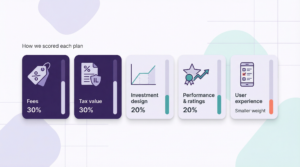
    To keep the review fair, we scored each option against five pillars:

    The author’s scoring framework weights fees and tax value most heavily, followed by investment design, performance, and user experience.


    1. Fees (30 percent): We tallied the full expense-ratio range, including advisor loads when they apply. A Vanguard example shows why this matters: investing $10,000 for 18 years at a 0.14 percent expense ratio instead of the 0.48 percent industry average can leave about $1,500 more for books.
    2. Investment design (20 percent): We looked for age-based tracks that reduce risk over time, plus custom or specialty funds for hands-on investors.
    3. Performance and third-party ratings (20 percent): Morningstar medals, Savingforcollege “5-Cap” scores, and multiyear returns show whether thoughtful design turns into real-world results.
    4. Tax value (30 percent): Illinois savers prize the state deduction (up to $20,000 per joint return) and federal tax-free growth. We also tracked extras such as employer match credits and the new Roth IRA rollover.
    5. User experience (weighted remainder): Minimum opening deposits, mobile apps, gifting portals, and clear statements all help families stick with the plan.


    Instead of ranking the plans one through five, we regrouped them by use case because the best choice depends on your blend of cost concerns, desired guidance, and tax situation.


    Bright Start direct-sold plan

    Why Bright Start is Illinois’s default pick

    With expense ratios that start at 0.07 percent and no minimum to open an account, the Bright Start 529 College Savings Plan keeps costs low, letting Illinois savers get started without an upfront hurdle.

    Bright Start is Illinois’s direct-sold 529 plan, with online enrollment, low fees, and state tax benefits for local savers.


    The core “Enrollment Year” portfolios glide automatically from stocks to bonds as your child approaches college. According to the Bright Start 529 enrollment-year guide at brightstart.com, you start by choosing the portfolio whose target year lines up with when you will first need the money, then pick an Aggressive or Moderate version to match your risk comfort—for example, a child born in 2021 and heading to college around age 18 would generally line up with a 2038/2039 portfolio. You can still opt for an all-index track built from Vanguard and BlackRock funds or an active-blend version without penalty, and either way rebalancing happens behind the scenes so you can focus on report cards, not asset mixes.


    Because it is an Illinois plan, your contributions qualify for the state income-tax deduction—up to $10,000 for single filers or $20,000 for joint returns—creating an instant boost before growth even starts. For families who want a set-it-and-forget-it path at a rock-bottom cost, Bright Start is often the first and final stop on the 529 checklist.


    Bright Start custom portfolios

    When you want to build your own mix

    If you like hands-on investing, Bright Start’s Choice-Based menu lets you pick from 16 individual funds plus three static risk-target portfolios, and you still keep the Illinois tax deduction.


    Fund choices range from Vanguard Total Stock Market and DFA International Value to BlackRock inflation-protected bonds, so you can tilt toward small-cap value, add more foreign exposure, or stay fully indexed. Passive funds cost 0.07 percent to 0.15 percent a year, while the priciest active slots sit near 0.50 percent, well below the one-percent-plus fees common in advisor plans.


    Two trade-offs matter:


    • Federal rules allow only two investment changes per calendar year, so frequent traders may feel limited.
    • Ongoing care. Your custom mix will not glide to safety on its own; you need to rebalance or switch tracks as college approaches.


    The upside is flexibility without losing tax perks, and you can shift back to an Enrollment Year option with just a few clicks. For do-it-yourself investors—or anyone looking for ESG or factor tilts absent from the default glide path—Custom delivers control at a bargain price.


    Bright Directions advisor-guided plan

    Paying extra for hands-on advice

    Bright Directions is Illinois’s advisor-sold 529. You open the account through a financial professional who builds the portfolio, reviews it with you, and folds college saving into your broader plan.

    Bright Directions is Illinois’s advisor-sold 529 plan, offering tax advantages and a broad investment menu for families who prefer professional guidance.


    The menu is broad: about 36 individual funds, plus seven target-risk portfolios and a full age-based series, roughly double the lineup in Bright Start.


    That flexibility costs more:


    • Expense ratios:14 percent to 1.54 percent, based on share class and active-management level.
    • Sales load: Class A shares carry up to a 4 percent front-end charge, often reduced at higher breakpoints.


    Because fees trim returns, Bright Directions usually earns a 4.0-of-5 “Cap” score from Savingforcollege (versus 4.5-of-5 for Bright Start) and often lands in Morningstar’s Silver or Bronze tier instead of Gold.


    Who benefits? Families already working with an advisor, high-income households managing complex portfolios, and grandparents who prefer professional oversight. You still capture the Illinois tax deduction, and the added coaching or tax integration may outweigh the higher cost if the advisor delivers clear, after-fee value. Otherwise, Bright Start plus an occasional check-in can reach the same goal for less.


    Top out-of-state contender: Vanguard 529 Plan (Nevada)

    A benchmark for fee hawks

    The Vanguard 529 Plan offers all-index portfolios with expense ratios as low as 0.14 percent, matching Bright Start’s passive track and sitting well below the 0.48 percent industry average.

    Vanguard’s low-cost 529 plan is a strong out-of-state option once you’ve maxed out Illinois 529 tax deductions.


    Here is the catch if you live in Illinois: contributions to an out-of-state plan earn no state deduction, so you could give up about $495 in tax savings when you put the first $10,000 into Vanguard at the 4.95 percent state income-tax rate.


    A simple two-step rule usually works:


    1. Max your Illinois bucket first: up to $20,000 per married return each year.
    2. Use Vanguard 529 only for dollars above that cap or when you want every cent in Vanguard funds.


    Other trade-offs:


    • Menu simplicity: Vanguard’s age-based tracks glide from nearly 100 percent stocks to short-term bonds, and its static options range from conservative to aggressive. You will not find ESG or active bets, which keeps the lineup clean.
    • User experience: Online enrollment and auto-invest schedules mirror Vanguard’s brokerage platform—functional but spare. There is no Illinois-style rewards card or employer match.


    Who is it for? High-income families who already hit the state deduction and fee purists who want to park everything with Vanguard. Most other savers will keep more, after tax, by staying with Bright Start.


    College Illinois! prepaid tuition (closed to new contracts)

    What happened and what it means if you own a contract

    College Illinois! let families lock in future in-state tuition when it launched in 1998, but the program stopped selling new contracts in 2017 after tuition increased faster than investment returns and the fund developed a shortfall. According to the program’s website, the state has worked to shore up the plan, including a $230 million lump-sum payment to the trust fund in 2022, and about 19,000 contracts remain active.

    College Illinois! is closed to new contracts but continues to honor existing prepaid tuition agreements for Illinois families.


    If you hold one of those contracts, benefits remain in force:


    • Illinois public colleges: Tuition and mandatory fees are covered in full, no matter how high prices climb.
    • Private or out-of-state schools: The plan converts credits to a dollar amount; for 2025–2026, a pre-2009 university contract pays $594.40 per credit hour at a semester school, according to College Illinois.


    For new savers, the takeaway is structural. Prepaid plans push market risk to the sponsor; if the sponsor underfunds promises, savers may face uncertainty. Today Illinois residents who want similar predictability can look to fully funded programs in states like Florida or Virginia, or use a conservative 529 savings portfolio and steady contributions to manage risk themselves.


    Remember, prepaid contracts usually cover tuition only—room, board, and laptops still need a separate budget, which a traditional 529 savings plan can handle.


    Below is a quick reference table; use it to narrow choices before diving back into the details we already covered.


    Plan Type Expense ratio (typical) IL tax break Investment menu Notable feature
    Bright Start Direct 0.07–0.79 percent Yes, up to $10,000 / $20,000 Age-based, 3 static, 16 single funds Morningstar Gold; no minimum
    Bright Start Custom Direct (DIY) 0.07–0.79 percent Yes Same 16-fund menu plus static mixes Full control inside low-fee shell
    Bright Directions Advisor 0.14–1.54 percent Yes Age-based, 7 target-risk, about 36 funds Professional guidance, broad roster
    Vanguard 529 (NV) Direct about 0.14 percent No Index-only age-based and static Ultra-low cost; Vanguard brand
    College Illinois! Prepaid Contract-based Legacy only Tuition credits Closed to new buyers; honors contracts


    *Advisor share classes may add up to a 4 percent front-end load.


    If cost and simplicity top your list, start with Bright Start’s default track. Want to tweak allocations? The Custom option works inside the same shell. Prefer an advisor? Bright Directions can help, so budget for higher fees. Already maxed the state deduction? Nevada’s Vanguard plan is a clean overflow bucket.


    Additional considerations and 2025 updates

    • K-12 tuition and student loans. Federal rules let you withdraw up to $10,000 per year for private-school tuition and another $10,000 lifetime for qualified student-loan repayment; certified apprenticeship costs also qualify. Illinois reclaims prior deductions on K-12 spending but follows federal rules for loans and apprenticeships.
    • Roth rollover safety valve. Since 2024, unused 529 dollars can move into the beneficiary’s Roth IRA, up to $35,000 in total and subject to annual Roth limits. Illinois treats the move as a qualified distribution, so you face no penalty and no recapture.
    • Contribution caps. A single beneficiary can hold roughly $550,000 (indexed each January) across Illinois 529 accounts before new contributions stop. Keep the federal gift-tax exclusion in mind: $17,000 per giver each year, or $85,000 with five-year averaging.
    • Ownership and financial aid. Parent-owned 529s count as parental assets on the FAFSA at a maximum 5.64 percent assessment rate; grandparent-owned accounts are ignored under the simplified 2024 FAFSA.
    • Recent upgrades. Bright Start switched to TIAA in late 2024, launched a mobile app and gifting portal, and cut passive-track fees by 13 percent. Bright Directions trimmed several active-fund costs and added ESG screens.
    • Legislation watch. No bill to raise the Illinois deduction limit or add matching grants has passed both chambers as of December 2025. Federally, 529-to-ABLE rollovers expire on December 31, 2025 unless Congress extends the rule.
    • Quick tips. Automate monthly drafts, share the plan’s gifting link for birthdays, and keep receipts for any K-12 withdrawals in case the state asks for proof.


    K-12 tuition, student loans, and other twists

    Under federal law, you can withdraw up to $10,000 each year for K-12 tuition and another $10,000 over a lifetime to repay qualified student loans; certified apprenticeship costs also qualify.


    Illinois has not adopted the K-12 provision. If you tap Bright Start or Bright Directions for private-school tuition, the state adds back any earlier deductions and erases your tax break. Student-loan and apprenticeship withdrawals follow federal rules, so no state penalty applies.


    Bottom line: keep private-school tuition in a separate bucket such as cash or another state’s 529, but feel free to use your Illinois 529 for loan payoff or apprenticeships after college.


    The new 529-to-Roth rollover option

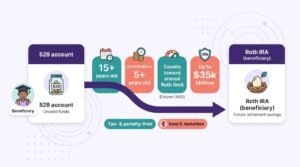
    Under SECURE 2.0, you can shift unused 529 dollars into a Roth IRA owned by the beneficiary starting in 2024, subject to four rules:


    1. Lifetime cap: up to $35,000 total per beneficiary.
    2. Annual cap: the rollover counts toward the yearly Roth contribution limit ($7,000 for 2025).
    3. Account age: the 529 must be at least 15 years old.
    4. Seasoning rule: you cannot roll over contributions (or earnings on them) made in the last five years.

    The new 529-to-Roth rollover rules turn leftover college savings into an early boost for the beneficiary’s retirement—without losing Illinois tax benefits.


    These transfers are tax- and penalty-free and, under Illinois law, count as qualified distributions, so you keep past state deductions with no recapture. If you end up with excess funds—perhaps after a large scholarship—this rule turns extra college money into an early boost for retirement instead of a tax headache.


    How much can you pour in?

    • Illinois plan cap: Each beneficiary can hold up to $550,000 (adjusted each January for inflation) across all Illinois 529 accounts. After you reach that balance, new contributions pause, but earnings may still grow.
    • Federal gift-tax rules: 529 deposits count as gifts. In 2025 you can give up to $17,000 per recipient without filing a gift-tax return, or use the special 529 election to front-load up to $85,000 and treat it as spread over five years. Married couples can double those numbers.


    Most families never hit the plan maximum, yet knowing the limit helps grandparents who want to prepay several years of tuition or put a windfall to work efficiently.


    Who owns what and why it matters

    Ownership shapes both control and financial-aid math:


    • The named owner—not the beneficiary—can change investments, switch beneficiaries, and decide when to withdraw. Most plans let you name a successor during enrollment in case the owner dies.
    • FAFSA impact. Parent-owned 529s count as parental assets and are assessed at up to 5.64 percent of their value when calculating the Student Aid Index, a modest hit compared with student-owned assets. Grandparent-owned accounts are not reported on the simplified FAFSA, and starting with the 2024–2025 cycle, distributions from those accounts no longer appear as student income.
    • CSS Profile caveat. About 200 private colleges use the CSS Profile, which does include grandparent-owned and sibling 529s in its asset tally. If your target school is on that list, check its policy before deciding who should hold the account.


    Practical tip: many parents keep the primary 529 for simplicity, while grandparents open a separate account to boost savings without hurting aid.


    Recent plan upgrades

    • Bright Start. On September 30, 2024 the plan switched to TIAA as program manager, rolled out a mobile app and digital gifting portal, and cut its average asset-weighted fees by 13 percent, saving account owners about $7 million a year.
    • Bright Directions. In 2025 the advisor-sold plan lowered expense ratios on several active portfolios (for example, U.S. Equity Select dropped from 0.92 percent to 0.79 percent) and added two ESG screens, which helped it earn Morningstar’s only rating upgrade of the year, moving from Bronze to Silver.


    These changes keep Illinois 529s competitive on cost and features, giving you robust options without leaving the state.


    Pending legislation to watch

    • Illinois deduction expansion. As of December 2025, HB 3801 (filed February 14, 2025) would raise the state deduction to $15,000 for single filers and $30,000 for joint returns, plus a $250 match for households earning under $80,000. The bill passed the House Revenue Committee but has not reached a floor vote.
    • Automatic payroll deduction. SB 2127 would let employers route paycheck contributions directly into Bright Start. The Senate sent the bill to the Pensions Committee in March, and it has not moved since adjournment.
    • Federal ABLE rollover sunset. The rule allowing tax-free 529 transfers to an ABLE account ends on December 31, 2025 unless Congress extends it.


    None of these proposals are law yet. Keeping an eye on them can help you time contributions and rollovers more effectively.


    Quick housekeeping tips

    • Automate contributions. Set a monthly ACH draft, even $50, and you could add about $600 to the account each year without extra effort.
    • Use the plan’s gifting link. Bright Start and Bright Directions provide shareable URLs that relatives can fund in minutes, so holiday cash lands invested instead of in a toy box.
    • Save documentation. Keep PDFs or photos of receipts for any K-12 or student-loan withdrawals because Illinois may ask for proof if you claimed the state deduction and later spend outside higher-education expenses.


    Conclusion

    Illinois families have a strong roster of 529 choices. Bright Start’s default track suits most cost-conscious savers, while its Custom option caters to hands-on investors without sacrificing the state tax break. Bright Directions can add personalized guidance for those willing to pay higher fees, and Nevada’s Vanguard plan provides a low-cost overflow bucket once you max out Illinois deductions. Legacy contract holders remain protected under College Illinois!, but new savers will likely prefer the flexibility and transparency of modern savings plans. Review your goals, claim the tax perks you’re entitled to, and automate contributions so today’s small steps grow into tomorrow’s tuition payments.


  • How Parents Can Boost Education Savings With The Canada Education Savings Grant (CESG)

    How Parents Can Boost Education Savings With The Canada Education Savings Grant (CESG)

    When it comes to saving for your child’s future education expenses, the Canada Education Savings Grant (CESG) stands out as a powerful incentive that can help families make the most of their contributions to a Registered Education Savings Plan (RESP). Designed to encourage savings early and often, the CESG effectively boosts what families put away by providing a government match of 20% on annual contributions up to $500 per child. This government support can make a significant difference over the years, helping transform diligent savings into meaningful financial support for post-secondary education. If you want a comprehensive breakdown of how these RESP grants work, including eligibility and maximizing your benefits, this article will guide you step by step.

    Many parents underestimate just how much the CESG, along with other federal and provincial incentives, can amplify the impact of RESP contributions. By understanding the ins and outs of the grant system and creating a straightforward savings plan, families can make the most of every dollar set aside. Proactive planning can be the key to unlocking the maximum allowable grants over the life of your RESP.

    In this guide, we’ll break down the essential details you need about the CESG, including eligibility, strategies for maximizing your grant, and common mistakes to avoid, so you can confidently help your child access the education they deserve. Discover how timely contributions and awareness of available programs ensure you are not leaving valuable assistance on the table.

    Support from government grants isn’t limited to the CESG alone. Several provinces offer their own education savings incentives, and targeted programs like the Canada Learning Bond help ensure that families from all backgrounds can save for education.

    For more detailed guidance on RESPs, eligibility, and epracticalstrategies, you can also visit Canada.ca’s Education Savings webpage as a trustworthy resource.

    Understanding the Canada Education Savings Grant (CESG)

    The CESG is a cornerstone of the Canadian government’s strategy to promote post-secondary education savings. For every dollar contributed to an RESP, the government adds an extra 20 cents, up to a maximum of $500 per child, per calendar year. If you contribute $2,500 in a year, your child will receive the maximum annual CESG grant of $500, turning careful, consistent savings into bigger educational opportunities.

    This grant makes it easier for families to accumulate enough funds to cover rising tuition and education-related expenses. The effect can be even more pronounced when the funds remain invested and compound over many years. Since the government allows a lifetime CESG limit of $7,200 per child, families who plan to maximize these benefits spread contributions over a child’s infancy and until they turn 17.

    Eligibility Criteria for CESG

    Qualifying for the CESG is straightforward, but there are essential requirements to keep in mind:

    • The child must be a Canadian resident with a valid Social Insurance Number (SIN).
    • The child must be named as the beneficiary of a Registered Education Savings Plan (RESP).
    • Contributions to the RESP must be made before the end of the calendar year in which the beneficiary turns 17.

    Specific rules apply for children aged 16 or 17. To be eligible for the CESG during those years, parents must have made a minimum total contribution of $2,000 at any time before the year the child turns 15, or have contributed at least $100 annually in any four years before age 15. For a complete rundown of eligibility guidelines, refer to the official CESG resource from the Canada Revenue Agency.

    Maximizing CESG Benefits

    To make the most of the CESG, three strategies stand out:

    • Contribute Regularly:Set a goal to save at least $2,500 each year to maximize the government match. Even smaller, consistent amounts add up quickly, and catching up with higher contributions in future years is allowed if you fall behind.
    • Catch Up on Missed Years:Unused CESG amounts can be carried forward. If you couldn’t contribute the maximum in a previous year, you can receive up to $1,000 in CESG in a single year to help catch up.
    • Start Early for Compound Growth:The earlier you open and contribute to an RESP, the longer your savings benefit from compounding, potentially turning government grants into much more by the time your child enrolls in post-secondary studies.

    Additional Government Education Savings Incentives

    Beyond the CESG, further government programs expand opportunities for families:

    • Canada Learning Bond (CLB):For families with lower incomes, the CLB provides an initial $500 grant just for opening an RESP and $100 annually up to age 15, for a total possible benefit of $2,000. No contributions are required to qualify for the CLB, making it a vital resource for those who might struggle to set aside significant amounts.
    • Provincial Programs:British Columbia’s Training and Education Savings Grant offers a one-time $1,200 contribution, while Quebec’s Education Savings Incentive gives contributors a refundable tax credit. Each program has its own criteria and deadlines, so parents should review their province’s specific programs.

    These added incentives can work alongside the CESG to further grow the RESP, emphasizing the power of leveraging every available grant.

    Strategies for Effective Education Savings

    Establishing a strong RESP savings habit is easier with sinnovativestrategies:

    • Automate Savings:Set up automatic monthly or biweekly RESP transfers to ensure contributions are regular and effortless, helping families consistently reach the $2,500 annual target.
    • Apply All Windfalls:Consider putting tax returns, work bonuses, or gifts directly into the RESP. Lump sums can quickly close any saving gaps and efficiently maximize grants.
    • Invite Family Participation:Anyone can contribute to an RESP, making it easy for grandparents or relatives to support a child’s education through birthday or holiday gifts.

    Common Mistakes to Avoid

    • Over-Contributing:The maximum lifetime contribution per child to an RESP is $50,000. Exceeding this limit triggers a costly tax penalty: a 1% monthly penalty until the excess is withdrawn, so keep a careful track of all contributions.
    • Delaying Contributions:Waiting to start RESP contributions not only loses out on valuable grant dollars but also means less time for investment growth.
    • Ignoring Provincial and Federal Grants:Many families never apply for grants they’re eligible for; reviewing both federal and local incentives ensures no free money is left unclaimed.

    Conclusion

    The Canada Education Savings Grant and its related incentives offer valuable, often underutilized support for building your child’s post-secondary education fund. By starting early, contributing strategically, and being aware of both federal and provincial programs, parents can meaningfully ease future tuition costs. Planning and making the most of all available resources ensures your child can pursue their dreams without unnecessary financial barriers.


  • How Remote Work Is Changing Homebuyer Priorities

    How Remote Work Is Changing Homebuyer Priorities

    The modern workforce has experienced a dramatic transformation as remote work becomes a permanent arrangement for millions. This shift is reshaping how buyers evaluate homes and what they expect from their living environments. With evolving priorities, today’s buyers are exploring new locations, amenities, and layouts to match their professional and personal needs better. For those looking to take advantage of these trends in highly desirable locations, options like Hamptons homes for sale offer a glimpse into how luxury and flexibility can go hand in hand.

    Consequently, the ripple effect of remote work has reached every corner of the residential real estate market. The choice of where to live is no longer solely determined by commuting distance, and home searches are increasingly focused on lifestyle, functionality, and future adaptability.

    Migration to Suburban and Rural Areas

    The rise of remote work has sparked a noticeable migration trend from densely populated urban centers to suburban and rural communities. Freed from the obligation of daily commutes, remote workers are prioritizing lifestyle and affordability. According to Pew Research, a substantial portion of remote employees who moved during the pandemic cited the desire for more space and a higher quality of life as driving factors.

    Suburbs now offer not only a quieter environment but also larger homes and yards, making them attractive to those seeking space for both work and leisure. In some cases, rural locations have also gained favor as high-speed internet becomes more widely available.

    Demand for Home Offices and Multi-Functional Spaces

    One of the most significant changes is the demand for homes with functional office space. Today’s buyers consider a home office—or even multiple dedicated work areas—an absolute necessity. Builders and sellers are responding by converting dens, spare rooms, or even finished basements into full-featured offices that balance privacy and productivity.

    Multi-purpose rooms that can transition between office, gym, study area, or guest room are especially popular, appealing to buyers who envision long-term remote or hybrid work as the new normal.

    Importance of High-Speed Internet and Smart Home Technology

    Without stable, high-speed internet, remote work is virtually impossible. As a result, buyers are increasingly prioritizing homes with robust digital infrastructure. Properties wired for fiber or supported by robust Wi-Fi networks see heightened demand, particularly in areas previously overlooked due to perceived technological limitations. According to Investopedia, smart homes, which include features such as remote-controlled lighting, security systems, and climate control, enhance both convenience and energy efficiency, making them especially appealing to professionals working from home.

    Emphasis on Outdoor and Wellness Spaces

    Spending more time at home has made outdoor and wellness features increasingly important. Buyers place higher value on expansive yards, patios, decks, pools, and garden spaces where they can relax, exercise, or host gatherings. Homes that include room for home gyms or spa-like bathrooms further distinguish themselves in a competitive market, offering an escape without leaving the property.

    Impact on Housing Market Dynamics and Pricing

    The exodus from urban cores has shifted demand patterns, driving price growth in suburban and rural areas. As a result, buyers may now face bidding wars in regions once considered “affordable escapes.” Meanwhile, some metropolitan markets have seen softening demand and stabilizing prices, creating new opportunities and challenges for buyers and sellers alike.

    Adaptations in Rental and Commercial Real Estate

    Rental and commercial markets are also transforming. Urban rental demand has cooled as tenants relocate for more space, pushing landlords to offer incentives or amenities. At the same time, office vacancies have led commercial landlords to reimagine traditional workplaces or even convert office space into residential units, further expanding inventory and reshaping downtowns.

    Rise of Hybrid and Co-Working Solutions

    The hybrid work trend is influencing home communities to introduce co-working spaces within residential neighborhoods. These shared facilities offer a middle ground for those who prefer not to work alone but still want to avoid lengthy commutes. Some communities are even adding high-tech conference rooms, business centers, and private pods to cater to evolving remote work preferences.

    Financial, Tax, and Lifestyle Considerations

    Relocation decisions are informed by more than just space and amenities. Many remote professionals weigh tax advantages, cost-of-living differences, and overall lifestyle improvements when deciding to move. States with lower income tax or attractive local incentives have become magnets for inbound migration, and buyers are increasingly consulting with tax professionals before finalizing their plans.

    Trends in Adaptable and Multi-Purpose Homes

    Homes with flexible floor plans that accommodate changing work and family needs are commanding premium prices. Features such as sliding doors, modular walls, and convertible bonus spaces give buyers confidence that their homes will remain functional and enjoyable as their remote work arrangements evolve.

    Long-Term Implications

    The widespread acceptance of remote and hybrid work is expected to have a lasting influence on both residential and commercial real estate. Buyers want homes that can meet their productivity, connectivity, and wellness needs for years to come. Real estate professionals who anticipate and respond to these shifts will be best positioned to serve new generations of homebuyers in an increasingly dynamic market.

    Remote work is no longer a temporary adjustment but a catalyst for enduring change. By understanding these new preferences—whether it’s for space, flexibility, or a blend of leisure and productivity—both buyers and industry professionals can navigate a real estate landscape that is more adaptable and innovative than ever before.


  • Innovative Trends in Custom Workwear: Enhancing Safety and Brand Identity

    Innovative Trends in Custom Workwear: Enhancing Safety and Brand Identity

    Innovative trends in custom workwear are reshaping how organizations approach employee safety, comfort, and visual identity. Modern work apparel is no longer limited to basic uniforms; it now incorporates advanced materials, ergonomic designs, and functional features that support workers in diverse environments. From moisture-wicking fabrics and reinforced stitching to high-visibility elements and adaptive fits, these developments reflect a growing emphasis on performance and well-being. At the same time, customization allows workwear to communicate professionalism and consistency, helping teams present a unified image while meeting practical job requirements.

    As these trends evolve, custom workwear increasingly balances safety standards with brand expression and responsible production. Companies that invest in custom work apparel, such as those from workharddressright.com, benefit from clothing that not only reflects their brand identity but also aligns with today’s best practices in safety, ergonomics, and sustainability. This integrated approach highlights how thoughtfully designed workwear can meet operational needs while adapting to evolving expectations for durability, comfort, and environmental impact.


    The Rise of Personalized Workwear

    Personalized workwear is an emerging trend among progressive employers who want to tailor gear to specific roles and individual preferences. By allowing customization of fabric, fit, and function, companies can enhance comfort and practicality, boosting employee morale, productivity, and job satisfaction. For example, Carhartt’s pilot program incorporates employee feedback on customization, making garments better suited to various tasks.

    Moreover, tailored workwear improves safety compliance and operational efficiency. Well-fitted clothing reduces the risks of snags and exposure to hazards, minimizes job-site errors, and contributes to a safer work environment. These customized solutions can also adapt to changes in duties and seasons, making them a valuable investment for both the company and its workforce.


    Integrating Technology for Enhanced Functionality

    The integration of advanced technology marks a new era in custom workwear, supporting workers in ways unimaginable just a decade ago. Smart fabrics embedded with micro-sensors and connected devices are now transforming how employees interact with their uniforms, and how those uniforms protect them. For example, garments with built-in biometric sensors can capture health data such as heart rate, core temperature, and movement, providing real-time analytics to both workers and supervisors. Specialized high-visibility vests or jackets can include GPS, proximity sensors, or RFID tags that trigger alerts in hazardous situations, improving response time in emergencies. In high-risk industries such as construction, mining, or chemical processing, these wearables offer a critical advantage for workplace safety and regulatory compliance, helping companies proactively monitor, prevent, and address incidents.


    Emphasis on Durability and Comfort

    Durability and comfort are essential features of exceptional custom workwear. Apparel designed for frequent and demanding use must strike a balance between toughness and ergonomic comfort, allowing workers to bend, lift, and stretch without restriction. Leading brands now offer lines made in the USA that include reinforced stitching, abrasion-resistant materials, and thoughtful design elements such as articulated knees and gusseted underarms.

    Adjustable fits, moisture-wicking fabrics, and strategically placed padding also play a significant role in keeping employees comfortable throughout long shifts. By prioritizing high-quality, durable materials, these garments can last longer, reducing the need for replacements and the associated costs for employers. For employees, reliable, comfortable workwear ensures their energy and focus remain on their tasks rather than being distracted by discomfort or malfunctioning gear.


    Eco-Friendly Materials and Sustainable Practices

    Sustainability has become a non-negotiable for organizations that want to lead in the modern era. Consumers and potential hires are increasingly conscious of environmental responsibility, pushing companies toward meaningful change in their procurement and supply chains. Modern workwear thus uses recycled fibers derived from plastic bottles, organic cotton grown without harmful pesticides, or innovative, eco-friendly materials that deliver superior performance. Many suppliers are adopting water-saving dye techniques, solar energy in their factories, and closed-loop recycling systems to drastically reduce their carbon footprint. By adopting environmentally responsible solutions, businesses demonstrate their commitment to the planet, enhance their public image, and position themselves as leaders in a rapidly changing, sustainability-focused world.


    Branding Through Customization

    Consistently branded workwear offers an unmistakable visual representation of a company’s culture and values to both employees and the outside world. Beyond simply placing a logo on a shirt, true customization means incorporating coordinated color palettes, distinctive piping or striping, and top-quality embroidery or screen printing, all elements that reinforce a polished, professional appearance. As shown by Masterman’s investment in in-house screen printing equipment, controlling the branding process ensures that every piece of apparel meets both aesthetic and regulatory requirements, giving companies peace of mind and full creative control. Effective branded uniforms strengthen team spirit, foster unity, and present a credible, trustworthy image to clients, customers, and prospective talent alike.


    Ensuring Compliance with Safety Standards

    Custom workwear must meet, and often exceed, industry safety standards, which vary across sectors such as construction, healthcare, public safety, and food service. Maintaining compliance with standards set by agencies such as OSHA, ANSI, or regional authorities is critical to protecting workers and safeguarding businesses from costly penalties or reputational harm. Collaborating with experienced suppliers who are deeply familiar with up-to-date safety requirements allows companies to specify the right materials, features, and manufacturing methods for their needs. This assurance helps employers stay on top of evolving regulations and best practices, ensuring every team member receives gear that’s as safe as it is functional.


    Maintenance and Care for Longevity

    To maximize the investment in custom workwear, businesses must implement and educate employees on best practices for garment care. Regular laundering using appropriate washing methods, prompt repairs to damaged pieces, and proper storage for out-of-season items help preserve the appearance and integrity of work garments. Some companies provide care kits or easy-to-follow guides along with training sessions, empowering workers to take personal responsibility for maintaining high standards. This diligence not only extends the working life and safety features of each piece but also projects a consistent, professional image to clients, customers, and colleagues.


    Conclusion

    Custom workwear is no longer a simple expense; it’s become a strategic asset for modern businesses focused on safety, brand impact, and environmental stewardship. By keeping pace with trends such as personalization, wearable technology, and sustainable manufacturing, today’s forward-thinking employers can use custom workwear to enhance operational performance, bolster employee satisfaction, and project a compelling and responsible corporate identity to the world.


  • The Connection Between ABA Therapy and Academic Readiness

    The Connection Between ABA Therapy and Academic Readiness

    Understanding ABA Therapy

    Applied Behavior Analysis (ABA) therapy is an evidence-based approach designed to systematically promote meaningful changes in behavior for children, particularly those diagnosed with autism spectrum disorder (ASD). By using careful observation, data collection, and functional behavior analysis, ABA therapists identify each child’s strengths and growth areas. They then break down essential life and learning skills into smaller, achievable steps that can be taught and measured over time. These skills can range from simple actions, such as making eye contact or following basic routines, to more complex undertakings, such as completing multi-step academic tasks and navigating peer interactions.

    Families are increasingly turning to center-based ABA therapy to maximize these benefits in a controlled, resource-rich environment. In such settings, children experience highly individualized interventions tailored to their developmental level, learning style, and interests. Center-based programs often offer access to group activities, cutting-edge materials, and trained therapists, ensuring robust learning opportunities that mirror real-world school settings. In contrast, home-based therapy can reinforce learning in the child’s comfort zone, fostering generalization of skills across settings. Integrating both models creates a continuum of support that addresses a broad range of academic and adaptive needs.

    ABA therapy draws from a variety of time-tested methods. Interventions such as positive reinforcement encourage desired behaviors by pairing accomplishments with rewards, motivating children to practice new skills and build confidence. Discrete-trial teaching involves structured, repeated sessions that help children develop and master skills in bite-sized increments. Techniques like task analysis break complex academic or self-care tasks into steps that can be practiced separately. At the same time, behavioral prompting gives children the right amount of support to succeed without becoming dependent on help. These strategies are fine-tuned in collaboration with families and educators to ensure mastery of skills in the classroom, home, and community.

    Enhancing Communication Skills

    Communication is central to academic engagement and educational achievement. ABA therapy provides a highly individualized set of interventions that address both verbal and non-verbal communication, helping children learn to express their needs, initiate conversations, respond appropriately to questions, and understand instructions commonly given in classroom settings. ABA therapists often use modeling, structured practice, and consistent feedback to teach children how to greet others appropriately, ask for help, participate in reciprocal conversations, and make requests using spoken words, signs, or communication devices.

    Children who undergo ABA therapy typically receive support in building their vocabulary, understanding non-verbal cues like gestures and facial expressions, and responding to multi-step directions, skills crucial for listening to teachers and following classroom routines. With repeated opportunities to practice and receive positive reinforcement, children become more confident communicators who can engage with peers and teachers, ask questions, and share their thoughts. Over time, these advancements lay a solid foundation for literacy, collaborative learning, and classroom participation.

    Developing Social Interaction Abilities

    Social skills are critically important for successful integration into academic and extracurricular settings. ABA therapists create supportive, structured scenarios in which children learn foundational social behaviors, such as sharing, taking turns, respecting boundaries, following group instructions, and understanding others’ perspectives. Therapists employ peer-mediated strategies, role-play exercises, and social stories to teach empathy and perspective-taking in ways that are accessible and engaging.

    By practicing these skills in a safe and encouraging environment, children can navigate the complexities of group activities, cooperative games, and problem-solving with peers. Mastering these abilities fosters a sense of belonging and helps children experience the positive aspects of teamwork and friendship. This is vitally important as healthy social interaction correlates with improved emotional well-being, greater school satisfaction, and better long-term outcomes.

    Improving Focus and Attention

    The ability to focus and maintain attention is fundamental to learning and academic achievement. Many children struggle with distractibility, difficulty sustaining effort, or frequent task-switching, all of which can disrupt classroom learning. ABA therapy helps address these challenges by establishing routines, visual supports, and individualized reinforcement systems that motivate children to sustain attention and complete assigned tasks. Therapists may introduce visual schedules, timers, and hands-on activities to scaffold focus and gradually increase the volume of work a child can accomplish in one sitting.

    As children’s stamina improves, so does their ability to engage fully in lessons, participate in extended group activities, and independently follow through on instructions. Building attention and focus through ABA not only helps children become more effective learners but also fosters resilience and self-regulation, enabling them to navigate academic challenges with greater confidence.

    Building Independence in Learning

    A core goal of ABA therapy is to help children become as independent as possible in their learning and daily routines. Independent learners can initiate tasks, set goals, solve problems, and persist in the face of challenges. ABA therapists use gradual fading of prompts, practice with self-management tools, and goal-setting exercises to help children learn how to organize their work, follow multi-step directions, and transition between activities without constant adult supervision.

    This focus on autonomy strengthens children’s self-esteem and provides them with critical life skills that will serve them throughout their academic journey. As children become more adept at managing classroom routines, taking responsibility for assignments, and making decisions, their reliance on adults decreases, setting them up for continued academic and personal growth in mainstream or specialized educational settings.

    Integrating Academic Foundations

    ABA programs regularly weave foundational academic concepts into therapy sessions. By systematically introducing early academic skills such as counting, sorting, recognizing letters and numbers, and following instructions, therapists help bridge the gap between early intervention and formal schooling. These skills are often taught through play-based, interactive activities that make learning engaging and relevant to the child’s interests and daily experiences.

    Mastering these pre-academic skills through ABA not only boosts a child’s self-efficacy but also sets them up for success as they enter preschool, kindergarten, and higher grades. A strong foundation in early academics helps children keep pace with their peers and opens the door to more advanced learning in reading, writing, and mathematics. For a more in-depth perspective on these benefits, see the studies discussed at Psychology Today.

    Collaborative Efforts for School Readiness

    Successful transition to academic environments relies on effective teamwork among ABA therapists, parents, and educational staff. Coordination is crucial to ensure consistency in behavior expectations, reinforcement strategies, and goal setting across different environments. Worksheets, communication logs, and regular team meetings can encourage seamless collaboration, helping children generalize learned skills across contexts. Strategies used in therapy sessions should be reinforced at home and school, empowering children to apply new skills in real-world situations and enhancing the likelihood of long-term success. Collaboration also ensures timely identification and troubleshooting of new obstacles, supporting each child’s ongoing development and adjustment to school life.

    Final Thoughts

    In summary, ABA therapy’s holistic, individualized, and evidence-based methods address the diverse needs required for children’s academic preparedness and success. By strengthening communication, fostering social connections, supporting self-regulation, encouraging independence, and building strong academic foundations, ABA therapy creates opportunities for children with ASD to participate in educational settings fully. When families, therapists, and schools work together, children have the foundation and confidence to thrive both in the classroom and beyond, paving the way for lifelong learning and personal growth.


  • Building a Balanced Mid-Large Cap Investment Strategy

    Building a Balanced Mid-Large Cap Investment Strategy

    Introduction

    Combining mid-cap and large-cap stocks can be an effective way for investors to balance potential returns and financial security. Investors are constantly faced with choices that either favor high risk and high reward or lower risk and moderate gains, making the quest for balance essential to a successful long-term strategy. By creating a strategy that incorporates both asset classes, individuals gain exposure to a diverse range of companies, each contributing unique strengths to their portfolio. Larger companies offer a sense of safety and a reputation built through years of industry dominance. At the same time, mid-sized firms capture the agility and growth potential necessary for dynamic capital appreciation. For those navigating the complexities of investing, insights from market experts and even services like public sector executive search firms can inform better decision-making and portfolio growth, offering research and trends that would be difficult to identify otherwise.

    Understanding the nuances of these asset classes helps investors maintain stability during turbulent times while positioning themselves for long-term wealth creation. The swift changes in the economic environment, market trends, and sector-specific developments underscore the importance of diversifying across company sizes. With the right approach, a balanced mix of mid-cap and large-cap investments can lay the foundation for enduring financial success. This blend helps investors weather downturns, participate in growth cycles, and avoid overexposure to the risks inherent in any single investment type.

    Understanding Mid-Cap and Large-Cap Stocks

    Mid-cap stocks refer to companies with market capitalizations typically ranging from $2 billion to $10 billion. These firms tend to operate in growing or niche industries, often expanding their reach and influence through innovative products, acquisitions, or increased market share. They are frequently in a growth phase, offering investors higher potential returns than both large- and small-cap segments, but this comes with greater risk, including higher volatility and less predictable earnings.

    Large-cap stocks, on the other hand, are companies with market capitalizations above $10 billion. These businesses tend to be industry leaders known for stability, steady performance, and resilience during broader market downturns. Their established track records of profitability, recurring revenue streams, and extensive resources provide investors with a sense of consistency and security, particularly when markets are uncertain.

    While mid-cap stocks can offer accelerated growth during bullish periods, they may lack the same resources and financial safeguards as their larger counterparts. With less access to capital, less diversified operations, and fewer established relationships, mid-cap firms face challenges magnified during recessions. Large caps tend to offer more consistent dividends and are generally better equipped to weather economic shifts, often acting as defensive holdings during market turmoil. Mixing both in a portfolio allows investors to benefit from the advantages each segment brings, growth and innovation from mid-caps, and steady returns and lower volatility from large-caps.

    Benefits of a Balanced Mid-Large Cap Portfolio

    • Diversification:Incorporating both mid and large-cap stocks reduces exposure to risk concentrated in a single company size or sector, helping form a more resilient investment portfolio. A diverse portfolio is less likely to experience simultaneous declines across all holdings, buffering against loss and offering peace of mind to investors in shifting markets.
    • Growth and Stability:The growth trajectory of mid-cap stocks is complemented by the reliability and stability of large-cap firms, supporting both capital appreciation and preservation. This blend allows participation in market surges while maintaining a financial anchor during downturns, striking a balance between ambition and caution.
    • Resilience to Market Fluctuations:A portfolio spread across company sizes is more equipped to buffer market shocks. Gains in one category may counterbalance losses in another, reducing overall volatility. This resilience is especially important during periods of market corrections or economic stress, when single-cap portfolios may suffer greater losses or miss rebounds in other segments.

    Key Considerations for Building Your Portfolio

    1. Risk Tolerance:Evaluate your comfort with volatility and temporary declines in value. Those with higher risk tolerance may allocate more to mid-cap stocks, seeking rapid portfolio growth. At the same time, conservative investors might prefer a tilt toward large-caps for their steady track record, even if it means slower gains.
    2. Investment Horizon:Investors with a longer time frame can weather short-term volatility and lean into mid-cap holdings to capitalize on enhanced growth prospects. Those nearing financial goals may want more large-cap exposure for stability and predictable returns, reducing the risk of substantial losses before a withdrawal or life milestone.
    3. Market Conditions:Stay up to date on economic cycles and sector trends, as prevailing conditions can affect the performance of mid- and large-cap stocks differently. In bull markets, mid-caps often outperform, while large-caps may hold up better in downturns. Adjusting the mix over time can help maximize returns while limiting risk. Remaining proactive and responsive can make a significant difference in overall portfolio performance.

    Implementing the Strategy

    To build a robust, balanced mid- to large-cap investment strategy, begin by conducting thorough research on individual companies or funds. Analyze financial health by reviewing balance sheets, cash flow, and recent earnings, and assess growth history through revenue, profit margins, and market expansion. Investigate the strength and sustainability of the industry sector in which the company also operates.

    • Research and Select Stocks:Choose those with proven business models, growth potential, and favorable analyst ratings. Look for indicators of competitive advantage, leadership, product differentiation, and a track record of navigating industry changes successfully.
    • Utilize Mutual Funds or ETFs:Exchange-traded funds or mutual funds that focus specifically on mid-cap and large-cap stocks can help achieve instant diversification and are easy to rebalance as market conditions shift. These funds spread investments across dozens or even hundreds of companies, reducing the risk associated with any single underperforming stock. Fund managers and index methodologies often employ rigorous screening, providing retail investors with a convenient entry point.
    • Regular Portfolio Review:Schedule periodic reviews, typically quarterly or annually, to assess allocations. Rebalancing ensures your portfolio stays aligned with your financial objectives and risk tolerance. More guidance on rebalancing strategies can be found at this CNBC article on portfolio management. Over time, successful investments might grow to represent a disproportionate share of your total portfolio; regular rebalancing maintains the desired risk level and allows you to realize gains strategically.

    Final Thoughts

    Developing a balanced mid- to large-cap investment portfolio begins with understanding the distinct roles each asset class plays in supporting growth and financial security. By candidly assessing one’s investment objectives, risk preferences, and timeline, anyone can implement a strategy that provides a compelling blend of opportunity and resilience. A continuous commitment to research, learning, and adapting builds not just a portfolio, but a dynamic financial strategy. Staying informed and periodically rebalancing ensures the strategy adapts with the times and remains a cornerstone of long-term financial well-being. In a shifting economic landscape, a balanced mid- to large-cap approach offers both confidence and opportunity for investors of all experience levels.


  • Key Features That Make Online Slot Games Interesting

    Key Features That Make Online Slot Games Interesting

    Have you ever sat with your phone late in the evening, scrolling and thinking why online slot games feel so fun and relaxing after a long day?

    Many people feel the same, and the reason is not luck alone. These games are built around simple ideas that keep the mood light, colorful, and enjoyable without stress.

    Let us talk in a simple way about what makes online slot games interesting and why people keep coming back to them with a smile.

    Visual Appeal And Simple Gameplay

    Online slot games catch attention first through looks. Bright colors, smooth movement, and friendly symbols make the screen feel lively. The setup is simple, so anyone asia128 start without feeling confused. You do not need long rules or deep thinking. Just spin, watch, and enjoy the moment. This easy flow helps players relax, especially after a busy day. The clear layout also helps new players feel comfortable from the start.

    Interactive Features That Keep Things Fresh

    Online slot games stay interesting because they add small surprises that feel natural and fun. After this short intro, let us look at some features that add charm to the experience.

    Bonus Rounds And Free Spins

    Bonus rounds bring extra fun without pressure. They often start suddenly and feel like a small gift during play. Free spins allow players to enjoy more action without doing anything extra. These moments add excitement and make each session feel different. The joy comes from the surprise and the extra time spent enjoying the game screen.

    Smooth Animations And Sound Effects

    Soft sounds and smooth movement add life to each spin. The sounds are usually cheerful and calm, helping players stay relaxed. Visual movement feels gentle on the eyes, not heavy or loud. Together, sound and motion create a pleasant mood that feels friendly and familiar, like background music during a calm evening at home.

    Easy Controls And Clear Buttons

    Controls are kept simple so players do not struggle. Buttons are clear, and actions happen quickly. This helps players focus on fun instead of learning steps. The smooth response of each tap or click keeps the flow steady and stress-free.

    Variety In Themes And Play Styles

    Themes play a big role in keeping online slot games fresh. After understanding the basics, it helps to see how themes add color to the experience.

    Daily Life And Fun Stories

    Many slot games use themes inspired by daily life, festivals, travel, or simple stories. These themes feel close to home and easy to relate to. Players enjoy seeing familiar ideas turned into playful visuals. This connection adds warmth and makes the time spent feel friendly and light.

    Changing Patterns And Small Surprises

    Each game offers small changes in patterns, symbols, and actions. This keeps boredom away and adds curiosity. Players feel like each spin can show something new, even if the idea stays simple. This steady change keeps interest alive without confusion.

    Fair Play And Calm Experience

    Online slot games focus on balance and comfort. After themes and features, it is important to talk about how the overall experience stays positive.

    Clear Information And Easy Understanding

    Information about how the game works is usually clear and easy to read. This helps players feel confident and relaxed. When people know what to expect, they enjoy the time more. Transparency builds trust and keeps the mood calm.

    Flexible Play Time

    These games fit easily into daily life. Players can enjoy a few minutes or spend more time based on their mood. There is no pressure to stay long. This freedom helps players feel in control and relaxed.

    Social Feel And Modern Touch

    Online slot games also feel modern and connected. After understanding play style and comfort, this part adds a human touch.

    Friendly Design For All Ages

    The simple look and easy flow suit many age groups. The games do not feel heavy or complicated. This friendly style makes them easy to enjoy with a light heart.

    Regular Updates And Fresh Feel

    Games often get small updates that keep the look fresh. These updates bring new colors, symbols, or styles while keeping the core simple. This balance keeps interest alive and makes players feel the game stays current.

    Final Thoughts

    Online slot games feel interesting because they mix simple play, cheerful visuals, and a relaxing flow. They fit easily into daily life and offer light fun without stress. With friendly themes, smooth action, and easy controls, these games create a calm space where players can enjoy small moments of joy. The charm comes from simplicity, comfort, and the feeling of easy fun, just like chatting with friends after a long day.