Author: info@fortunescrown

  • Step Towards Inclusivity—Mexico Announces Crisis Helpline For LGBTQ Youth

    Step Towards Inclusivity—Mexico Announces Crisis Helpline For LGBTQ Youth

    The LGBTQ+ Community has always been a part of us. They are valid and active members of society, not just today but ever since the world existed. There have been multiple protests and events for and by the community. Solely because a certain section of this world disregards them from being their true self. Multiple LGBTQ flags were raised, and slogans were chanted, but some just didn’t understand.

    A 2016 Pew Research Center research found that almost everyone knows someone who is LGBTQ. While a 2022 Gallup poll found that the percentage of identifying as LGBTQ has steadily increased to more than 7%. Some people never think they need to emerge from their closet. Many LGBTQ persons are empowered and protected by legislation from an early age and by families and communities who accept them.

    That metaphorical closet is still there. In reality, it’s rather large. It is found that more than 4 out of 5 LGBTQ people conceal their true identity from all or the majority of people.

    Violence Against The Community

    FBI records show a rise in the frequency of violence against LGBTQ people in recent years. Additionally, anti-LGBTQ legislation has been on the rise. After Roe v. Wade was overturned by the Supreme Court in June, advocates expressed fear about same-sex marriage. Several other LGBTQ rights would be the next items on the conservative justices’ agenda. LGBTQ persons continue to experience hatred in all facets of public life. Including social exclusion, bullying at school, marginalization at the workplace, and worse.

    “One plausible cause is anti-LGBT prejudice at home, work, or school, which would make LGBT people particularly vulnerable to victimization in numerous areas of their everyday life.”

    Bullying and harassment of LGBT youth are major issues in schools. Many kids, gay or straight, frequently experience verbal and physical abuse. What should be a secure environment for learning is frequently unsafe and lonely.

    The Helpline

    The National Survey on Sexual and Gender Diversity (ENDISEG) conducted a recent study. It indicates that 28.7% of Mexico’s LGBTQ population has contemplated or attempted suicide at some point in their lives.

    On the occasion of National Coming Out Day (11th October), The Trevor Project in Mexico made an announcement. It’s a free, confidential, 24/7 digital crisis help service for LGBTQ youth. The crisis response services for LGBTQ adolescents will be available on TrevorChat, and TrevorText. Also through SMS texting, WhatsApp, and online chat, in Spanish.

    “It’s incredibly inspiring to see our vision of providing life-affirming crisis services to LGBTQ young people beyond the U.S. Being realized today with our launch in Mexico. This is a major milestone in our goal to end the global public health crisis of LGBTQ youth suicide,” said Amit Paley (he/him pronouns), CEO & Executive Director of The Trevor Project.

    For U.S. Crisis Services: If you or someone you know needs help or support, The Trevor Project’s trained crisis counselors are available 24/7. At 1-866-488-7386, via chat at TheTrevorProject.org/Get-Help, or by texting START to 678678.

    For Mexico Crisis Services: If you or someone you know needs help or support, The Trevor Project’s trained crisis counselors in Mexico are available 24/7. Via chat at TheTrevorProject.MX/Ayuda, via SMS by texting “Comenzar” to 67676, or via WhatsApp by texting 55 9225 3337.

    While it is a shame that we as a society need such crisis services while we live in this modern world with advanced lifestyles. It is a good step for the well-being of the community.

    Several little souls are out there, trying to figure themselves out- what and who they like. An adolescent mind races with questions, dilemmas, and confusions. If that mind is introduced to a shut-off, non-accepting world, they probably will build walls. Will never allow themselves to explore, ask, and accept.

    Every one of those little souls deserves a world where they are accepted, appreciated, and acclaimed.

  • Amusement Park Triggers iPhone 14 Crash Detection Software

    Amusement Park Triggers iPhone 14 Crash Detection Software

    Panicked Sent Multiple Emergency Alert To 911

    The new iPhone 14 is packed with a variety of advanced features. Every technological update focuses on making it more interactive and functional. But in the end, we all should understand that they are artificial intelligence, not human intelligence. Backing up this logic is a recent incident in the U.S. 911 received an alert about a major car crash, only to later find out it was just a woman enjoying her time on a roller coaster ride with her iPhone 14 in her pocket.

    The Feature

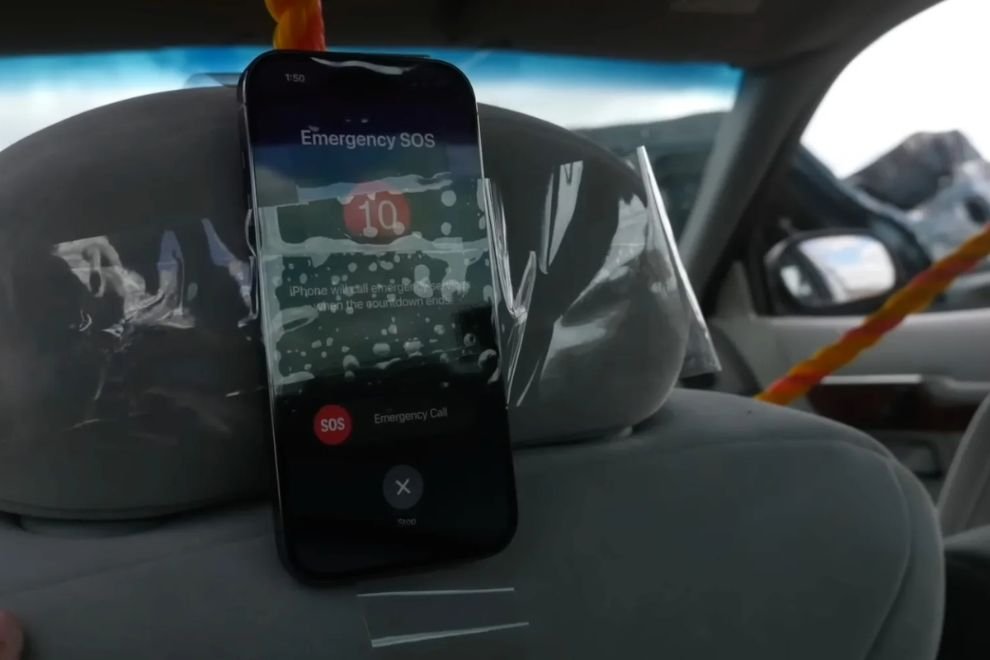
    The recently launched iPhone 14  by Apple comes with some new features. One of them is Crash Detection. The always-on feature will send alerts to safety authorities when it detects a hazard or mishap.

    When the phone detects an accident, it displays a warning that it is dialing 911 and provides a 20-second countdown to turn off the warning if it was generated in error.

    The Alert

    911 received an automated set message saying “The owner of this iPhone was in a severe car crash” with the location. The AI system even recorded background audio and because it was a roller coaster, it was filled with screams.

    When officials analyzed the location, they found nothing suspicious or alarming. The team was then approached by the owner of the iPhone 14 who realized this mess. She assured them that she is okay, and hilariously so, added that she didn’t visit the “bumping cars” yet for a car crash.

    From Apple

    Apple hasn’t officially made a statement about this at all. The crash detection capability should be simpler to enable or disable. Adding a shortcut toggle to the control center could be a solution.

    Now looking at this situation, there can be two interpretations-

    One is that the iPhone feature is unreliable as it is not able to detect actual accidents and can be fooled in such situations.

    Two is that the feature is sensitive enough to detect every disturbance and change. Users can trust this feature with detecting huge accidents and sending SOS alerts.

    So the choice is yours, how and what to choose!

  • “Optimus” The Humanoid Robot Enters In Style At Tesla’s AI Day

    “Optimus” The Humanoid Robot Enters In Style At Tesla’s AI Day

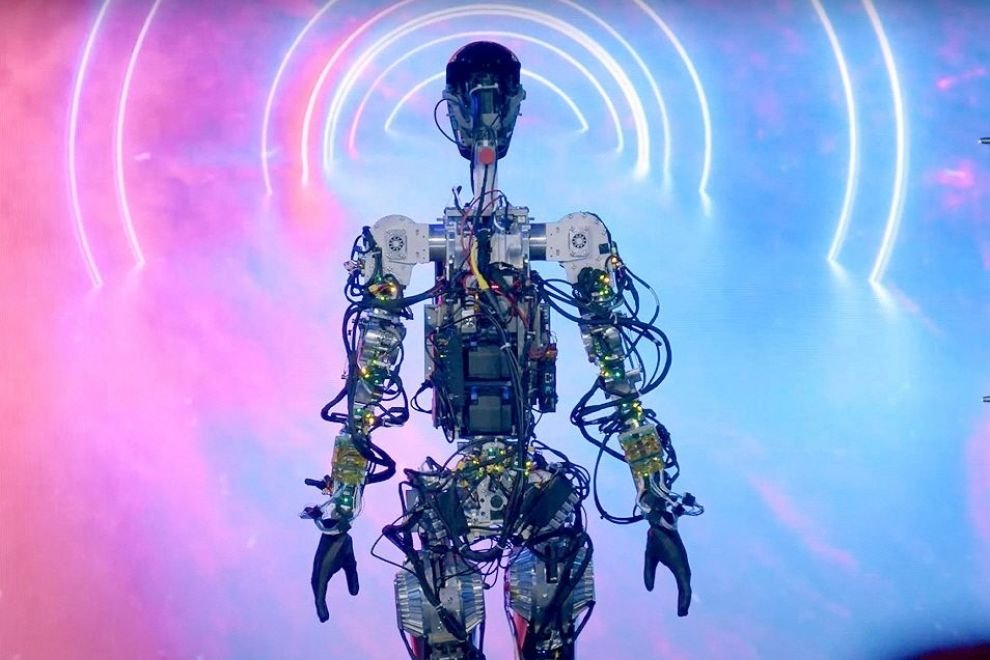
    Elon Musk is a name that showcases intelligence, brilliance, and innovation. Being the CEO of Tesla, he has achieved great heights- Twitter, humanoids, car models, and more. At Tesla’s AI Day, Elon Musk recently unveiled his much-awaited humanoid robot “Optimus.” 

    The humanoid robot entered the stage with the style of a movie star. Dancing around and owning the stage. The prototype entered the stage and waved to the spectators sitting in their seats. Further, the robot was seen in a video moving metal bars, carrying a box, and watering plants in the automaker’s factory.

    Our goal is to make a useful humanoid robot as quickly as possible,” Musk said. “There’s still a lot of work to be done to refine Optimus and prove it.”

    “Optimus” But, Prime?

    Musk claimed that current humanoid robots were “missing a brain,” lacking the capacity to independently navigate the world. They were also incredibly expensive and produced in small quantities.

    In contrast, he claimed, Optimus would be a “highly capable robot” that will be in production eventually in millions of units, on a higher level, and for less than $20,000, making it much less expensive than a car.

    “There’s so much about what people can do dexterously that’s very, very hard for robots. And that’s not going to change whether the robot is a robot arm or whether it’s in the shape of a humanoid,” Jonathan Hurst, Chief Technology Officer.

    Recent Developments

    Elon Musk will also provide updates on Tesla’s Dojo high-speed computer, which was announced last year and is going to be crucial to the company’s efforts to create self-driving technology, at the event on Friday.

    According to Musk, Tesla should accomplish fully autonomous driving this year and mass-produce a robotaxi without a steering wheel or pedal by 2024.

  • After the 9/11 Attack, How the US Strengthen Its Life-Saving Policies?

    After the 9/11 Attack, How the US Strengthen Its Life-Saving Policies?

    Terrorism did not begin on September 11, 2001, but that ill-fated day changed the world. The attacks on the United States, which killed nearly three thousand innocent people, demonstrated that terrorism had evolved into a global phenomenon capable of causing massive pain and destruction anywhere. Because of the magnitude of the attacks, no one could remain on the sidelines. Because the impact of terrorism was felt everywhere, the fight had become global.

    Terrorists mock the human values we share and strive to uphold. Peace, equality, tolerance, and dignity for all are universal values that transcend national boundaries. They are the adhesive that holds us together. We must unite as nations and peoples of the world to protect our common humanity.

    Aftermath of 9/11

    With 9/11 marking its 21-year mark this year, there is a chance to consider how the world and the United States have changed throughout this generation. Any assessment attempting to weigh the costs and benefits of US national security responses and approaches across four US administrations, however, will only provide a partial picture.

    The protective actions taken over the last 21 years have resulted in significant gains in domestic security—but these gains have come at a high human, financial, and strategic opportunity cost.

    The global anti-terrorism framework

    Long before that fateful September morning ten years ago, the United Nations was preoccupied with the issue of terrorism. For decades, the Organization has brought the international community together to condemn terrorist acts and to create an international legal framework that allows states to combat the threat collectively. Sixteen international treaties have been negotiated at the United Nations and related forums, addressing issues as diverse as plane hijacking, hostage taking, terrorism financing, explosives marking, and the threat of nuclear terrorism. 

    Shortly after the terrorist attacks of September 11, 2001, the Security Council took even more forceful action, recognizing that terrorism would continue to pose a serious threat to international peace and security in the new millennium. It passed a comprehensive resolution outlining the next steps in the fight against terrorism. This resolution calls on all UN Member States, individually and collectively, to deny terrorist haven and financial support, and to work together to bring them to justice.

    Following Security Council resolutions focused more on prevention, noting, for example, that extremists were using the Internet to recruit people and incite terrorist acts. The Council began to emphasize the importance of counter-terrorism measures that are consistent with states’ international legal obligations, including human rights law.

    A comprehensive anti-terrorism response

    Over the last decade, the United Nations has built on previous experience to assist states in adapting to an evolving threat that frequently involves new technologies. Although I believe we are on the right track, much more progress must be made at the national, regional, and international levels.

    Individual countries have made significant progress, but success is measured in relative terms, and significant disparities remain. While some countries can spend billions of dollars to combat terrorism, others struggle to implement even the most basic measures required to protect their borders and bring terrorists to justice.

    When a large proportion of a country’s population is impoverished, it is unsurprising that scarce resources are directed toward development rather than counter-terrorism. We recognize this and frequently propose approaches that protect the country’s economic and developmental interests while also enhancing its security.

    To be honest, preventing terrorist attacks is a challenge for everyone, even for countries with abundant resources and skilled personnel. Most nations’ implementation of the long list of measures envisioned by Security Council resolutions and the Global Strategy will be patchy at best.

    The current scenario in the USA

    Today, the United States is less vulnerable to foreign terrorist attacks at home, but it faces increased domestic terrorist threats. America’s global efforts to promote freedom and democratic governance have failed. Since 2005, global freedom has stagnated and deteriorated, and the significant stresses on America’s democratic system have increased dramatically.

    The strategic ledger that accounts for 21 years of work is decidedly mixed. There have been undeniable gains and signs of progress, but they have come at a high price and have frequently spawned new challenges. There are, however, lessons to be drawn as the United States considers a national security strategy for the next two decades

    Gains and indicators of progress

    Since the September 11, 2001 attacks, the United States has made significant progress in securing the country from terrorism. Nonetheless, work continues as the country’s terrorist threats have evolved over the last ten years and continue to change.

    Following 9/11, the federal government acted quickly to create a security framework to protect the country from large-scale attacks directed from abroad, while also strengthening federal, state, and local capabilities to prepare for, respond to, and recover from domestic threats and disasters.

    The United States is less vulnerable to threats from foreign terrorist networks

    The 9/11 attacks killed 2,977 people, the highest single death toll from a foreign attack on America. Since then, 107 Americans have died as a result of Salafi-jihadi terrorist attacks in the United States.

    Following 9/11, no other major foreign terrorist attacks occurred within the United States. This is the result of several lines of work.

    The United States established new agencies such as the Department of Homeland Security, the Directorate of National Intelligence, and the National Counterterrorism Center. It also significantly increased resources for intelligence and law enforcement agencies.

    Furthermore, to restore trust in air travel, the United States implemented new security procedures. It developed new military and intelligence capabilities that aided in the thwarting of numerous plots and the capture of terrorist operatives and leaders, most notably Osama Bin Laden in 2011.

    The United States significantly increased its capacity to track and disrupt terror finance networks, and it adapted its approaches to counter terror threats in the cyber realm, staying ahead of rapidly changing technologies. US military and intelligence agencies formed or strengthened counterterrorism partnerships around the world, allowing the US to accomplish more than it could on its own.

    These military, intelligence, and law enforcement efforts resulted in a significant improvement in domestic security. However, some of these initiatives had significant financial, moral, and strategic opportunity costs.

    America recognized the need to redefine national security

    After a few years of the initial US policy response to the 9/11 attacks, many political leaders, policymakers, and analysts began to recognize the limits of a military-centric approach, with many calling for prioritizing diplomacy, economic tools, and political and ideological engagement. This growing recognition resulted in modest reforms, but the main structures and resources devoted to so-called “hard” security remained in the spotlight. Attempts to incorporate “smart power” as a central concept in US national security have failed to produce the expected and desired results. Too often, the United States repeated past patterns of behavior by failing to effectively use foreign assistance and other related tools to achieve U.S. policy objectives

    Added to this, customs and immigration policies implemented in the aftermath of 9/11 have been mixed at best, and they require careful ongoing scrutiny. As the United States tightened restrictions and imposed new requirements on foreigners wishing to enter the country in the years following 9/11, discussions of immigration policy shifted significantly away from comprehensive reform. Some programs, such as the US-VISIT biometrics collection initiative, became part of a larger biometric entry-exist program, whereas others, such as the National Security Entry-Exit Registration System (NSEERS), was scaled back and then discontinued in response to criticism of their effectiveness and illiberalism. Other international customs inspection programs, such as the Container Security Initiative, have also been implemented at ports of entry worldwide, from Dubai to Shanghai.

    Conclusion

    America’s post-9/11 foreign policy yielded some significant successes, most notably the averting of a major foreign terrorist attack on the US. However, these more positive outcomes came at a high strategic, material, and human cost, including the emergence of several conflicts and foreign policy crises that will not be resolved anytime soon.
  • Instead of Gen Z vs Millennials, Is It Them Vs Distraction?

    Instead of Gen Z vs Millennials, Is It Them Vs Distraction?

    Oh, let’s read this article. Wait! This ad seems good. Oh! Has someone messaged me? Why does no one message me? Wait! Did that wall always have that black mark? I need to paint my walls. Maybe I should make a Pinterest mood board for my new room decor! What is this you ask? Just a visual representation of a distracted mind. Constantly driven to distractions, on its journey. 

    This seems to be increasingly happening in the minds of Gen Z and Millennials.

    Gen Z and Millennials. Terms every person who has the slightest access to the interwebs has heard or seen. But what are they? Are they rivals or long-lost siblings? Both in a way. A Millennial is anyone born between 1980 and 1995. A member of Gen Z is anyone born between 1996 and the early-mid 2000s. The main differences between the two are based on their content exposure, upbringing, and values. These little differences make up an entire culture respective to each generation with rules and ways of living of their own.

    Even though are 2 generations altogether, they share a fair bunch of similarities. One of them is- Attention Span. Statistically speaking, the normal attention span of a healthy teenager or adult is around 5-6 hours. But recent studies have something different to reveal. The average human has an attention span of just 8.25 seconds according to recent studies – 4.25 seconds less than in 2000. 

    The Cause And The Effect

    A very “parents” reply to this, but, these generations grew up with a smartphone, and it is estimated that 96% of Generation Z own a smartphone. The importance of cell phones in Gen Z’s lives is seen in how they feel about owning one. Owning a smartphone is having the whole world at the tip of your fingers. You can hop onto any train of thought and your phone will have an answer for it. 

    With smartphones, comes the smart lifestyle that Social Media fuels. Fear Of Missing Out (FOMO) culture later plays its role in constantly bugging minds into thinking they are missing out on something.

    According to a survey, 82% of Gen Zs and Millennials indicated that social media had hindered their ability to focus on their academic work. Additionally, it was discovered that only 56% of men but 3 in 4 female respondents agreed that social media had influenced them to compare themselves to others.

    One of the common causes of such distraction is overexposure. When there is one plate in front of you with one type of biscuit, you will eat it readily. But when there are 28 plates with 369 biscuit options, the human brain starts to wander. Similarly, while living their lives, Gen Zs and Millennials. are exposed to multiple sources of entertainment, education, and pass time. This results in them being caught up with where they wish to go for 4 of the 5 options they have.

    The Do-It-All Culture

    This could be blamed on the upbringing of Millenials or Gen Z, but the way people look at work today is different and borderline unhealthy. Gen Z and Millennials spent their years being pressured through academics into careers that they have to be good at everything. No excuse, No concessions. 

    This upbringing probably has imprinted itself on their brains resulting in the Do-It-All culture. Under this, one tries to do everything at once, in an attempt to feel productive. And end up doing neither of the tasks perfectly. Through the millennial years, they never learn to give adequate attention. Task 1 is at hand, but the mind is already planning the footsteps of task 34. 

    The Do-It-Later Culture

    Totally in contrast to the above, a result of overexposure to resources. The Do-It-later Culture is when it is well-known that a task is pending. But having access to so many resources and aids, the mind lets itself relax. Thinking “I will do it. Promise. Just. After watching this”. Because there is bottom-line confidence that even if distracted and procrastinating, the work will be completed now or later. 

    Studying Behavior

    According to recent data from Omnicom Media Group and Snap Inc,  covid-19 increased video use across applications, including social media (61%) and streaming, both within the platforms themselves (56%) and within streaming apps on phones (52%). Users watch videos of some kind more than half the time they are using applications like Facebook, Snapchat, and Instagram, which do not focus on videos.

    Unsurprisingly, both groups boosted their overall video consumption on smartphones, with Millennials watching 51% more and Gen Z 67% more.

    Looking at these numbers and facts, one thing is clear- the next generation the world will get to see will be completely unique. In terms of their work culture, values, practices, and so on. We might witness that in the coming years, the world is completely changed in terms of its functioning and lifestyle. Gen Z and Millenials may not win the battle among themselves, but will definitely win one by developing a new culture.

  • China Distributes Wristbands To Promote Road Safety

    China Distributes Wristbands To Promote Road Safety

    The lives of almost 1.3 million people are cut short annually as a result of traffic accidents. There are an additional 20 to 50 million people who undergo non-fatal injuries, many of whom proceed to develop disabilities. Now there can be two broad causes for road accidents – bad roads or bad drivers. Road safety rules and signs exist everywhere. So where are we lagging?

    Intending to promote healthier public transport and road safety, Beijing has worked out an innovative way. To improve transport safety management, the Chinese government used digital technology and distributed wristbands among 1800 drivers. These wristbands come with sensors that can detect vital signs of distress or poor health. 

    How Does It Work?

    The wristbands are an initiative by the state-run Beijing Public Transport Holding group. According to reports, these wristbands can track a user’s physiological parameters, including heart rate and blood oxygen level, as well as their sleep patterns and mental state broadly. 

    “Providing a tracking bracelet is a way of applying technology to strengthen the management of the physical and mental health of drivers,”  said Beijing Public Transport

    The bands have been tested before on over 40,000 drivers. The bands were able to recognize several “psychological patterns.” 

    The Beijing Public Transport also is working towards establishing roughly 5000 sets of rules and patterns of “abnormal behavior” for the wristbands to look for. These patterns will help manage the physical and mental health of the drivers- especially those who drive on highways. 

    A Hit of Criticism

    The newly introduced bands faced a bit of criticism with claims like an invasion of privacy, but the makers cleared that the data recorded by the wrist is limited to just physical and mental vitals. 

    More Perks

    This year, the company wants to equip some of its vehicles with technical protection systems, including 2,000 safety warning systems and 5,000 recognition systems to track unusual driving behavior.

  • UK May Impose a £27 Million Fine On TikTok For Children Privacy Breach

    UK May Impose a £27 Million Fine On TikTok For Children Privacy Breach

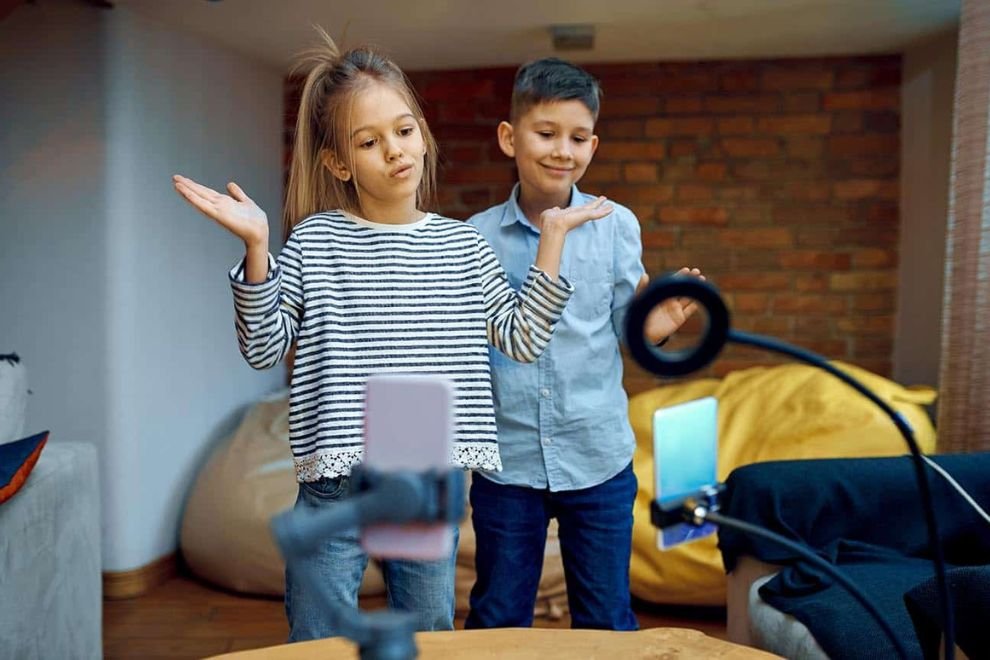
    Tiktok is one of the most popular video-posting apps right now. The app is widely used both privately and professionally, by celebrities, companies, to teenagers. The app has 1 billion users worldwide. Of those, around 62% of its users are between 10 and 29.

    But are the young users and the constant content being posted on the app safe?

    The UK’s Information Commissioner’s Office (ICO) claims the video-sharing platform has inappropriately processed the data of those under-13s without consent. The breach is said to have been processed for more than two years from May 2018 until July 2020. 

    TikTok Inc. and Information Technologies UK Limited have received a “notice of intent” from the ICO, a legal document that comes before a potential penalty.

    Information Commissioner John Edwards said:

    “We all want children to be able to learn and experience the digital world, but with proper data privacy protections. Companies providing digital services have a legal duty to put those protections in place, but our provisional view is that TikTok fell short of meeting that requirement.”

    According to ICO’s investigation, the platform was found to have-

    • processed the data of children under the age of 13 without appropriate parental consent
    • failed to provide proper information to its users in a concise, transparent, and easily understood way
    • processed special category data, without legal grounds to do so

    TikTok and Privacy

    TikTok has implemented a range of measures to improve user privacy and security, such as letting parents link their accounts to their kids and banning direct messaging for users under the age of 16.

    Recent privacy policy updates revealed that the app might collect biometric information “including faceprints and voiceprints.” While this is already quite scary and concerning, the app said the data is collected for them to enable special video effects, content moderation, and ad recommendations. 

  • Space Telescopes Hubble And James Webb Releases Images of DART Asteroid Strike

    Space Telescopes Hubble And James Webb Releases Images of DART Asteroid Strike

    The James Webb and Hubble telescopes on Thursday revealed their initial images of a spacecraft deliberately crashing into an asteroid, marking the first time the two most powerful space telescopes have observed the same celestial object.

    Telescopes around the world turned their gaze towards the space rock Dimorphos earlier this week for a historic test of Earth’s ability to defend itself against a potential future life-threatening asteroid.

    On Monday night, 11 million kilometers (6.8 million miles) from Earth, NASA’s Double Asteroid Redirection Test (DART) impactor slammed into its pyramid-shaped target to the joy of astronomers.

    Following the impact, a massive cloud of dust was seen expanding out of Dimorphos and its larger brother Didymos, which it orbits, in images captured by telescopes positioned on Earth.

    While those images showed matter spraying out over thousands of kilometers, the James Webb and Hubble images “zoom in much closer”, said Alan Fitzsimmons, an astronomer at Queen’s University Belfast involved in observations with the ATLAS project.

    Terrifying Yet Beautiful Visuals From Space

    James Webb’s images were shown in red because the telescope operates primarily in the infrared spectrum, which allows it to peer further into the universe than ever before.

    The images from Hubble’s Wide Field Camera 3 were blue because it shows the impact on visible light.

    Hubble images from 22 minutes, 5 hours, and 8.2 hours after impact show the expanding spray of matter from where DART hit on the asteroid’s left.

    The accurate measure of DART’s success will be exactly how much it diverted the asteroid’s trajectory, so the world can start preparing to defend itself against more giant asteroids that could head our way in the future.

    “The problem we have at the moment is that there’s still a lot of dust and debris around the asteroids… How quickly astronomers can make that measurement will depend on exactly how efficient DART was,” said Fitzsimmons 

  • Dogs Can Sniff Out Stress From Their Owners’ Breath and Sweat

    Dogs Can Sniff Out Stress From Their Owners’ Breath and Sweat

    Dogs are known stress relievers. After a long hard day, spending some time with your little dog proves to make one feel a lot better and light. It was recently discovered that dogs can smell stress in our breath and sweat.

    Can these furry creatures get any better?

    The Study

    Acute stress alters the chemical composition of human breath and sweat. In the latest study, researchers took samples of human participants’ sweat and breath taken before and after they completed a challenging mathematical task.

    36 human volunteers were given a task to count from 9000 backward out loud in units of 17, for three minutes. They took samples from the volunteers before and after solving the task and presented to the Dogs. According to the study published in the scientific article PLOS One, the dogs were able to recognize the before and after samples with 90% accuracy.

    “While it is likely that in a real-life context dogs are picking up on our stress from a variety of context cues, we have shown using a laboratory study that there is a confirmed odor component that is likely contributing to dogs’ ability to sense when we feel stressed,”  said Animal Psychologist, Clara Wilson.

    The dogs trained with a clicker-and-kibble method to indicate the sample in which they can sniff out stress. The study shows how strong of a sense of smell dogs possess and the way human bodies alter themselves in various situations.

    Such studies prove how and why dogs are preferred for emotional support and therapy as they truly understand and detect human emotions better than any other animal. A dog can not only understand your psychological state through your behavior but also can provide companionship and relief.

  • Nothing To Hide But Everything to Fear: Teenagers Towards Digital Freedom

    Nothing To Hide But Everything to Fear: Teenagers Towards Digital Freedom

    When it comes to the dangers of social media, cyberbullying and sexual predators get the most attention. However, digital freedom has many more subtle or hidden dangers that are influencing a whole generation of teenagers as they grow into young adults.

    With 89% of teenagers owning a smartphone and 70% using social media multiple times daily, these digital threats affect celebrities. Indeed, 38% of young people reported that social media has a negative impact on their self-esteem.

    The Advantages Of Social Media

    Teens can use social media to create online identities, communicate with others, and build social networks. These networks can provide valuable support to teens, particularly those who are excluded or have disabilities or chronic illnesses.

    Teens use social media for entertainment as well as self-expression. Furthermore, the platforms can expose teenagers to current events, allow them to interact across geographic boundaries, and teach them about a variety of topics, including healthy behaviors. Teens may benefit from social media that is amusing or distracting, or that provides a meaningful connection to peers and a large social network.

    Why Should You Be Concerned? Contextualizing Digital Freedom To Youth

    Did you know that over 210 million people worldwide are addicted to social media and the internet? While you may wish to blame your adolescent for lacking self-control, it’s essential to understand what they’re up against. Thousands of Ph.D.-level researchers are working on social media platforms to determine what level of digital freedom is appropriate for the youth. The platform earns more money the more time your teen spends on social media.

    Digital Freedom, Digital anxiety

    Social Media’s Immediate Dangers

    Here are some of the potential risks that your teen may face while using various social media channels:

    1. Inappropriate, upsetting, or adult-themed content exposure

    Of course, you don’t want your adolescent exposed to adult-themed or pornographic content. The danger of social media is that this material can be sent to your child by strangers or trusted sources. Even if your child’s social networking sites are restricted to known friends or their profiles are set to private, they may still be at risk.

    2. Teenagers with dubious judgment

    In teenagers, the prefrontal cortex (the part of the brain responsible for good judgment) is still not fully developed. Poor judgment combined with easy access to a global audience can lead to some terrifying scenarios

    3. Oversharing in inappropriate and dangerous ways

    Even being emotionally vulnerable with the wrong person can have disastrous consequences for someone who suffers from low self-esteem or depression. We lose control of the information we share on the internet.

    4. Cyberbullying

    59% of US teens have been bullied or harassed online, with Instagram being the most popular platform for bullying. In addition, one in every five young people has skipped school due to cyberbullying. Cyberbullying has been linked to teen depression and can even lead to increased vulnerability and depression later in life.

    5. Constantly comparing their relationships to all the “ideal” relationships

    Teens seeing online can lead to a distorted understanding of what relationships are supposed to be like. Relationships are messy, complicated, and often boring.

    Social media can be beneficial. It allows your teen to stay in touch with friends while boosting self-esteem if used correctly. However, there are risks associated with social media. A certain level of digital freedom must be observed, which you should discuss with your child. Make sure that social media is a tool that your family uses, not one that your family uses.