Author: info@fortunescrown

  • International Day of Awareness on Food Loss and Waste Reduction

    International Day of Awareness on Food Loss and Waste Reduction

    “Take action, start something. Stop food loss and waste. For the people. For the planet.”

    On September 29, 2022, the International Day of Food Loss and Waste (IDAFLW) will be observed for the third time. The IDAFLW will issue a clear call to action for public and private entities from across the food system, as well as consumers, to collaborate to reduce food loss and waste (FLW) and support food security and nutrition.

    Stop Wasting Food! For both people and the environment!

    In many countries, the food supply chain is on track to surpass farming and land use as the largest contributor to greenhouse gas emissions (GHGs). Food processing and packaging, as well as transportation and food waste, are pushing the food supply chain to the top of the list of global GHG emitters. Global solutions in food processing, such as cleaner technologies and sustainable manufacturing practices, are being adopted to mitigate these environmental impacts.

    Globally, approximately 14% of food produced is lost between harvest and retail, with an estimated 17% of total global food production wasted (11 percent in households, 5 percent in the food service, and 2 percent in retail).

    The International Day of Food Loss and Waste is an opportunity to mobilize both the public (national or local governments) and private sector (businesses and individuals) to prioritize actions and move forward with innovation to reduce food loss and waste to restore and rebuild better and more resilient food systems.

    The 2030 Agenda for Sustainable Development, specifically SDG 12, Target 12.3, calls for halving global food waste per capita at the retail and consumer levels, as well as reducing food losses along the production and supply chains.

    Why is it critical to reduce food waste and loss?

    Food waste and loss jeopardize the sustainability of our food systems. When food is lost or wasted, all of the resources used to produce it, including water, land, energy, labor, and capital, are wasted. Furthermore, the disposal of food waste and loss in landfills produces greenhouse gas emissions, which contribute to climate change. Food loss and waste can also hurt food security and availability, as well as contribute to rising food prices.

    Our food systems cannot be resilient unless they are sustainable, which is why we must prioritize the adoption of integrated approaches to reduce food loss and waste.

    Global and local actions are required to maximize the use of the food we produce. Technology, innovative solutions (such as e-commerce platforms for marketing and retractable mobile food processing systems), new ways of working, and good practices to manage food quality and reduce food loss and waste are critical to implementing this transformative change.

    With only eight years left to achieve SDG 12 targets 1, 2, and 3, there is an urgent need to accelerate action to reduce food loss and waste.

  • Suicide Prevention Awareness Month: Reaching Out to Those In Need

    Suicide Prevention Awareness Month: Reaching Out to Those In Need

    Suicide is the 10th leading cause of death. An estimated 703,000 people lose their lives due to suicide. September is “Suicide Prevention Awareness Month.” Directly connected with someone’s mental health and condition, this cause of death even though is leading, is somehow taboo to be discussed and processed. 

    Every suicidal death is a public health issue that has a significant effect on the people in the community. We can lower the number of suicides worldwide by increasing knowledge, removing the stigma associated with it, and promoting informed action.

    As members of society, as children, as parents, as friends, as coworkers, or just as human beings, we can all contribute to helping those who are in a suicidal crisis or who have lost a loved one to suicide. We can all spread awareness of the problem, help those who are in need, and share our personal experiences. Through our actions, we may all spread hope and shine a light.

    Resources and Ways to Help

    The theme for this year is “Creating hope through action.” The slogan supports and encourages the creation of an environment of hope and positivity not just by words, but by actions. Not just by posting uplifting quotes online, but also to check up on our near and dear. To make sure they are doing fine and if they need help. 

    WHO has a unique “LIVE LIFE” approach for suicide prevention. There are four strategies- 

    • Restricting easy availability of hazardous substances which can act as means of suicide
    • Educating media about reporting suicide.
    • Educating the public about recognizing and correct ways of helping individuals.
    • Early identification of suspicious or concerning behavior, handling and approach to said behavior, and usage of resources and helplines to further prevent the issue. 

    If you or someone you know have been having a hard time in life, it is important to know that you are not alone and are loved. Asking for help is always the best option.

  • Metaverse: The Future of Business and Interactions

    Metaverse: The Future of Business and Interactions

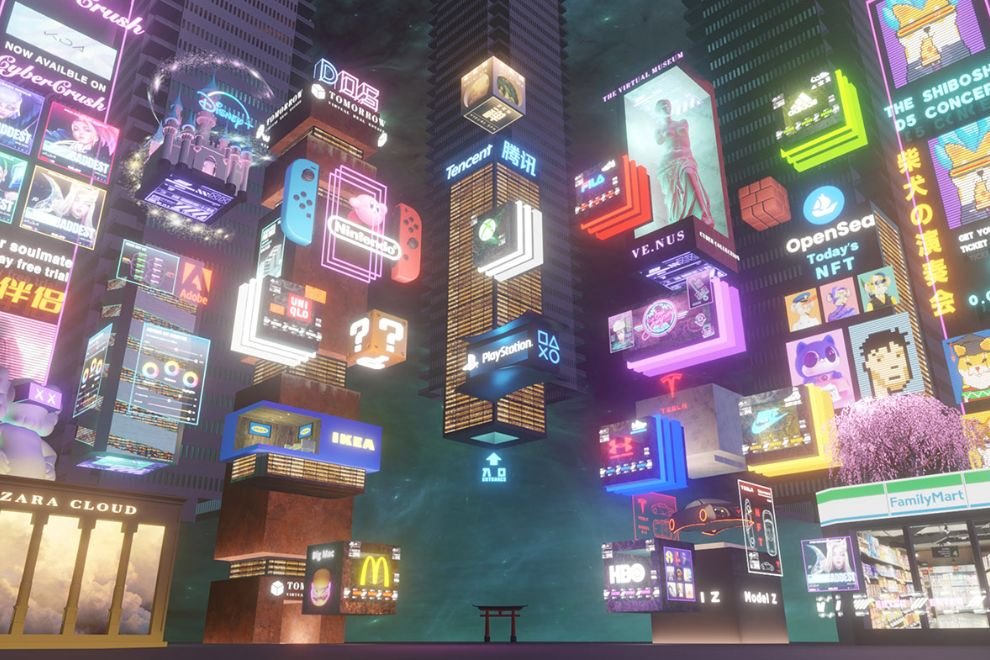
    The Metaverse is the next step for gaming. A world where once you put on the metaverse VR, you can interact, socialize, fight, and basically live out your life in this alternate artificial universe. 59% of U.S adults expect metaverse to have a greater impact on our lives and the world in general in another year or two. Through a recent study by KPMG, it was found that the metaverse is not limited to just gaming as we all thought. 

     “With each interaction, people are becoming more accustomed to engaging in everyday activities in the metaverse. From banking and telemedicine to learning and working, the medium we use to communicate and interact is perpetually shifting towards virtual,”  said Cliff Justice, U.S Leader of KPMG

    Deeper Impact Than Expected

    Metaverse is on its way to completely transforming the way that consumers and businesses interact, conduct business, socialize, and work. 92% of respondents who use the metaverse think it improves learning opportunities, such as job training, schooling, and further education, while 86% say it offers chances for entrepreneurship, such as marketing and selling.

    Metaverse has further potential to make interactions possible from long distances while giving the feeling of an actual face-to-face discussion. Beyond socialization, telemedicine (72%), virtual shopping apps (67%), virtual work (65%), and starting a business (51%) rank the highest. 

    Read More: How NFTs Will Transform Data Ownership in the Metaverse?

    Current Utilization of Metaverse

    • The majority of current metaverse users are happy with their virtual adventures. The top experiences among people who have engaged with the metaverse are beginning a business (91%), playing cooperative online games and simulations (91%), and engaging in brand-created immersive virtual experiences (87%).
    • Users also report that the metaverse has reached outside the world of gaming and is actively been used in formal and informal settings including virtual meetings with family and friends (73%), telemedicine (72%), virtual shopping apps (67%), virtual work (65%) and starting a business (51%).

    Metaverse and its latest developments no longer leave it as an “augmented reality”, but a new opportunity for the world to adapt to.

  • Know How UEF’s Mini-Grids Are Revolutionizing Electricity Supply

    Know How UEF’s Mini-Grids Are Revolutionizing Electricity Supply

    There are still regions and areas that don’t have adequate or no supply of everyday life essentials like water, electricity, or connectivity. Multiple companies are working towards these areas getting certain life necessities. Managed by Sustainable Energy For All (SEforALL), the Universal Energy Facility (UEF) is a financing facility. The facility recently established its first set of electricity connections in Madagascar. With their first grant, 542 connections are currently in Madagascar with mini-grid developers. 

    What are Mini-Grids?

    A mini-grid, also sometimes referred to as a “microgrid or isolated grid,” can be defined as a set of electricity generators and possibly energy storage systems interconnected to a distribution network that supplies electricity to a localized group of customers. They involve small-scale electricity generation (10 kW to 10MW) which serves a limited number of consumers via a distribution grid that can operate in isolation from national electricity transmission networks.

    A mini-grid may be built to run independently in a distant area with the option of connecting to the main grid when grid extension takes place.

    About the Universal Energy Facility

    The facility was launched in October 2020. UEF is a multi-donor facility working towards processing and providing grants to competent organizations. The company later verifies the work by the organizations and provides incentives based on their results. 

    The first set of mini-grids in Benin, Madagascar, and Sierra Leone will result in around 2170 people having access to electricity. In addition, this will also give a push to their community services and businesses. With more than USD 8 million spent, the facility expects this technology to touch more lives.

    “We are thankful for this grant that will be instrumental in bringing productive electricity to villagers and trigger economic growth and positive social impacts in eight new villages across Madagascar,” said Romain de Villeneuve, CEO, WeLight Africa.

    The Areas Where UEF Works 

    Communities of Ambovonomby, Mangindrano, Marovato, Ambohitoaka, Anjozoromadosy, Ambodisaina, Andohajango, and Marotandrano in Madagascar today have access to electricity for the first time which is also affordable to them. They can now use this new development to start new ventures and enhance the existing ones. 

    Electricity alone cannot create all the conditions for economic growth. Still, it is an essential element to meet the needs of the population of Ampasimatera to facilitate the development of economic activities in the commune,” said Thyerry Rozenaly, Mayor of Ampasimatera.

    A new facility was recently launched which is expected to reach approximately 14000 more people in remote areas that need support. In the community of Ampasimatera, a new set of mini-grids is under construction for the locals to have new economic opportunities.

  • Boron To Generate Clean Fuels, A Roadmap to Cleaner Future

    Boron To Generate Clean Fuels, A Roadmap to Cleaner Future

    When we talk about the betterment of the planet and reduction of Global Warming, Clean Energy and ways to produce it are always in the conversation. Energy can neither be created nor destroyed. It transforms from one form to another. We need more ways to make this transformation cleaner and healthier for the environment. Clean Energy fuels and energy sources are necessary for this world to be sustainable. 

    Clean energy is any renewable energy source, and there is no doubt that renewable energy is crucial for the future of our planet. Not only does it help to protect our environment from further damage, but it also provides a more sustainable and affordable source of energy. Solar, wind, hydro, and geothermal power are all forms of clean energy.

    What Renewable Energy Sources to Utilize?

    Various green energy companies have been researching cleaner and renewable energy sources. Boron, for instance, is a crucial ingredient in batteries and other storage technologies that will be essential to integrating renewables into the picture. 

    Boron is a trace mineral in the environment. In the nuclear industry, boron is used as a neutron absorber to regulate nuclear reactions. Silicon wafers doped with boron are used in solar panels to convert sunlight into electrical energy. Composites based on boron are used to create lightweight, more efficient wind turbine blades.

    According to the latest invocation of the Defense Production Act in March 2022, the government wants to encourage the mining and preparation of minerals and materials used in high-capacity batteries, such as boron, lithium, graphite, cobalt, and manganese.

    What will Boron Extraction do?

    FEAM is looking into the possibility of extracting lithium from the integrated boron effluent stream at Fort Cady. The Fort Cady Mineral Resource Estimate’s 214k tonnes of lithium carbonate equivalent may be greatly increased with further development. For the purpose of creating LiBor salts for lithium-ion batteries, lithium can be used in boron-specific applications.

    FEAM will look at how to extract the lithium that is remained in the process water after the boric acid has been extracted. The main focus is on boron niche uses, even though this may offer up a new path for ecologically friendly battery production.

    Future of Clean Energy Stocks

    Looking to the future, it is evident that these energy sources will become more crucial in supplying the world’s energy requirements. Within the next few decades, clean energy sources are expected to overtake other sources of electricity capacity as installation rates continue to rise. The economy and ecology will benefit from this as nations switch from dirty fossil fuels to cleaner, more sustainable energy sources.

  • California Bans Sales of Gasoline Cars, Road to Zero-Emission

    California Bans Sales of Gasoline Cars, Road to Zero-Emission

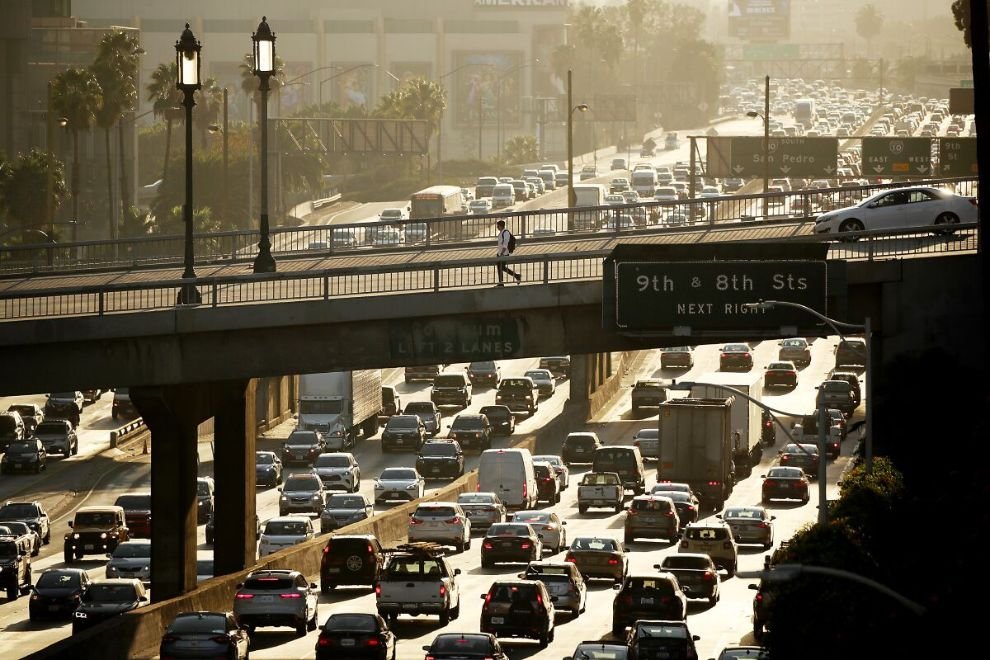
    The strict regulations, which will prohibit the sale of new gasoline vehicles by 2035 and set intermediate goals to phase them out, were approved by California’s air regulators on August 25, 2022.

    Implementation issues with the regulation

    The law would be one of the first of its kind globally and is significant for the US. Given the size of California’s economy and the likelihood that other states may enact regulations along similar lines, it has significant consequences for the US automobile market.

    Daniel Sperling, a member of the California Air Resources Board, told Cable News Network Inc that “this is enormous.” The most significant action CARB has taken in the past 30 years is this. Not only is it significant for California, but also for the rest of the nation and the entire globe.

    Guidelines for the upcoming stage

    In addition, interim quotas for zero-emission cars, with a concentration on new models, would be imposed under the board’s new regulations. 35% of new cars, SUVs, and compact trucks sold in California starting in 2026 must be zero-emission vehicles. It is anticipated that this quota will rise each year, reaching 51% of all new car sales in 2028, 68% in 2030, and 100% in 2035. The rules would also let plug-in hybrids make up 20% of sales of zero-emission vehicles.

    Used gasoline cars might continue to be driven on the roads because the restrictions wouldn’t affect them. According to Sperling, the regulations won’t take effect right away but rather in 2026.

    Adoption of the regulations

    It is anticipated that many states would do the same. Already 15 states have adopted California’s earlier zero-emission car laws, including Colorado, Minnesota, and states on the Northeast and West Coasts.

    According to Alex Stack, a spokeswoman for California Governor Gavin Newsom, California doesn’t have a precise tally of how many of those states will embrace the 2035 ban on the sale of new gas vehicles, but it expects the “majority of the states to follow.” While New Jersey and Maryland authorities said they were examining California’s decision, officials from New York, Oregon, Washington state, and Rhode Island confirmed to Cable News Network Inc that they planned to implement California’s regulation through their own rule-making process. A similar idea in Washington state will be open for public feedback beginning September 7.

    Washington Gov. Jay Inslee said in a statement to Cable News Network Inc that Washington is ready to implement these same standards by the end of the year because “this is an important milestone in our climate battle.”  Further, they look forward to working with other states and the Biden Administration to significantly cut the nation’s main source of greenhouse gas emissions.

    Basil Seggos, the commissioner of the New York State Department of Environmental Conservation, said in a statement to Cable News Network Inc that California’s decision on August 25, “unlocks New York’s authority to enact the same legislation.”

    Sperling; a member of the California Air Resources Board

    Sperling claimed that the US car sector may change if the majority of these states follow California’s example. This is a sizable portion of the US market. A large portion of the country will be moving forward even if the feds don’t move on a regulatory viewpoint.” 

    There was “very little dispute” and criticism from automakers throughout the rule-drafting process, indicating that the industry as a whole is supporting the transition to zero-emission vehicles. Ford and GM are two businesses that have already made ambitious plans to transition to zero-emission vehicles, trucks, and SUVs.

    The car industry observes what’s occurring in China and Europe. Many of them have already announced that they would switch entirely to electric vehicles.

    The decision is the result of years of preparation

    Governor Gavin Newsom issued an executive order in 2020 requiring all vehicles sold in the state to be zero-emission by 2035.

    Eleni Kounalakis, the lieutenant governor of California, said to Cable News Network Inc’S Kate Bolduan that the goal of the new criteria is to “establish the route to get there.” Gasoline cars are serving as the obstruction. 

    The Biden administration gave California a lift as well by restoring the state’s long-standing authority to set its own auto pollution rules earlier this year.

  • New York Times Article Shows Existence of Giants. History or Hoax?

    New York Times Article Shows Existence of Giants. History or Hoax?

    Aliens in the background of ancient cave paintings. Atlantis at the bottom of the ocean. Area 51 has mutants. And there are many such theories that make people lift their eyebrows. Some people say they are all fake or just made-up things, but for something to be made up there has to be some base to it. Every crazy conspiracy theory you hear is not always delusional; some might genuinely have ties with our past present and perhaps our future.

    One more such theory is that Giants once roamed the earth. They were beings like us, habituating the Earth, but way larger and heavier than we could ever be. These giants have been mentioned in our legends, myths, and stories throughout human history.

    “But there must be real-life proof of these theories for us to believe them right!!” Well, what if there is?

    Giants Roaming Around on Earth?

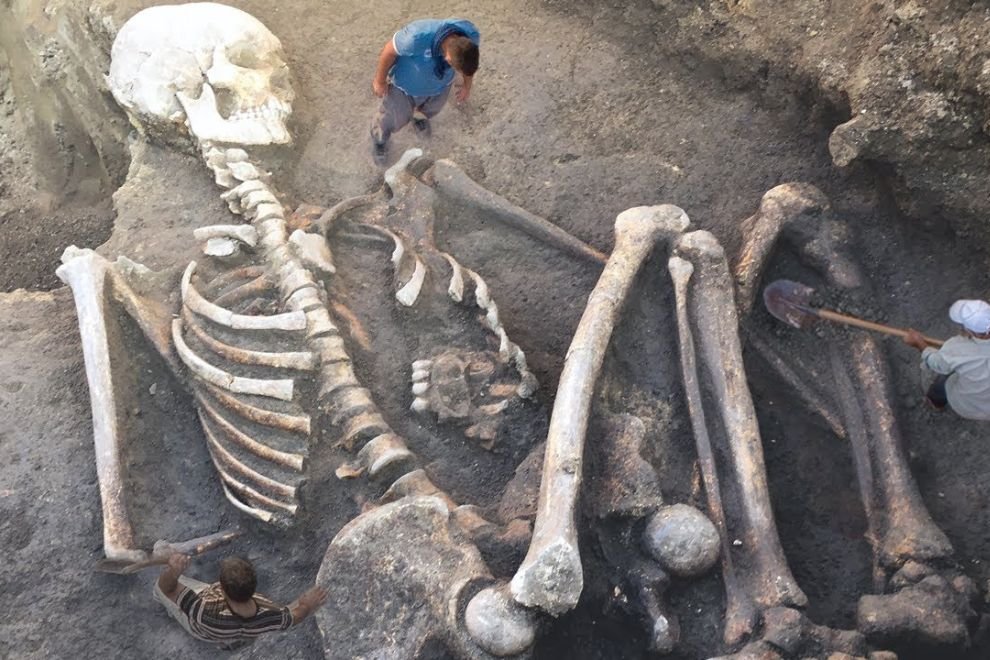
    There is a New York Times Article dating back to 1902 where there are mentions of “an enormous skeleton”. The said article states that the crew unearthed this skeleton ranging in size from 7 to 9 feet tall. Some of them were “compressed or flat head type” with skeletal traits.

    The article goes on to say the unearthed skeletons “could not have been less than 12 feet in length ”The reporter said, “the men who opened the grave say that the forearm was 4 feet long and that in a well-preserved jaw the lower teeth ranged from the size of a hickory nut to that of the largest walnut in size.” 

    The corpse’s chest appeared to be seven feet in diameter. According to the account, the bones were found on Luciana Quintana’s property “Quintana, who has uncovered many other burial places, expresses the opinion that perhaps thousands of skeletons of a race of giants long extinct will be found. This supposition is based on the traditions handed down from the early Spanish invasion that have detailed knowledge of the existence of a race of giants that inhabited the plains of what now is Eastern New Mexico. Indian legends and carvings also in the same section indicate the existence of such a race.”

    What Do Such Discoveries Prove?

    Such theories and discoveries may sound crazy at first, but they also tell us that what we do know about our history as humans on this planet is still really little. There are several more stones to be unturned from the civilizations that existed before us.

    And we certainly have no clue about what this planet is and what beings lived on it if we go past our recorded history. 

  • The Wait Is Finally Over! Apple Unveils iPhone 14 Series

    The Wait Is Finally Over! Apple Unveils iPhone 14 Series

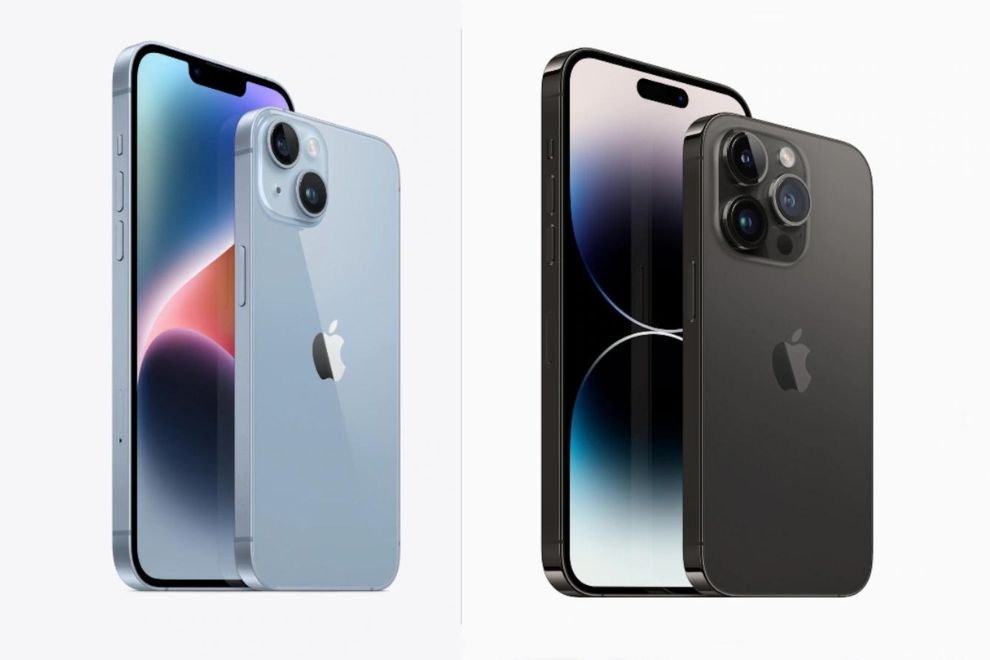
    At its Far Out Event in Cupertino, Apple unveiled four new iPhones: the iPhone 14, iPhone 14 Plus, iPhone 14 Pro, and iPhone 14 Pro Max. While the iPhone 14 (with 6.1-inch display) and iPhone 14 Plus (6.7-inch display) will be the most popular affordable iPhone options, the real deal is in the new iPhone 14 Pro series.

    Detailings of the New iPhones

    The iPhone14 and iPhone 14 Plus are Apple’s new “affordable” iPhones, with prices beginning at $799, and are available alongside the more expensive iPhone 14 Pro and iPhone 14 Pro Max.

    If you look at the iPhone14 and iPhone 14 Plus, you’ll notice that they both have the same A15 Bionic chipset as the iPhone 13 series. The design is also identical. Better cameras with larger sensors, as well as a new 12MP selfie camera with autofocus, are among the enhancements. Not to mention that these phones lack ProMotion, but there is a new Emergency SOS feature via satellite. By pointing your iPhone 14 at a satellite orbiting the Earth, you can send SMS messages without cellular reception. Of course, the SMS UI will point you in the right direction to get satellite reception. In addition, it is only free for the first two years in the United States and Canada. It should be noted that the new iPhones support 5G connectivity.

    The iPhone 14 is available in blue, purple, midnight, starlight, and (PRODUCT)RED colors. Unlike the iPhone 14 Pro models, the affordable iPhone models i.e., 14 and 14 Plus retain the front-facing notch that houses the TrueDepth camera. The iPhone 14 and iPhone 14 Plus, like the iPhone 13 models, features Super Retina XDR OLED displays with 1200 nits peak brightness, a 2,000,000:1 contrast ratio, Dolby Vision, and True Tone support for matching the display’s white balance to the lighting in the room. The standard iPhone 14 models do not have ProMotion display technology, which is only available in the Pro models.

    The New iPhone Lineup

    Apple’s new ‌iPhone‌ lineup is as follows, with starting storage capacities:

    • iPhone SE – $429 (64GB)
    • iPhone 12 – $599 (64GB)
    • ‌iPhone 13‌ mini – $599 (128GB)
    • ‌iPhone 13‌ – $699 (128GB)
    • ‌iPhone 14‌ – $799 (128GB)
    • ‌iPhone 14‌ Plus – $899 (128GB)
    • ‌iPhone 14 Pro‌ – $999
    • ‌iPhone 14 Pro‌ Max – $1099

    The ‌iPhone SE‌ continues to be the cheapest ‌iPhone‌ that’s available at $429, and the ‌iPhone 12‌ is now $100 cheaper at $599.

  • International Literacy Day 2022: Transforming Learning Spaces

    International Literacy Day 2022: Transforming Learning Spaces

    “Literacy is the jump-off point from which all of life’s successes take flight.” Literacy is the vehicle that will take us to a world sustainable, healthy, and prosperous in more ways than one. Education or Literacy isn’t a luxury or a choice, but a right and a responsibility. A right every individual has and should have access to. International Literacy Day falls on September 8 of every year intending to promote awareness and resources so that education reaches each corner of the world.

    The theme for International Literacy Day 2022 will focus on “Transforming Literacy Learning Spaces”. The theme allows everyone to rethink the fundamental importance of literacy learning spaces to build resilience and ensure quality, equitable and inclusive education for all.

    Why is International Literacy Day Celebrated?

    The world observes International Literacy Day on the 8th of September every year to encourage literacy and educate people about their rights to social and personal development. To eliminate poverty, reduce child mortality, manage population growth, and achieve gender equality, literacy is a crucial instrument. This day is observed to motivate people to pursue ongoing education. UNESCO has been at the top of the list regarding promoting global literacy in general and International Literacy Day.

    According to statistics from UNESCO, at least 773 million adults worldwide lack basic literary skills. When education rights and literacy are discussed, people often are more focused on children. While children’s education is important for us, Adult education is equally as important. Adults who in their growing years couldn’t have access to literacy, today are unable to earn their living due to a lack of skills.

    Literacy and Education reaching such individuals helps reduce unemployment and motivates them to be contributing members of society.

    History

    On 26th October 1966, UNESCO declared 8th September as International Literacy Day after the World Conference of Ministers of Education on eradicating illiteracy in Tehran in 1965. The main focus of observing this day is to combat illiteracy and to empower individuals who wish to have access to education.

    Literacy is one of the critical components of UN’s Sustainable Development Goals and UN’s 2030 Agenda for Sustainable Development. Literacy is a necessary tool to raise family status, both not just academically but also financially. If even half the members of an average family are educated, they can avail various opportunities and stand their feet strong in supporting their family.

    International Literacy Day is promoted by UNESCO in partnership with governments, communities, and other organizations. It strives to highlight the importance of literacy and skill development in the context of a changing world through themes and several programs.

    The UNESCO Confucius Prize for Literacy

    The UNESCO Confucius Prize for Literacy was established in 2005 with the support from the People’s Republic of China which considers functional literacy, leveraging technological environments, in support of adults in rural areas and out-of-school youth. The prize winners receive a medal, diploma, and $30000.

    What is Different About 2022?

    As the world went through a Global Pandemic, it has changed in many ways, including education and the ways we look at it. With multiple individuals losing jobs and companies being closed, several people lost their access to education due to financial problems. This situation stayed the same even after the world started moving again.

    With funds and budgets being further divided to help in vaccinations and other aids, the budget allocation to education has decreased drastically around the world.

    The theme “Transforming Literacy Learning Spaces” encourages people to respect and work on every learning space and makes them approachable, attainable, and absorbable for all.

    Playing Your Part

    While we live a well-privileged life with amenities and resources for education, income, and necessities, some people can’t even afford to dream about these things. The kids of your housekeeping staff, the guy who works at that electricity repair shop, the children living on the streets. Every one of these people deserves an education to improve their life.

    Here are some ways you can give back to society this International Literacy Day:

    • Tutor a child

    For kids who wish to enhance their skills to catch up to their proper grade level in reading, the support of a tutor who offers one-on-one attention is a game changer.

    One of the best ways to have a long-lasting effect on a local student is to tutor them one hour a week throughout the academic year, but volunteering for one day is also a fantastic place to start. As we recover from the COVID-19 pandemic, several institutions and organizations are providing online tutoring opportunities this year.

    • Starting a Book Club

    Combining multiple books donated or borrowed from members, collectively reading and discussing books can help encourage skills like better vocabulary and in-depth knowledge of concepts.

    • Volunteer Work

    Several organizations and NGOs work toward the cause of promoting literacy by going to rural schools and other locations where they can promote literacy and teach the basics to the ones who wish to improve.

    In the words of Coretta Scott King:

    “In every community, there is work to be done. In every nation, there are wounds to heal. In every heart, there is the power to do it.”

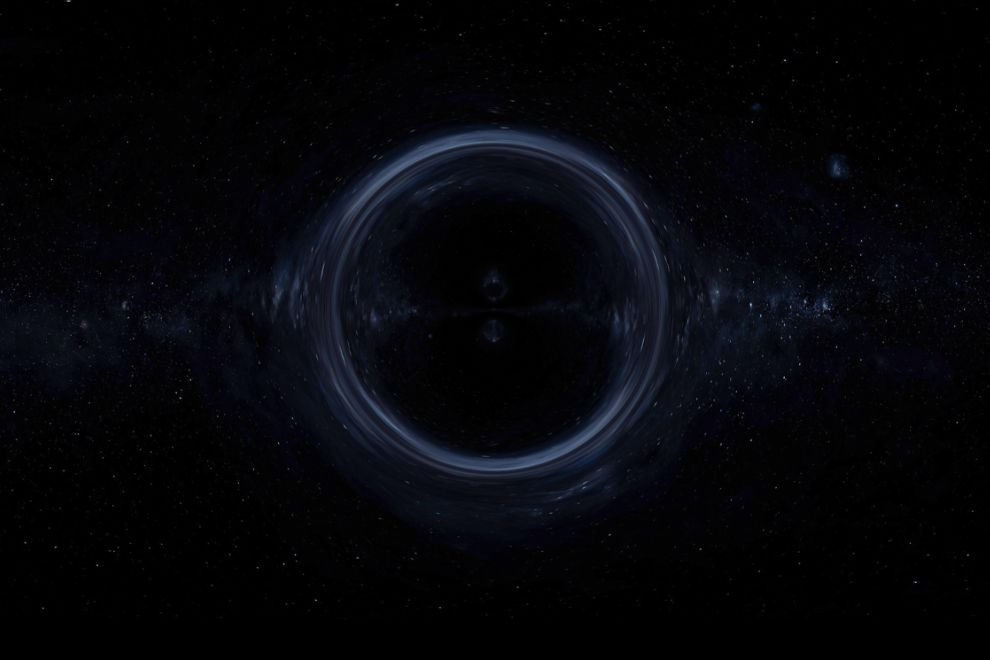
  • NASA Reveals the Deep Void Sound of Black Hole

    NASA Reveals the Deep Void Sound of Black Hole

    People who have listened to a sound sample that NASA uploaded on Twitter have described it as scary and ethereally magnificent.

    The Perseus galaxy cluster, located approximately 240 million light-years from Earth, is home to a black hole that has been sonified, according to a tweet from the US space agency. 

    NASA’s perspective 

    According to NASA, the sound waves discovered there over two decades ago were “extracted and made audible” this year.

    People were astounded that anything, much less what sounds like a creepy, guttural groan, could exit a black hole after watching the 34-second film, which erupted on social media.

    The notion that there is no sound in space, however, is false, according to the organization. A galaxy cluster, on the other hand, “has abundant amounts of gas that encircle the hundreds or even thousands of galaxies inside it, providing a channel for the sound waves to traverse,” NASA added. Whereas most of the space is a vacuum with no medium for sound waves to pass through.

    The film, which NASA referred to as a “Sound of Black Hole Remix,” was initially made available in early May to coincide with Black Hole Week. However, a tweet from the NASA exoplanets team on Sunday really got people’s attention, since the video had been seen more than 13 million times.

    After 53 hours of observation, scientists with NASA’s Chandra X-Ray Observatory “found that pressure waves pushed out by the black hole generated ripples in the heated gas of the cluster that could be translated into a note,” which led to the discovery of the sound waves in 2003.

    The frequency of that note, however, was too low for humans to hear since it was akin to a B-flat, which is around 57 octaves below the middle C note of a piano, according to NASA. 

    So, Chandra astronomers altered the audio and raised the frequency by 57 and 58 octaves. According to NASA, the frequencies are being heard 144 quadrillions and 288 quadrillion times higher than they were originally.

    Sonification Project chief’s views

    The sonification project’s chief investigator, Kimberly Arcand, remarked that she leaped up in delight when she first heard the sound in late 2021, which she compared to “a lovely Hans Zimmer soundtrack with the melancholy level set at extremely high.”

    So, Chandra astronomers altered the audio and raised the frequency by 57 and 58 octaves. According to NASA, the frequencies are being heard 144 quadrillions and 288 quadrillion times higher than they were initially.

    The sonification project’s chief investigator, Kimberly Arcand, remarked that she leaped up in delight when she first heard the sound of a black hole in late 2021, which she compared to “a lovely Hans Zimmer soundtrack with the melancholy level set at extremely high.”

    According to Chandra’s visualization scientist and emerging technologies lead, “It was such a fantastic picture of what was in my imagination.” She said that it also served as a “tipping point” for the sonification initiative as a whole since it “truly aroused people’s imaginations.”

    It also suggests potential future study areas. It is “extremely intriguing” to think that there are supermassive black holes scattered around the cosmos that are “belching forth wonderful tunes,” continued Arcand.

    The sound in NASA’s remix, according to experts, isn’t precisely what you’d hear if you were miraculously standing next to a black hole. According to Michael Smith, an astronomy professor at the University of Kent in England, “this sound of black hole” couldn’t be heard by humans since their ears aren’t “sensitive enough to be able to pick them up.” But if we magnified it, we would be able to hear them since they are present and are of the proper frequency, Smith added. He compared it to a radio, saying that when the sound is turned up, the level is higher and you can hear it.

    According to Arcand, the sound of black holes developed during the coronavirus epidemic. She had been working on building 3D printable models to make it easier for those with low vision or no vision to access the X-ray light data that Chandra’s orbiting telescope had been collecting into photos. The epidemic made it challenging to remotely maintain such a program.

    She then made the decision, together with several other colleagues, to try something novel: sonification, which is the conversion of astronomical data into sound. Arcand was “motivated to think differently” about the benefits of converting complicated data sets into music since the team included blind professionals.