Category: Technology

  • Apple iOS 18 Extends Activation Lock to Secure iPhone Parts

    Apple iOS 18 Extends Activation Lock to Secure iPhone Parts

    Apple has made a big move with its latest iOS 18 update. In fact, Apple has introduced a new security feature that extends Activation Lock to individual iPhone parts. This important change, announced earlier this year, is now live. Interestingly, the feature is designed to make it tougher for thieves to profit from stolen iPhones by selling their parts. As part of Apple’s ongoing efforts to keep users safe, this update not only helps reduce iPhone thefts but also adds extra protection for your device. So let’s read on the details of the new extended Apple Activation Lock.

    Apple Secures iPhone Parts

    You might already be familiar with Apple Activation Lock. Essentially, this feature prevents anyone from using a stolen iPhone. However, Apple has now extended this lock to cover individual iPhone parts with iOS 18. This means the system will recognize stolen components of the phone—like the screen, battery, or motherboard. In addition, the system will alert users, making it harder for thieves to sell those parts. Ultimately, this extra layer of security gives users peace of mind, knowing their phone and its parts are protected.

    Cracking Down on Stolen Parts: Apple’s New Strategy

    In the past, thieves could make money by selling iPhone parts, even if they couldn’t access the device itself. However, the new update for Apple Activation Lock might end that practice. Now that Apple ties the parts to your account, buyers will receive a notification if they come from a stolen device. This change significantly lowers the resale value of stolen iPhone components, making theft far less lucrative for criminals.

    Notifications for Stolen Components

    Here’s where it gets interesting: iOS 18 will alert you if a repair shop uses a stolen part to fix your iPhone. Specifically, you’ll receive a notification in your Settings app, informing you that an “Unknown Part” has been installed. You can still use your iPhone by pressing “Cancel,” but the warning will remain, continuously reminding you that something is off about that part. This feature helps you avoid using stolen parts unknowingly. Moreover, such issues can impact future repairs or even reduce the resale value of your phone.

    Your Data, Safeguarded

    Of course, this isn’t just about protecting parts. The Apple Activation Lock continues to play a crucial role in safeguarding your data. Moreover, the feature makes sure that no one can access your personal and sensitive information without your Apple ID credentials. However, Apple emphasizes that you need to stay extra vigilant with passwords. Unfortunately, some thieves have developed methods to steal iPhones after obtaining the owner’s password, which could potentially allow them to bypass the Activation Lock. That’s why you must implement strong password practices to keep your device fully secure.

    What to Expect: iOS 18 and Device Compatibility

    If you own an iPhone 12 or later, you’ll be happy to know that Apple has made the updated Activation Lock feature available with iOS 18. In fact, those in the beta program might already have seen it in action. For everyone else, Apple officially released iOS 18 on Monday, 16th September 2024. Looking ahead, it will be compatible with iPhone XR and later models too! Moreover, to fully benefit from these security improvements, Apple recommends that you turn on the iPhone’s Stolen Device Protection feature, which adds even more layers of protection.

    In the end, Apple’s move to extend Activation Lock to iPhone parts benefits everyone. It enhances iPhone security and reduces the financial appeal of stealing them. By adding these extra safeguards, Apple makes it harder for thieves to profit while giving users greater peace of mind. With iOS 18, you can be sure that your iPhone—and its parts—are safer than ever.

    Future Outlook: Will iPhone Thefts Decrease?

    Although the new extended Apple Activation Lock won’t eliminate iPhone thefts immediately, it definitely moves us in the right direction. Thieves and repair shops will need to adjust to these changes over time. Once people catch on, the value of stolen iPhone parts will likely drop. As a result, thieves might find stealing iPhones much less appealing, which is great news for all of us.
  • iPhone 16 Launching in India: Specs, Pricing, and Major Upgrades

    iPhone 16 Launching in India: Specs, Pricing, and Major Upgrades

    Apple is all set to unveil the iPhone 16 series on September 9, and excitement is through the roof! As always, the spotlights on Apple’s new iPhone 16 lineup, are expected to include four snazzy models: iPhone 16, iPhone 16 Plus, iPhone 16 Pro, and the much-anticipated iPhone 16 Pro Max. And yes, the iPhone 16 launching in India on the same date has fans buzzing even more! With the date finally confirmed, let’s quickly recap what we know about these sleek devices, so far. We’ll also discuss the pricing and other details of the flagship phones. So, buckle up, and let’s dive right in!

    Get Ready For Exciting New Releases!

    Before the iPhone 16 launch date arrives, get ready for the bundle of joy Apple has in store for you. Here’s what the entire series offers:

    The iPhone 16 series lineup is turning heads with four models: iPhone 16, iPhone 16 Plus, iPhone 16 Pro, and iPhone 16 Pro Max. And here’s the fun twist—it might just be the first to roll out with iOS 18 pre-installed, powered by the brand-new, lightning-fast Apple A18 Pro chipset.

    But hey, Apple isn’t stopping there! We’re also in for a treat with the Apple Watch Series 10 and the all-new AirPods 4. The AirPods 4 will drop in two versions, each boasting cool noise cancellation tech, ready to replace the AirPods 2 and 3.

    Unveiling the iPhone 16 Series: Major Upgrades

    The entire iPhone 16 series is packed with key upgrades inside and out, including the powerful A18 Pro chip. You’ll experience a big performance leap, plus the exciting new ‘Capture’ button. As the iPhone 16 Launch date nears, and with the iPhone 16 launching in India and globally on the same date, let’s dive into the most thrilling features!

    • First of all, the iPhone 16 could be the first to rock iOS 18 pre-installed—ready to go out of the box. And if you’re eyeing the Pro models, keep your fingers crossed for Apple Intelligence, which is rumored to roll out a bit later in October!
    • Secondly, the lineup includes the iPhone 16, 16 Plus, 16 Pro, and 16 Pro Max, all packing the punchy A18 Pro chipset. But don’t be fooled; each model brings its own flair to the table! Talk about variety!
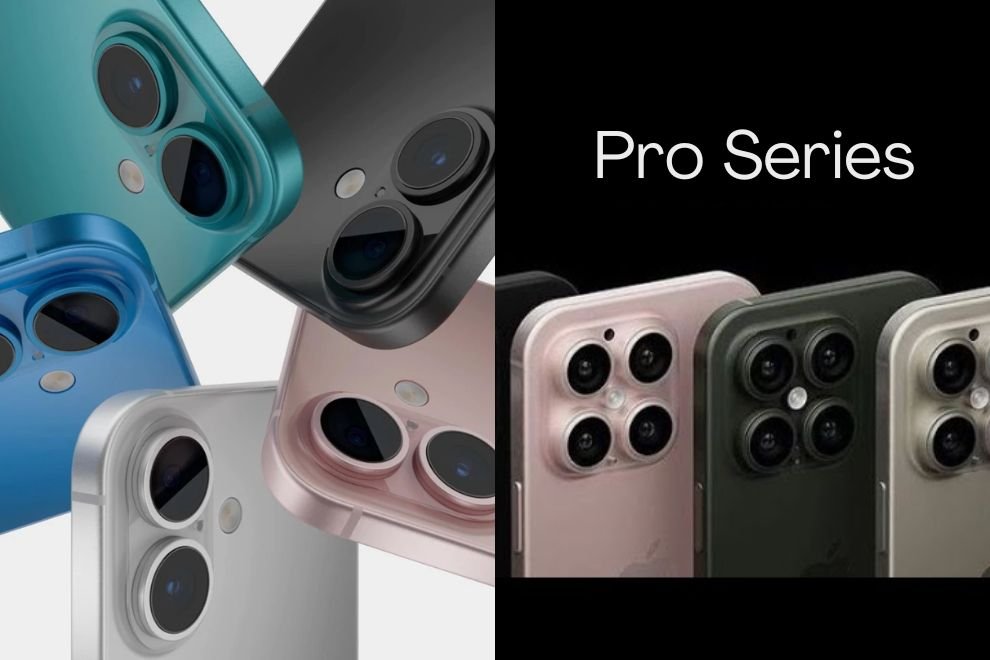
    • Thirdly, Guess who’s back? Apple is taking a blast from the past by bringing back vertically stacked cameras in a cool capsule design. With colors like white, black, blue, green, and pink, these are not your average iPhones!
    • Next up, be ready to capture the magic, as the iPhone 16 keeps the 48 MP main camera with f/1.6 aperture and that handy 2x optical zoom, perfect for those crisp, Insta-worthy shots.
    • Further, the iPhone 16 Plus offers more screen real estate, but rumor has it the battery might take a tiny 9% hit. Don’t worry, though—overall battery improvements should keep you powered up!
    • Moreover, the Pro models are bringing the heat! With a triple-camera setup and a dark and matte, fresh desert titanium color the iPhone 16 Pro and Pro Max are all about that sleek, sophisticated vibe.
    • Last but not least, the Pro models’ ultra-wide camera is rumored to jump from 12 MP to a whopping 48 MP, perfect for epic wide-angle shots. Plus, improved battery life means you can keep snapping all day without a worry!

    iPhone 16 Series: Key Specifications Unveiled

    With all these major upgrades, you’ll want to know the key specs to avoid any surprises. Here’s the scoop on the iPhone 16 series’ essential details:

    Display Sizes: The iPhone 16 features a 6.1-inch display. The Plus variant boasts a 6.7-inch screen. The Pro and Pro Max offer 6.3-inch and 6.9-inch displays, respectively. The Pro models also support a smooth 120Hz refresh rate.

    Battery Sizes: The iPhone 16 packs a 3561mAh battery, while the Plus has a 4006mAh battery. The Pro and Pro Max come with 3355mAh and 4676mAh batteries.

    Storage Options: The iPhone 16 and 16 Plus start with 128GB of storage. The Pro and Pro Max models offer 256GB of storage.

    Pricing Review: What to Expect From the iPhone 16 Series

    As we count down to the iPhone 16 Launch date and know the specs and upgrades, you’re probably eager for the pricing details! So, here’s the scoop:

    The iPhone 16 is expected to start at $799. The iPhone 16 Plus, 16 Pro, and Pro Max are anticipated to cost $899, $1,099, and $1,199, respectively.

    With the iPhone 16 launching in India, prices are roughly Rs 67,000 for the iPhone 16. The iPhone 16 Plus, 16 Pro, and Pro Max might be priced around Rs 75,500, Rs 92,300, and Rs 1,00,700, respectively.

    Keep in mind these prices are speculative, and actual Indian prices may vary.

  • Instagram Introduces Music to Profiles for Personalized Expression

    Instagram Introduces Music to Profiles for Personalized Expression

    Recently, Instagram launched a new feature that allows you to add music to your profile. When anyone opens your profile will appear with background music. It reminisces a popular social media platform MySpace that allows music to play while visiting a profile. Instagram has modified its way to copy this feature, by adding music to profile descriptions and do not play automatically. The song will play after tapping to play it but this feature is similar to MySpace.

    Unveiling New Feature 

    The introduction of this feature has garnered attention because it collaborated with a new song by singer Sabrina Carpenter. Unveiling the teaser of the song “Taste” and showcasing the music profile feature with the Instagram profile of Sabrina is a fantastic collaboration. It is a creative way to express musical taste to the followers. 

    How to Add Song to Your Profile

    Using this new feature is very simple you can add a song to your profile with these steps:

    1. Open your Instagram Account- First of all, you have to open your Instagram with the profile on which you want to add a song. 
    2. Selecting Profile- You have to tap on your profile which is at the bottom to open the profile page. 
    3. Edit Profile Option- Now you have to tap the “edit profile” option, it will take you to a new interface where you can edit any information on your profile. 
    4. Add Music Option- It may take a few minutes to open this option, you will see a new label with “music” It is accompanied by the text that says “Add music to your profile picture” You have to tap on the button. 
    5. Choosing Song- Now Instagram will provide you with a popular song list, you can pick any song that you like. You can also use the “search bar” in the upper column.
    6. Select Particular Segment – After choosing your favorite track, Instagram will allow you to choose a 30-second segment from the song. Now, you can tap to add this segment to your profile.    

    After adding the track to your profile, it will appear in your profile description. Any person visiting your profile can listen to this song by tapping on it. Unlike the Instagram reel where clips are often temporary, the track you will choose stays on your profile till you decide to change it. Users can add only one song to their profile, at a time. 

    Benefits of New Feature

    This feature adds a new layer of personalization to a user’s profile. Here everyone can highlight music that resonates with them. It is also an exciting way to communicate with people like you and a good option for artists and influencers. With growing users, Instagram is committed to enhancing user experience and engagement.

  • Salicit and Google AI ‘HeAR’ Detects TB Through Cough Sounds

    Salicit and Google AI ‘HeAR’ Detects TB Through Cough Sounds

    On August 20, Google announced that India’s Salcit Technologies is diving into its HeAR bioacoustic model. Medicine and technology are joining forces once again, creating marvelous possibilities. Just recently, a Chinese doctor made headlines by performing remote surgery with the help of a surgical robot. Now, the medical industry has achieved yet another incredible breakthrough. This cutting-edge model aims to enhance early tuberculosis detection by analyzing cough sounds. Review the fascinating details as this next medical miracle sets the pace.

    A New Frontier In Healthcare: Google HeAR

    Early diagnosis is absolutely crucial for treating any medical condition. And this year, Google took a bold step. In March of 2024, Google launched an AI model to detect diseases from cough sounds. Enter the Health Acoustic Representations (HeAR) model—Google’s groundbreaking innovation that decodes sound patterns to reveal vital health insights. Moreover, it’s now available to researchers! Trained on 300 million audio pieces and 100 million cough sounds, HeAR is poised to revolutionize the way we understand and diagnose respiratory diseases.

    Basically, HeAR is making waves by helping researchers build models that detect early disease signs through human sounds. Notably, Shravya Shetty, Google’s Health AI lead, emphasized HeAR’s outstanding performance in capturing health-related patterns across various tasks. Even better, HeAR-trained models achieve high performance with less data—a game-changer in data-limited healthcare research. Moreover, Google invites researchers to explore HeAR’s potential by requesting API access. With HeAR, Google aims to revolutionize diagnostic tools and ultimately improve health outcomes around the world.

    India’s Revolutionary Early Disease Detection: Swaasa

    Salcit Technologies, an India-based respiratory healthcare company, developed Swaasa. This is an AI tool that analyzes cough sounds to assess lung health. Now, they’re gearing up to supercharge Swaasa by integrating HeAR, aiming to boost early TB detection. “Missing a case of tuberculosis is a tragedy; late diagnoses are truly heartbreaking. But acoustic biomarkers can flip this narrative,” says Sujay Kakarmath, a Google Research product manager who’s working on HeAR. 

    Ending TB by 2030: Swaasa and HeAR Partner Up!

    Even though TB is curable, it often slips through the cracks due to limited access to affordable healthcare. So now Google heAR and Salcit Technologies’ Swasaa, are teaming up to bring together experts and affected communities, all with the ambitious goal of ending TB by 2030. “HeAR will bring AI-powered acoustic analysis to the forefront, advancing tuberculosis screening with an accessible, low-impact tool,” says Zhi Zhen Qin, a digital health specialist with the Stop TB Partnership.

    A Healthcare Revolution

    To conclude, HeAR’s outstanding performance in capturing health-related patterns and Salcit Technologies’ Swasaa’s focus on affordable healthcare are merging seamlessly. And this collaboration promises a revolution in diagnostic tools. Consequently, it will drive significant improvements in health outcomes worldwide. As a result, progress in global healthcare is becoming more achievable and impactful than ever.

  • Tesla Optimus Robots: Job Opportunities and Investment Potential

    Tesla Optimus Robots: Job Opportunities and Investment Potential

    On Monday, July 22nd, Elon Musk announced on X (formerly Twitter) that Tesla will kick off ”low production” of Tesla Optimus robots next year for internal use. Not only that, but he also revealed that these Tesla Bots will soon take over factory tasks and could even be available for purchase by the end of 2025. By 2026, Tesla aims to mass-produce these robots for third-party use, marking a huge technological leap forward. Naturally, concerns about AI’s impact on jobs might arise. But don’t worry! Exciting earning opportunities are waiting for you, hand in hand with the Tesla Optimus robots. Today, let’s take a look at these groundbreaking job opportunities. 

    Earn Big: Train Tesla’s Optimus Robots

    Get ready, technology enthusiasts—your wildest dream is about to come true! Picture yourself working for the world’s top companies, all under the leadership of the planet’s richest person. How? By training Tesla Bots! While they may be cutting-edge in technology, these humanoids aren’t human. They still need plenty of training before they’re fully ready to take on the world. 

    But don’t worry, you’ve got this! Slip into a motion capture suit, strap on a VR set, and prepare to dive into one of the coolest jobs out there. The best part? You could earn up to $48 per hour just by training Tesla’s Optimus robots. Now, how awesome is that?

    Investors, Take Note: A $25 Trillion Market Cap on the Horizon

    Investors, you’ve got to check this out! Elon Musk predicts that Tesla’s market cap will soar to an astonishing $25 trillion. That’s right—$25 trillion! With this bold prediction, Tesla presents a golden opportunity for anyone looking to invest in the future, especially with the development of Tesla Optimus robots. So, what are you waiting for? Jump on board and watch your investment grow!

    How to Get Involved: The Application Process

    Interested candidates can jump right in by taking a simple test to kick off data collection. If you’re chosen, you’ll get to suit up in a cool motion capture outfit and headset. Then, you’ll perform some fun, specific movements, directly helping to train the advanced Tesla Optimus robots. Ready to get started? 

    Are You Eligible? Here’s What You Need

    To qualify, candidates must hit a few key criteria. First off, you need to be physically fit and strong enough to carry up to 30 pounds. You should stand between 5’7” and 5’11” tall. Plus, you’ll need to master a range of postures, from sitting and standing to stooping, bending, reaching, crouching, and twisting. These skills are crucial for helping train the Tesla Optimus robots. 

    Flexible Shifts and Attractive Benefits

    Working with the Tesla Optimus robots is a blast, and here’s why. The job offers fantastic flexibility with shift timings, including day or night shifts, one-weekend shift, and optional overtime. Plus, you’ll earn a solid $48 per hour and receive stock awards. It’s hard not to fall in love with a job like this!

    So, don’t miss out. It’s your moment to be part of something groundbreaking!

  • 17-Year-Old Builds Nuclear Fusion Reactor, Impresses UK Schools

    17-Year-Old Builds Nuclear Fusion Reactor, Impresses UK Schools

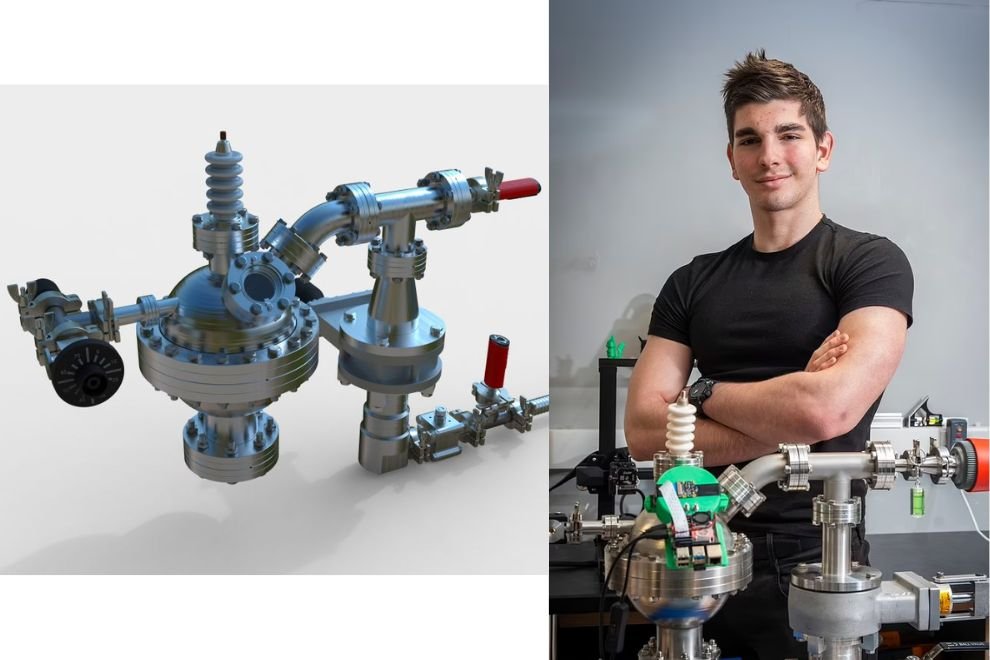
    Cesare Mencarini, a 17-year-old Italian teenager studying in the United Kingdom has achieved a remarkable feat by making a nuclear fusion reactor as a part of Extended Project Qualification (EQP). His revolutionary project is believed to be the first of its type constructed in the school setting. Also, this real-time project has garnered significant attention and shown the potential of the young generation.

    Mencarini’s reactor has reached the stage of plasma production and it is specifically designed for generating neutrons, plasma production is a milestone step in the nuclear fusion process. This project took 18 months of dedication and hard work from Mencarini. He targeted the replication of the conditions necessary for nuclear fusion (this procedure also powers the sun). Replication of the sun’s immense gravitational pressure is beyond the extent of this project. High-voltage electricity is employed to achieve extremely high temperatures to create an atmosphere for the fusion of atoms.

    All these complex procedures demonstrate deep knowledge of the physics and engineering challenges. The hard work of Mencarini has produced sweet fruits and this project is showcased in the Cambridge Science Festival. The reactor is also showcased at prestigious institutions of Imperial College where it has gained immense attraction of teachers, students, and the public alike. The University of Bristol and Bangor University are next in the queue for the showcase list.

    Mencarini’s Nuclear Reactor and Teacher’s Concern

    Despite building this groundbreaking reactor he faced skepticism, especially from teachers who were concerned about the safety implications of the reactor in a school environment. By securing support from school staff and performing risky assessments he was able to provide this innovative creation. This particular experience highlights Mancarini’s persistence and ability to cope with the challenges that come with pursuing such an ambitious project.

    Dr. Julian Davies, the principal of Mencarini’s college has spoken high words about his achievements. He described him as “outstanding” and believes that he will have a significant impact on the energy industry in the future. His academic performance is also unequivocal proof of his achievements, he achieved 5 A*s in stem subjects which is the highest possible score in the UK. 

    As Mencarini continues his studies, his passion for engineering and nuclear technology is evident in both academics and his early accomplishments. His works serve as an outstanding example for inspiring young age people.

  • Samsung Rewards $1M for Hacking Into Mobile Security Program?

    Samsung Rewards $1M for Hacking Into Mobile Security Program?

    Attention, Android users! Samsung has big news! They’re inviting hackers worldwide to break into their Mobile Security Program for up to $1M in rewards. Sounds weird, right? If someone can hack a system, isn’t it flawed? Exactly! Samsung wants hackers to expose flaws in their Mobile Security Program. And by offering rewards, they aim to strengthen security and build customer trust. So, let’s dive into the details!

    The Million-Dollar Challenge

    Like every tech giant, Samsung also runs a bug bounty program, and it’s getting even better! According to a recent blog, Samsung is offering massive rewards to those who can uncover security flaws in its software. As part of its Mobile Security Program, Samsung challenges hackers to break into their systems and expose vulnerabilities. And here’s the exciting part—they’ve just bumped the rewards up to a whopping million dollars!

    But that’s not all. Additionally, security researchers and even everyday hackers can earn Samsung rewards by finding vulnerabilities related to Arbitrary Code Execution on privileged targets. This could involve unlocking devices, extracting sensitive data, executing arbitrary app installations, or bypassing the device’s security measures. Consequently, Samsung is pulling out all the stops to ensure its Mobile Security Program is rock solid, and they’re willing to pay big to make it happen!

    High Stakes, High Rewards

    Samsung explains that users can score rewards by finding various security flaws in their system. The top $1 million reward goes to anyone exploiting Knox Vault and executing remote code in Samsung’s hardware security system. But there’s more! For instance, unlocking a device after it’s already been unlocked scores $200,000 while unlocking it first bumps that up to $400,000. Moreover, remotely installing an app from the Galaxy Store earns $60,000 in Samsung rewards, with $30,000 for a local install. Additionally, installing an app remotely from other sources earns $100,000, and $50,000 for local installs.

    Samsung’s Rules

    However, Samsung also pinpoints a few regulations. Samsung’s blog post says that your report should highlight a successful attack targeting key scenarios. To qualify for the Good Report Bonus, your submission must include an exploit that targets one or more defined Important Scenarios. Furthermore, the exploit needs to work on the latest security updates of the flagship Galaxy S and Z series devices. It should run smoothly without elevated privileges. When submitting through the Samsung rewards program, include the prefix [ISVP] in your report title to join the Mobile Security Program.

    Conclusion

    Ironically, paying people to hack into their Mobile Security Program is Samsung’s genius way to gain customer trust. This approach tightens security, keeps loyal customers returning, and attracts new ones to Samsung. It’s a win-win for everyone—Samsung, customers, and hackers!

  • SpaceX’s Polaris Dawn: World’s First Private Spacewalk Mission

    SpaceX’s Polaris Dawn: World’s First Private Spacewalk Mission

    SpaceX is back with another revolutionary idea, and it’s out of this world! The company has been on a roll, delivering exciting news one after the other. After launching the Falcon 9 rocket with the Euclid Space Telescope last July, SpaceX returns with even more excitement! This time, SpaceX prepares to make history with the world’s first private spacewalk mission, Polaris Dawn. So, buckle up, and let’s dive into the details of this epic adventure!

    Meet Polaris Dawn!

    SpaceX’s Polaris Dawn is a commercial flight that will make history with the first private spacewalk. The Dragon spacecraft will soar higher than ever before, in Earth orbit, reaching heights not seen since the Apollo era. Apparently, it will pass through the Van Allen Belts, areas filled with high-energy radiation, adding a daring twist to the mission. Moreover, the Polaris Dawn crew will also study space radiation’s effects on humans, pushing the boundaries of science.

    And guess what? This groundbreaking mission will launch from Florida on August 26, 2024. Polaris Dawn will send four private citizens on an epic adventure. Specifically, American businessman Jared Isaacman will lead the crew. He will be joined by mission pilot Scott Poteet and SpaceX employees Sarah Gillis and Anna Menon.

    Beyond the Apollo Era

    The Polaris Dawn mission kicks off three epic adventures planned under the Polaris Program. Moreover, Jared Isaacman, who previously led the Inspiration4 mission in September 2021, funds and commands it. Polaris Dawn won’t dock with the International Space Station (ISS) unlike most space missions. Instead, it will operate as a free-flying mission in Earth orbit, adding an extra layer of excitement.

    During the Polaris Dawn mission, the crew will soar to an altitude of approximately 700 kilometers. This altitude makes it the farthest crewed mission from Earth since the legendary Apollo era. Over their action-packed five-day journey, the Polaris Dawn crew will conduct fascinating scientific experiments. Plus, they’ll test SpaceX’s brand-new extravehicular activity (EVA) spacesuits in the vacuum of space—talk about a more thrilling challenge!

    Science, Spacewalks, and Philanthropy

    And, finally—SpaceX’s Polaris Dawn mission will not only achieve thrilling milestones but also explore how spaceflight and space radiation impact human health. These groundbreaking efforts aim to blaze a trail for future long-duration missions and design spacesuits for the Moon and Mars. Plus, Polaris Dawn will sprinkle some philanthropic magic by raising funds for St. Jude Children’s Research Hospital.

    This is a groundbreaking milestone indeed! And if all goes well, Polaris Dawn could solidify SpaceX’s status as a top player in the exciting world of private space travel and exploration.

  • China’s Doctor Conducts Remote Lung Surgery from 5,000 km Away

    China’s Doctor Conducts Remote Lung Surgery from 5,000 km Away

    Just when you think medical science has reached its peak, it surprises us with another remarkable milestone. Imagine this: a Chinese doctor recently performed surgery remotely, all thanks to a surgical robot! So, stay with us as we dive into this exciting fusion of medical science and robotics.

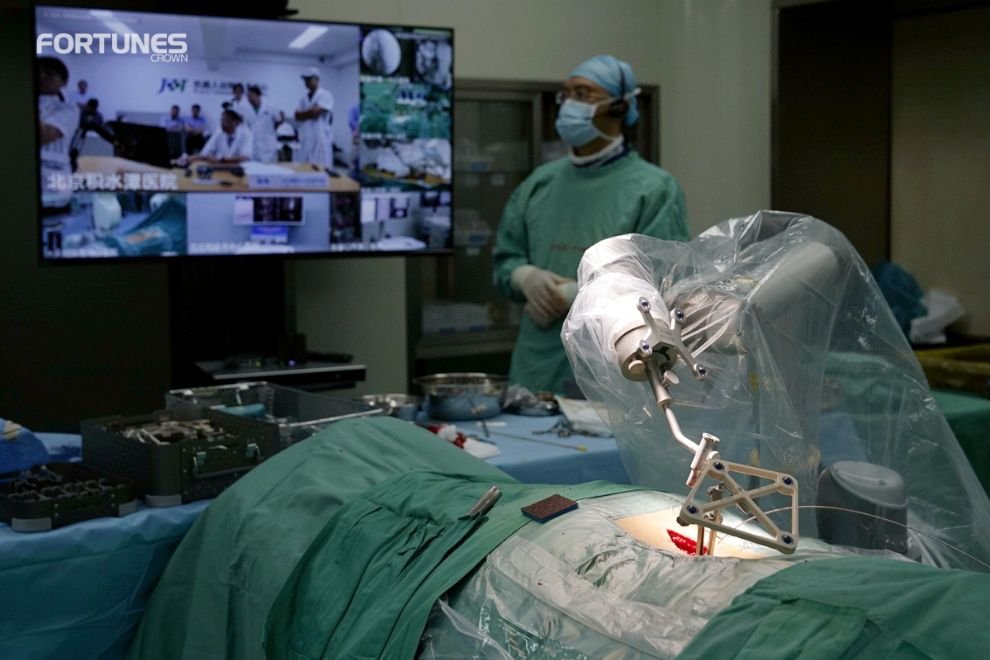
    A recent video of an incredible surgery has been making waves on the internet, and it’s easy to see why! In this video, a surgeon in Shanghai, China, performed a remote lung surgery, a cancer operation on a patient 5,000 km away. This amazing procedure was made possible thanks to a cutting-edge 5G surgical robot, revolutionizing the field of medicine. So, now let’s dive into the details of the surgery and the surgical robot.

    Precision and Safety: Surgery Across 5,000 km

    So, here’s how it went down: The surgeon and his team at Shanghai Chest Hospital successfully removed a lung tumor. They used a domestically-made 5G surgical robot, showcasing the power of advanced technology in medical procedures. While the surgeon worked his magic from Shanghai, the patient and robot were stationed in Kashgar, Xinjiang Autonomous Region. This region is around 5,000 km away, making the surgery an incredible feat in remote medical care.

    At the console station, the surgeon has a 32-inch monitor with 3D vision, ensuring a clear and detailed view. The station also features a safety camera that detects the doctor’s presence, automatically pausing the surgery if needed. This 3D vision reduces mistakes and accidents, enhancing the precision of the procedure. The instruments used during surgery are impressively small, measuring just 8 mm in size.

    A backup surgeon was also stationed nearby, ready to step in if things went out of hand during the procedure. This mind-blowing surgery reportedly took place on July 13, marking a significant achievement in medical history.

    Doctor’s View On Transforming Patient Care

    Dr. Luo Qingquan from Shanghai Chest Hospital led the operation, highlighting its impact on patient care. He emphasized that this success shows how patients can now enjoy top-tier medical services in their hometowns. They no longer need to travel to big cities like Beijing or Shanghai for specialized medical care.

    To add even more to the story, a report from the Shanghai municipality revealed more details. The doctors at Shanghai Chest Hospital achieved this medical marvel after thorough clinical research and preparation. They used domestically-made surgical robots, further highlighting China’s growing expertise in medical technology.

    Dr. Luo Qingquan, the chief surgeon, led the charge with a few assistants by his side throughout the surgery. Moreover, Dr. Luo declared that this surgery marks a huge milestone in proving the clinical power of homegrown surgical robots. This breakthrough could make a world of difference for patients, especially those in remote and rural areas.

    India’s SSI Mantra: Local Robotic Revolution

    India has also entered the world of robotic surgery with its indigenous system, SSI Mantra, created by Dr. Sudhir Srivastava. The Indian surgical robot boasts a modular design with over five detachable arms, making it perfect for heart surgeries.

    While China’s recent surgery covered 5,000 km, India’s was closer, spanning 40 km between surgeon and patient. Dr. S.K. Rawal, medical director of Rajiv Gandhi Cancer Institute, operated from Gurgaon, and his patient was in Rohini, Delhi.

    This breakthrough highlights India’s growing expertise in the field of robotic surgery, bringing cutting-edge technology to medical care.

    Future of Surgery

    What makes this innovation exciting is doctors can perform surgery remotely, even if they’re miles away from the patient. If this tech becomes affordable, it’ll be a game-changer! Imagine accessing top healthcare without draining your savings. Even better, you wouldn’t need to move to another city, where living expenses add to healthcare costs.

    Netizens have mixed opinions about this surgical robot. Some call it a “medical miracle,” while others admire the “beautiful engineering.” There’s applause for China’s technological strides, but concerns arise about the unknowns in the human body.

    Anyhow, this is a fantastic leap in medical science! It showcases the power of AI and robotics in healthcare. If this tech lives up to the hype and works as promised, a surgical robot could become the century’s greatest

  • BSNL and Starlink Partnership to Disrupt Indian Telecom Industry

    BSNL and Starlink Partnership to Disrupt Indian Telecom Industry

    The recent reports of the BSNL and Starlink partnership have generated significant excitement among Indian telecom users. According to sources, the Department of Telecommunications (DoT) is planning to grant Starlink the Global Mobile Personal Communication by Satellite (GMPCS) license. Consequently, this license would enable Starlink to introduce its satellite-based internet services in India. With the implementation of this advanced technology, Indian consumers could benefit from more affordable recharge plans and improved coverage. As a result, this development poses a substantial challenge to the existing telecom giants, potentially reshaping the competitive landscape of the industry.

    Disrupting Monopolies 

    For nearly a decade and a half, Jio and Airtel have single-handedly dominated the Indian telecommunication market. However, recent developments have disrupted this dominance. Following a 25% hike in recharge prices, Jio, Airtel, and Vodafone Idea are grappling with significant customer dissatisfaction. This discontent has led approximately 250,000 customers to transfer their services to BSNL via mobile number portability (MNP) since July 3-4. 

    The surge in BSNL’s customer base is not solely due to these transfers. The company has also reported adding around 2.5 million new connections to its network during this period. This remarkable growth highlights the shifting dynamics in the Indian telecom sector, driven by consumer demand for more affordable and reliable services.

    Satellite Technology Meets Telecom

    Starlink, a satellite network from SpaceX, has achieved consecutive successes. Initially, it provided humanitarian aid by launching services in Ukraine. Recently, it expanded to enhance internet connectivity in remote areas of Indonesia, aiding the government in overcoming geographical barriers to healthcare. Starlink has also aimed to enter the Indian market since 2021 but faced delays due to India’s requirement for full ownership disclosure. Starlink cited U.S. privacy laws as a barrier to sharing this information.

    Regardless, the Department of Telecommunications (DoT) finally plans to grant Starlink the Global Mobile Personal Communication by Satellite (GMPCS) license. The BSNL and Starlink partnership aims to use satellite technology to build strong networks without needing extensive physical infrastructure. Consequently, this could lead to lower data plan costs and recharge rates for consumers struggling with recent price hikes from other providers. Moreover, reports suggest that Starlink, backed by the Tata Group, might offer speeds up to 300 Mbps. Such speeds would enable smooth internet access for activities like video calls, browsing, and downloads, thereby avoiding the limitations of traditional tower-based networks.

    What to Expect

    The BSNL and Starlink partnership introduces Starlink’s satellite technology to India and aims to offer cheaper and more widely available services. This could potentially capture a significant market share, thereby, challenging the monopolies of Airtel and Jio. Consequently, the established players may need to rethink and adjust their strategies.

    Lastly, India’s telecom landscape might soon undergo a major shift, with BSNL making a strong comeback and potentially reshaping the industry.