Category: Article

  • Will the Uptake Of Electric Vehicles Peak Between 2022 And 2025?

    Will the Uptake Of Electric Vehicles Peak Between 2022 And 2025?

    More than $1 trillion is being invested by the automotive industry in a revolutionary switch from internal combustion engines to software-controlled electric vehicles. Automakers and government decision-makers have embraced the promise of electric cars to offer greener, safer transportation from Detroit to Shanghai. 2035 has been established as the cutoff date for the sale of new combustion-powered passenger vehicles by European nations and California.

    The Industry Rulers 

    Established manufacturers like Toyota Motor Corp (7203.T) and Volkswagen AG (VOWG p.DE) that were formerly hesitant to go electric have been humbled by Tesla Inc’s (TSLA.O) surge to become the world’s most valuable automaker after reaching a $1 trillion value last year.

    The world’s major markets will see a surge of new electric vehicles beginning in the next year, ranging from pickup trucks to middle-class SUVs and sedans.

    Industry leaders and forecasters disagree on how quickly electric vehicles might supplant conventional vehicles in even half of the world’s auto market.

    Battery electric vehicles occupy around 21% of the market in China, the largest automotive market worldwide. A little under 12% of all European passenger vehicle sales are electric vehicles. But the US’s market share of electric cars is currently around 6%.

    Hurdles to be Incurred 

    Industry executives and analysts identified several obstacles to EV adoption, including a lack of public fast-charging infrastructure and the rising cost of EV batteries. This results from a shortage of essential materials and uncertainty regarding government subsidies, which have boosted EV purchases in important markets like the United States, China, and Europe.

    According to AutoForecast Solutions, by 2029, electric vehicles may make up around 26% of all cars produced globally and a third of the North American market.

    According to AFS President Joe McCabe, sales of electric vehicles are unlikely to rise in a straight line. The adoption of EVs will be slowed if there is a recession next year, as many economists predict.

    In 2027, combustion vehicles are expected to account for just under 80% of sales in North America, according to Wards Intelligence. Wards analyst Haig Stoddard stated at a recent conference that manufacturers “expect strong ICE (internal combustion engine) volume heading into the next decade.”

    Deployment of electric vehicles till 2025

    According to the most recent EY Mobility Consumer Index, which was covered by Electrek last week, 52% of consumers worldwide are interested in purchasing EVs (MCI). It signifies a rise of 22% points in just two years, and it is the first time that 50% has been surpassed.

    Growth Apprehension 

    The conclusions of BloombergNEF are in line with those of the EY study, as BloombergNEF predicts that the adoption of electric vehicles will continue to multiply through the year 2025 due to growing global legislative pressure, the availability of more electric car models, and rising customer demand.

    Sales of plug-in cars are expected to increase from 6.6 million in 2021 to 20.6 million in 2025, according to a Bloomberg NEF forecast. Plug-in vehicle sales are expected to increase from slightly under 10% in 2021 to 23% of new passenger car sales globally in 2025. Of those, 75% will be entirely electric.

    The researchers don’t envision plug-in hybrids earning a sizable market share outside of Europe, and they project that their global sales will peak around 2026.

    Sales of fuel cell vehicles are anticipated to rise significantly due to efforts in China, but generally, they won’t have appreciable effects on the passenger vehicle market.

    It is anticipated that the US market will lag somewhat. It is expected to increase from 2023, but in 2025, it will likely only account for 15% of the worldwide electric vehicle market. According to the EY study, customers in Australia (38%) and the US (29%) are the least committed to converting to electric vehicles.

  • Will China Give The World A Throwback To COVID-19? China Records A Million Cases

    Will China Give The World A Throwback To COVID-19? China Records A Million Cases

    While the rest of the globe has been reporting a few infections daily over the previous few months, China is experiencing a rapid rise in Covid cases and deaths. Several sources claim that the Chinese healthcare system is under stress due to an increase in infections and fatalities. New questions concerning the pandemic have been prompted by the current scenario in China, such as “Why are Covid instances rising in China now?” and “Will the same problem repeat itself in the rest of the world?”

    The Real Picture

    According to a fresh analysis from a London-based analytics business, Bloomberg reported Thursday that China, which is fighting to manage what is possibly the largest Covid-19 outbreak the world has ever seen, maybe record a million Covid-19 cases and 5,000 fatalities every 24 hours.

    According to Airfinity Ltd., the current wave of cases, which has been made worse by China’s insistence on abandoning Covid protocols as well as the appearance of BF.7, a new Omicron subvariant, could rise to 3.7 million daily new cases by the end of the month and a terrifying 4.2 million by the end of March.

    Why China?

    Experts claim that following the initial Covid virus outbreak in China, the government occasionally adopted the zero-covid policy, resulting in extremely stringent lockdown conditions that prevented people from being exposed to more recent sub-variants like Delta or Omicron. Because of this, the average level of immunity in China did not rise to the same degree as it did in the rest of the globe. The relaxation of the zero-covid policy is now causing a significant increase in infections because the majority of Chinese people were not exposed to different sub-variants of the virus on a widespread basis.

    Another factor is that 130 million old individuals in China are at risk for immunization failure or non-immunization. If the virus spreads unchecked in China, mortality in this population would most likely be quite high—possibly exceeding 1 million. According to leading Chinese epidemiologist Eric Feigl-Ding, 1-2 million fatalities could occur overall as a result.

    The Bigger Picture

    Having spent the last two years in a pandemic, and only recently the world getting back to “normal”, this new widespread spread of the same virus has raised some questions and eyebrows. 

    It’s not just a health emergency that COVID-19 is spreading. The pandemic now has a geopolitical component. The health crisis disrupted the delivery of global public goods, exacerbated competitive dynamics between the USA and China, and introduced instability into the global order.

    The “game changer” cluster mutations present in the Covid-19 virus are of great concern. These make the virus more transmissible, highly infectious. Also able to dodge human immune systems’ antibodies produced by earlier infections and vaccinations. There were more than 10 mutations in these problematic variations. There were 18 mutations in the Delta variant.

    This genetically modified chimeric virus has been improved by gain of function-accelerated manual mutations, resulting in several variants. Under the guise of an on and off pandemic, the sudden development of cluster mutations in some parts of the world would raise the potential of deliberate biowar.

    What Now?

    It’s challenging to predict whether the world would experience another wave of Covid because there is now no precise information available from China regarding how the new sub-variant of Omicron BF.7, which is driving this new wave, is changing.

    Let’s hope that the situation doesn’t arise since the rest of the globe has better immunity from earlier exposure to the virus and better vaccinations.

    All we can do is take the precautions we took before and hope we don’t get 2023 as a 2.0 version of 2020.

  • Canada’s Climate Change New Regulations Encourage Adoption of Zero-Emission Vehicles

    Canada’s Climate Change New Regulations Encourage Adoption of Zero-Emission Vehicles

    Canadians have clearly stated that they want a healthy economy, clean air, and good jobs. Since 2015, the Canadian government has taken the lead in the battle against climate change and made more progress toward creating a sustainable economy than any other government in history. The 2030 Emissions Reduction Plan, which puts Canada on a course to achieve at least a 40% reduction in emissions by 2030, is made up in large part of the proposed rules, which aid in reducing emissions from our transportation.

    The government made the proposed regulations public on December 21, 2022, and a formal 75-day consultation process will begin after they are published in Part I of the Canada Gazette on December 31, 2022.

    Opinions Before Decisions

    The Canadian government consulted with stakeholders in March to get their opinions on encouraging the adoption of zero-emission vehicles in the light-duty vehicle sector. All parties agreed that maintaining compliance with US greenhouse gas standards is crucial for cutting vehicle emissions of greenhouse gasses while maintaining the industry’s competitiveness.

    Some believed that a standard strategy for zero-emission vehicles would be necessary to bring about revolutionary change, generate the market certainty required to speed up the transition to zero-emission vehicles, and make the decisions and long-term investments required (including electricity generation and distributors).

    More people had differing views on the adoption of a zero-emission vehicle standard, with most automakers opposing it and non-governmental groups firmly in support, emphasizing how it can spur electrification while sending a powerful long-term investment signal.

    “Zero-emission vehicles are where the rubber hits the road for cost-conscious Canadians who want to help the environment while getting off the roller-coaster of high gasoline prices,” Minister of Environment and Climate Change, Steven Guilbeault, said.

    New Regulations

    All businesses that produce in Canada or import into Canada to sell automobiles to the initial retail buyer would be subject to the proposed regulations. They will only apply to new passenger cars, SUVs, and pickup truck makers and importers; they do not apply to emergency and fire-fighting vehicles.

    The evidence from other nations and from states like British Columbia and Quebec, as well as from other provinces, is abundant and unmistakable: when paired with supportive investments, a regulated zero-emission vehicle sales target expands consumer choice and hastens the move away from internal combustion engine vehicles. Because of this, the Canadian government is also expanding financial assistance for buying ZEVs, investing in charging stations, and assisting in the establishment of a Canadian battery supply chain that incorporates essential minerals and manufacturing.

    The Incredible ZEVs

    The term “zero-emission vehicle” (ZEV) refers to a variety of vehicles, including battery-electric vehicles that run solely on electricity, fuel-cell electric vehicles that run on hydrogen, and plug-in hybrid electric vehicles that can run exclusively on electricity for a set minimum distance before switching to hybrid operation, which uses both electricity and liquid fuels.

    Because they allow for some electricity use while keeping the use of fossil fuels when necessary, plug-in hybrid electric vehicles are likely to play a significant role in northern and rural regions shortly.

    Pickup trucks, SUVs, and hatchbacks with two- and four-wheel drive are all currently offered as ZEVs, and more will be in the following few years. Even in extremely cold temperatures, electric cars can be driven. Cold-weather nations like Norway, where over 70% of new car sales are ZEVs, are a common place for ZEVs.

  • Autonomous Vehicles: Key to Change the Face of the Auto Industry

    Autonomous Vehicles: Key to Change the Face of the Auto Industry

    With smart cities and technologies like artificial intelligence (AI) and machine learning (ML) increasingly contributing to our way of life, the global autonomous (semi and fully) car market is expected to reach nearly $62 billion by 2026, up from $21 billion in 2020, at a CAGR of 22.75%.

    How have autonomous vehicles evolved up to this point?

    Autonomous vehicles (AVs) technology is being used in a variety of vehicles around the world to meet both commercial and personal transportation needs. They rely on AI and machine learning to boost the level of intelligence used by comprehending human participation. As autonomous vehicle (AV) technology advances, high definition (HD) maps with the ability to decipher map objects and draw logical conclusions are being integrated into vehicles. HD maps extend visibility beyond the driver’s field of view, providing an accurate representation of the road ahead as well as information about the surrounding environment. The intelligence of AVs is attributed to the billions of map data points fed into the vehicles’ AI and ML systems, which allows them to make decisions while navigating. In turn, the accuracy of the map inputs is determined by the array of sensors, cameras, and radar systems. However, the AV’s ability to successfully comprehend the path and respond appropriately is dependent on the AI built into the system.

    Self- Driving: The latest move by the AV industry

    It’s the latest step by the AV sector to distance itself from the phrase “self-driving,” which many observers read as an acknowledgement of Tesla’s effect on public understanding of the technology.

    Tesla provides a feature dubbed “Full Self-Driving,” which is a beta version of a sophisticated driver-assist system that manages parts of the car’s operations on local roads but still requires human supervision. Autonomous vehicles, on the other hand, are vehicles that may run on public highways without human intervention or supervision.

    Industries that stand to gain from the EV-AV transition

    It is expected that moving from level 1 to level 5 AVs would result in a significant reduction in worldwide traffic fatalities. Because the AVs will be networked and connected to traffic management systems, they will be able to plan their speed and routes accordingly, resulting in a vastly cleaner environment, less air pollution, and a significantly lower rate of accidents and road congestion. This will save many hours of commuting time, and the worth of such advances is nearly incalculable.

    The whole nature of vehicle ownership may alter as well, with resources dedicated to a more “use-the-AV-service-when-you-need-it-and-pay” approach. 

    This strategy encourages the presence of the ride-sharing industry and the expansion of current ride-sharing firms. Furthermore, the EV engine’s fuel and maintenance savings, along with AV technology, allow for increased use, lowering transportation expenses.

    Adoption of EV and AV technology poses risks and problems.

    Despite the potential benefits, the fast adoption of EV and AV technologies may result in employment displacement in the transportation sector, both on the production and delivery sides. In a driverless world, fleet drivers and the driving community may face job losses.

    Cybersecurity issues have generated hurdles that might stymie the expansion of the autonomous vehicle business. The hazards of tapping into technology and seizing control of the antivirus software remain. There will be opposition to complete adoption until a comprehensive cybersecurity plan is implemented to keep both automobiles and their occupants secure.

    Do autonomous vehicles have a future?

    The driverless cars of the future will do more than just transport people. The full automation of the delivery and shipping business will have a significant influence. This year was important in the United States because a business gained the first regulatory safety permit for an autonomous vehicle meant to carry groceries. The estimated timeline for the commercialized use of autonomous cars has been extended owing to certain setbacks in the final years of the past decade leading to speculations that level 5 autonomous vehicles might be arriving later than expected. As a result, low-speed autonomous vehicles designed for short trips will be the first autonomous vehicles to be used widely. However, despite several challenges, analysts and industry experts believe that level 5 autonomy could be closer than we thought.

  • World’s Largest 170-Carat Pure Pink Diamond Found In South-Africa

    World’s Largest 170-Carat Pure Pink Diamond Found In South-Africa

    The earth we live on still has so many secrets to unveil kept deep inside of it. Secrets about precious gems, lifestyle and building techniques of our ancestors, and so on. According to a report, miners from Angola in Central Africa have uncovered a rare, pure pink diamond that is thought to be the largest one to have been found in 300 years.

    The Lulo Mine in the nation’s diamond-rich northeast is home to a 170-carat pink diamond known as The Lulo Rose, one of the largest pink diamonds ever unearthed, according to a statement from the Lucapa Diamond Company.

    The Angolan government, also a part of the mine, praised the “historical” discovery of the Type IIa diamond, one of the most uncommon and pure varieties of natural stones.

    The greatest diamond discovery in Angola—the 404-carat “4th February Stone” in 2016—was made in the Lulo concession, a 3,000 square kilometer area around 600 kilometers from the country’s capital Luanda.

    Why Is It Pink?

    No. Valentine’s Day is not for another three months.

    Victoria from the Museum claims that this stone’s pink color is the consequence of high temperatures and non-isotropic stress after the rock was formed in the soil.

    To understand the Lulo Rose’s actual value, cutting and polishing would be necessary, a process that can cause a stone to lose 50% of its weight. The Angolan State Diamond Marketing Company will offer it for sale through an international tender. The diamond will be sold at an international auction, probably for a remarkable amount.
    According to Diamantino Azevedo, minister of mineral resources for Angola, “This record and spectacular pink diamond recovered from Lulo continues to showcase Angola as an important player on the world stage.”

  • “New Omicron Variants BF.7 & BA.5.1.7 Are Extremely Contagious” – China Reports

    “New Omicron Variants BF.7 & BA.5.1.7 Are Extremely Contagious” – China Reports

    In March 2020, the world saw one of the worst pandemics it has ever witnessed- COVID-19. Two years later, COVID cases are still recorded all over. The only difference is- both the fear and intensity of the virus have decreased. Or has it? On 4th October 2022, BF.7 was detected in Yantai and Shaoguan City in China. 

    Less than a week after it was initially discovered in Northwest China’s Inner Mongolia Autonomous Region, the new Omicron variant BF.7 has spread to more provinces in China.

    Two extremely transmissible subvariants of Omicron, BF.7 and BA.5.1.7, were discovered in different Chinese provinces. Both subvariants spread quickly and are quite contagious. 

    Two types are “extremely contagious,” according to Li Shujian, deputy director of a Chinese disease prevention and control center, and are very easy to evade prior immunization.

    Keep an Eye Out for the Symptoms

    Constant coughing, headaches, chest pain, changes in sense of smell, hearing loss, and shaking are among the symptoms of the BF.7 subvariant. The majority of the symptoms are similar to diseases brought on by other Omicron subvariants.

    One also shouldn’t ignore the additional COVID symptoms, including nausea, vomiting, diarrhea, runny nose, sore throat, and exhaustion. Mask use and hand sanitization should be promoted and practiced.

    Is This a Threat to the World?

    There is definitely a noticeable pattern in the new variant detection and the start of the pandemic two years back. So should we take the masks, gloves, and sanitizer guns back out?

    According to a report in the Chinese media, BF.7 has improved immunity evasion capabilities compared to its recurrent parent since it is a subvariant of the main COVID variant, Omicron.

    The Omicron variant and its subvariants have the capacity to bypass immunity. The BF.7 subvariant is rapidly expanding outside of China in Belgium, Germany, France, Denmark, and England.

    White House COVID-19 Data Director Dr. Cyrus Shahpar took to Twitter and said “Slow growth in emerging sub-variants (e.g. BA.2.75, BA.4.6, BF.7) and expect more in weeks ahead. Bottom line: These are all Omicron & we have a new bivalent dose that increases protection against all of them. Get one now to have a safer fall and winter!”

    Whether this turns out to be a minor hit or something unfathomable, we as citizens should keep in mind the safety precautions issued before and adhere to them. These reports strongly hint that this pandemic isn’t over yet.

  • Twitter Blue is No More Free, Have to Pay $8 per Month

    Twitter Blue is No More Free, Have to Pay $8 per Month

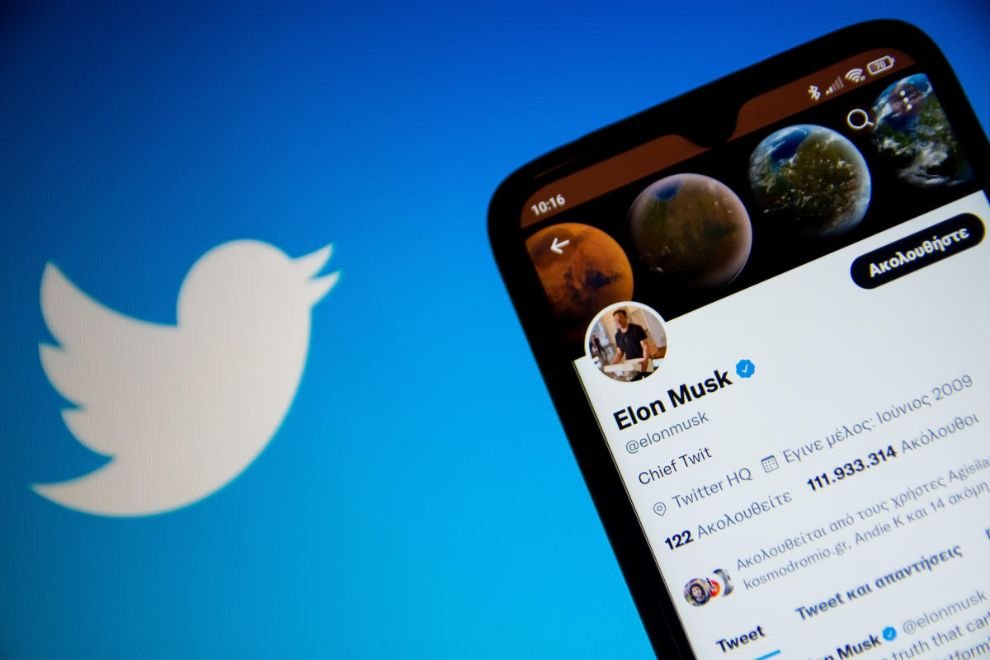
    After finally owning Twitter, it seems like he has taken on his mind to change almost everything about the micro-blogging platform. After changing and firing the entire employee base, Elon Musk has introduced another upgrade to the app, giving his employees an ultimatum. Twitter Blue is Elon’s upgraded way for people to have verified accounts. But there’s a catch- Twitter is planning to charge approximately $8 for the new Twitter Blue Subscription. 

    What Is Twitter Blue?

    In 2021, Twitter Blue was introduced, giving users exclusive access to premium features like the ability to edit, undo tweets, and have access to ad-free articles. According to the article, users would now have to subscribe to Twitter Blue in order to have a Twitter blue check. 

    What’s So New About Blue?

    When one comes across a tweet and observes the trademark Twitter blue check on it, it is deemed to be more authentic in terms of the information it is presenting. Your account must be well-known and active in order to be verified. Anyone can currently apply for Twitter Verification. The website divides well-known accounts into various categories.

    Now, under the new rules and regulations, not only to-be verified accounts will have to pay an additional subscription fee of $8, the existing verified accounts have to as well. The users will have a 90-day period to either subscribe or lose their verification. 

    Through a recent tweet, Elon made it clear that he plans on completely revamping the verification process. Also, the fact that Elon has given an ultimatum for his employees to launch this feature by the first week of November, or they can pack up their stuff and leave. 

    What are your views on the hefty and rapid steps Elon Musk is taking after spending mere 3 days as the owner of Twitter? 

    Secretly hoping for an Edit Button on Twitter.

  • 700 Years Old Mexican Architecture Supports Sustainable Agriculture

    700 Years Old Mexican Architecture Supports Sustainable Agriculture

    All over the world, we see ancient architecture and whole civilizations intact and in their best form. Compared to architecture today, that leads to leaks, cracks, and dents within 2-3 years of construction. The techniques used by our ancestors were way more sturdy, durable, and sustainable than the ones we rely on today. One such example is the Floating Gardens of Xochimilco, Mexico. 

    The Aztec Empire undertook a vast land reclamation operation in the 14th century that left behind these man-made island farms. The farms still provide food for Mexico City’s population today. Hundreds of tourists swarm Xochimilco’s canals every weekend to see a flashy show of sombreros, food, music, and art. But most are unaware of the ancient engineering marvel as they go alongside the chinampas, often known as “floating gardens.” 

    A Dive Into The Past

    According to mythology, the Aztecs were delighted by an extraordinary sight on Lake Texcoco when they first arrived in the Valley of Mexico in 1325 AD. On the swampy margins of the lake, sat an eagle with a serpent in its beak perched on a prickly pear cactus. The nomadic tribe made the decision to establish themselves and create their capital city here. It was known as Tenochtitlan.

    The Aztecs used chinampas to build floating gardens that could be used for agriculture, animal rearing, and hunting for animals and food in areas farther from the city center. They connected islands in Tenochtitlan’s city center using bridges and boardwalks. The Aztecs were able to support their expanding empire because of their inventive method of farming on water.

    Beneficial To Sustainable Architecture

    The Chinampas, also a World Heritage Site, are still productive and environmentally sound. These man-made island farms are effective and self-sufficient. They make up one of the most prolific agricultural systems in the entire globe.

    This is due to the soil being continually improved by fine lake sediments, plant debris, and animal waste. The ahuejote fences around each island also serve as organic trellises for vine crops. Furthermore, shield the chinampa from wind and pests, and prevent erosion. They had an incredible ability to grow up to seven different crops yearly. Early in the 16th century, Aztec chinamperos produced 13 times as much food as dryland farmers.

    “Chinampas are like giant sponges; you don’t need to water them, yet they can be productive all year long.” said Lucio Usobiaga, founder of Arca Tierra.

    Present Scenario

    The remaining islands were still farmed on a small scale, but the market for chinampa agricultural products drastically decreased. People started switching to purchasing more affordable substitutes from big wholesale markets that got their produce from outside of Mexico City. 

    The families of chinamperos began looking for better employment options in downtown Mexico City even though tourism on Xochimilco’s canals did generate some additional cash.

    Local organizations played a significant role in connecting chinamperos with potential customers by developing online portals. Through this clients could conveniently obtain fresh veggies, free-range eggs, and chinampa honey. During the pandemic, Chinamperos coordinated with initiatives like Comidas Solidarias to give meals to patients, medical personnel, and needy families.

    Seven hundred years after they were first built, Xochimilco’s chinampas are feeding and sustaining Mexico City in uncertain times and unfavorable environments.

  • BLUEVIEW Launches the World’s First Biodegradable Shoe

    BLUEVIEW Launches the World’s First Biodegradable Shoe

    BLUEVIEW, a new sustainable footwear brand dedicated to reducing plastic waste on the globe is offering consumers the world’s first biodegradable shoe. BLUEVIEW’s first shoe ‘the BLUEVIEW Pacific’ revolutionizes the footwear business by replacing petroleum plastics with plant-based plastics. This sneaker features Soleic and PlantKnitTM, two breakthrough new plant-based materials that work together to create a sustainable and beautiful sneaker that gives an ocean of comfort and significant durability.

    Changing the trajectory of our planet

    As the cornerstone of the BLUEVIEW shoe, they spent more than six years studying and creating Soleic, the world’s first high-quality, renewable, and entirely biodegradable polyurethane foam. The arch support, sturdy cupsole, and outsole are all made of Soleic foam, making BLUEVIEW shoes the most comfortable shoes in the market. PlantKnitTM, the world’s first plant-based and 100% biodegradable machine knitted shoe upper was created to complete the shoe. Each pair of sneakers comes with a detachable organic canvas cotton strap, allowing customers to wear them as a loafer or slip-on.

    “Seeing our Soleic foams finally reach the consumer market is a dream come true” stated Stephen Mayfield, CEO of BLUEVIEW and co-inventor of Soleic foams. “We are pleased to present consumers with a revolutionary footwear experience by combining this innovation with world-class design and production to complete the BLUEVIEW Pacific.”

    BLUEVIEW is the industry leader, using only vegan and ecologically friendly materials to provide next-level comfort and high-quality handcrafted footwear with best-in-class style and strong branding. To demonstrate state-of-the-art durability for the BLUEVIEW Pacific sneaker, BLUEVIEW conducted Durability and SmartLast testing on the BLUEVIEW Pacific at Heelux Labs.

    “As a surfer, I’ve witnessed directly how plastic waste is affecting our oceans. I am happy to provide our customers with access to the world’s first biodegradable shoe by combining my knowledge in the footwear sector with the advancements produced by our research team,” said Tom Cooke, co-founder, and president of BLUEVIEW.

    Each BLUEVIEW shoe is an accessible and sustainable alternative to change the trajectory our planet is on, as part of a commitment to accelerate and lead the global transition to bio-based materials and more ecologically friendly production techniques.

    Every component of BLUEVIEW’s plant-based shoes biodegrades under aerobic composting conditions (ASTM D5338), which means that when exposed to air, moisture, and microorganisms in compost, they will totally decompose.

    More about BLUEVIEW

    BLUEVIEW is the world’s first biodegradable footwear business dedicated to safeguarding the globe from plastic pollution, born out of a meeting between two surfers who discovered a shared passion and concern for our oceans and planet. BLUEVIEW’s footwear, which is revolutionizing the footwear industry, is built of bio-based materials such as revolutionary Soleic and PlantKnitTM to create a sustainable, yet durable sneaker. Next-level comfort, high-quality craftsmanship, best-in-class design, strong branding, and ecologically responsible materials are all aspects of BLUEVIEW footwear. All BLUEVIEW products are environmentally friendly, vegan, and free of microplastics.

    Read More: How Russia’s Theft Legality Will Cost Unfriendly Nations?

  • Raj Subramaniam to Replace Frederick W Smith as the New CEO of FedEx

    Raj Subramaniam to Replace Frederick W Smith as the New CEO of FedEx

    FedEx, the multinational e-commerce and transportation giant with a market share of 59.62B US dollars, will get its new CEO, an Indian American Raj Subramaniam. Frederick W Smith, Founder and CEO of FedEx announced on March 28, he will step down from this position on June 1.

    Who is Raj Subramaniam?

    Raj Subramaniam is an Indian descendant who studied B.tech, chemical engineering from IIT, Bombay 1987. Further studied at Syracuse University MS, chemical engineering 1989 and MBA, marketing and finance at the University of Texas, Austin.

    Why is Raj Subramaniam?

    Since he joined FedEx in 1991, served as executive vice president and chief marketing and communications officer of FedEx Corp., where he was responsible for the development of corporate strategy. Furthermore, served as the president of FedEx Express in Canada and in several other management and marketing roles throughout Asia and the US. Other than that, Subramaniam was elected to the board in 2020 and will retain his position as stated by the company.

    He was connected to FedEx for 30 years. His leadership experience, keen business insights, and focus on globalization have contributed to the success of FedEx and provided a revolution to the transportation and logistics industry.

    “As we look toward what’s next, I have a great sense of satisfaction that a leader of the caliber of Raj Subramaniam will take FedEx into a very successful future,” Smith said in a statement.

    Read More: Elon Musk Thinks A.I. is Lethal But Wants to Implant It in Our Brain