Category: Technology

  • New Google Privacy Tools Helps Hide Explicit Data

    New Google Privacy Tools Helps Hide Explicit Data

    Google introduces new privacy tools that will give users more control over unwelcome personal images posted online and ensure that explicit or graphic images don’t show up frequently in search results.

    Users will now have the ability to delete explicit and non-consensual photographs of themselves from searches thanks to a recent amendment to Google’s policies regarding personal explicit images.

    With the new Google Privacy tools anyone who has generated and uploaded explicit content to a website and later decides they no longer want it to be accessible through search can simply ask for Google to remove it.

    Get Notified When Searched

    Users will be able to see search results that include their contact information thanks to a new Google dashboard, which will initially only be made available in the US in English. Users can easily add their request for Google to remove certain search results. The tool will also notify the user when fresh search results with information about them appear.

    Safe Search

    To safeguard their users from explicit images and results, Google Privacy Tools includes a new feature called SafeSearch.

    SafeSearch is also for the parents wanting to make the internet a safe and knowledgeable experience for their children. It can be used as a good parental control over the content being presented to the toddlers.

    Parents can use Google Privacy tools to hide explicit search results from their children. This month, the new SafeSearch function will become available, making it simpler for users to delete private, explicit photographs from Search.

    Google has issued a warning, however, stating that despite its ability to delete search results, the content will still be available online.

    How to Use Google Privacy Tools?

    As a Google user who is logged in, you will see these tools for removing personal information. Simply seek for the Results About You option by clicking on your user profile photo in the upper right corner of any Google page. You are then taken to the updated dashboard. However, If you don’t see the dashboard right away, you may still find personal information in search results by using the traditional method of Googling your name.

    The dashboard is rolling out to consumers in the US this week.

    You can select the three-dot menu in the top right corner of a search result if it displays your home address, email, or phone number. obsolete information will be listed as a choice under “Remove Result.”

    Google will ask you to provide a reason after you choose it. Choose if the information is obsolete, contains personal contact information, or is intended to cause you harm from the list of possible reasons to remove the result.

  • The Good, The Bad, and The Scams of Facebook Marketplace

    The Good, The Bad, and The Scams of Facebook Marketplace

    There is a very common rule in household management. If you haven’t used things- clothes, decorative pieces, toys, or furniture, you should discard them. But the big question when it comes to discarding items is WHERE to discard them. Throwing them out of your house is littering outside. Keeping them in storehouses just defeats the purpose of cleaning up. Knock Knock! Who’s There? Facebook Marketplace!

    Another popular rule of thumb should be that something you don’t need can fulfill the dire needs of someone else. Something that has been lying around your desk can bring huge joy to someone else. This is where Facebook Marketplace comes in! Now, many ask, “How does Facebook Marketplace work?” Isn’t Facebook just to share photos and play candy crush? Well, you are wrong! (Womp Womp!)

    Facebook Marketplace: The Hub

    According to Meta spokesman David Troya-Alvarez, Facebook Marketplace has more than one billion monthly visits from users worldwide. Additionally, the Marketplace function appears to be flourishing even while Facebook’s daily active users are declining.

    The most recent user statistics for Marketplace are not disclosed by Facebook, but the “other” division, which includes Marketplace and virtual reality subsidiary Oculus, saw the fastest revenue growth during the fourth quarter. The combined “other” revenue increased to $885 million, up 156% from the previous year. Comparatively, Amazon’s third-party vendors’ sales increased by 53% year over year to $20.4 billion over the same period.

    Facebook’s dedicated Marketplace, which allows users to purchase and sell items online, was introduced in 2015. Here, the question of whether this characteristic is valuable emerges. Here, we’ll talk about whether Facebook Marketplace is a good option for making online purchases.

    Simple Interface In Comparison

    Craigslist was a well-established hub for re-purchasing and selling. Facebook Marketplace was one of the first attempts to “dethrone” Craigslist. When it came to purchasing and selling old things, many had attempted, but none had been able to dethrone the straightforward website.

    One of the prime reasons why people leaned towards Facebook Marketplace was accessibility. There was no complex tutorial on how to sell on Facebook Marketplace. It was quite simple. Using Facebook’s website and mobile app, sellers could list their items in seconds. Likewise, with one simple search, purchasers could find their wished item in seconds.

    Even Craigslist quickly debuted a smartphone app. Although the app for Craigslist does the job, it is just as very simple as the website. Although Craigslist’s simplicity is maintained by its simplicity, some may find this to be off-putting. On the other hand, the Facebook app has a slick appearance that users have gotten accustomed to by using it regularly, and Marketplace has a similar aesthetic.

    Genuineness

    Facebook Marketplace runs on two basic offerings- connectivity and accessibility. How does Facebook marketplace work is quite simple.

    Facebook asks for access to your current location when you join up. The dominant social networking company insists on using your location to provide individualized information and ideas that are local to you. The marketplace employs the same methodology.

    It will make suggestions for items nearby, making it simple to close a real purchase. Additionally, you have the choice to explore and hunt for appealing items that might not be local to you.

    Paying a security deposit or fee to the app to show the product is one of the pet peeves that most sellers mention. Furthermore, This age-old practice is given a fresh perspective by Facebook Marketplace, which gives sellers the option to choose who pays for delivery.

    However…

    Safety Hazards

    There have been several incidences where people decided to meet up as buyers and sellers, but things hit the fan. Innocent buyers who probably just wanted a chair for their backyard end up being scammed and losing valuables.

    The possibility of getting robbed is quite high on such platforms. People anticipate receiving a high quality product when they pay money. Contrary to eBay Buyer Protection, there is no assurance that users will receive what has been promised. Facebook does not provide any assurances, however, you are welcome to physically inspect the item.

    People anticipate receiving a high-quality product when they pay money. Contrary to eBay Buyer Protection, there is no assurance that users will receive what has been promised. Facebook does not provide any assurances, however, you are welcome to physically inspect the item.

    Scammers Everywhere

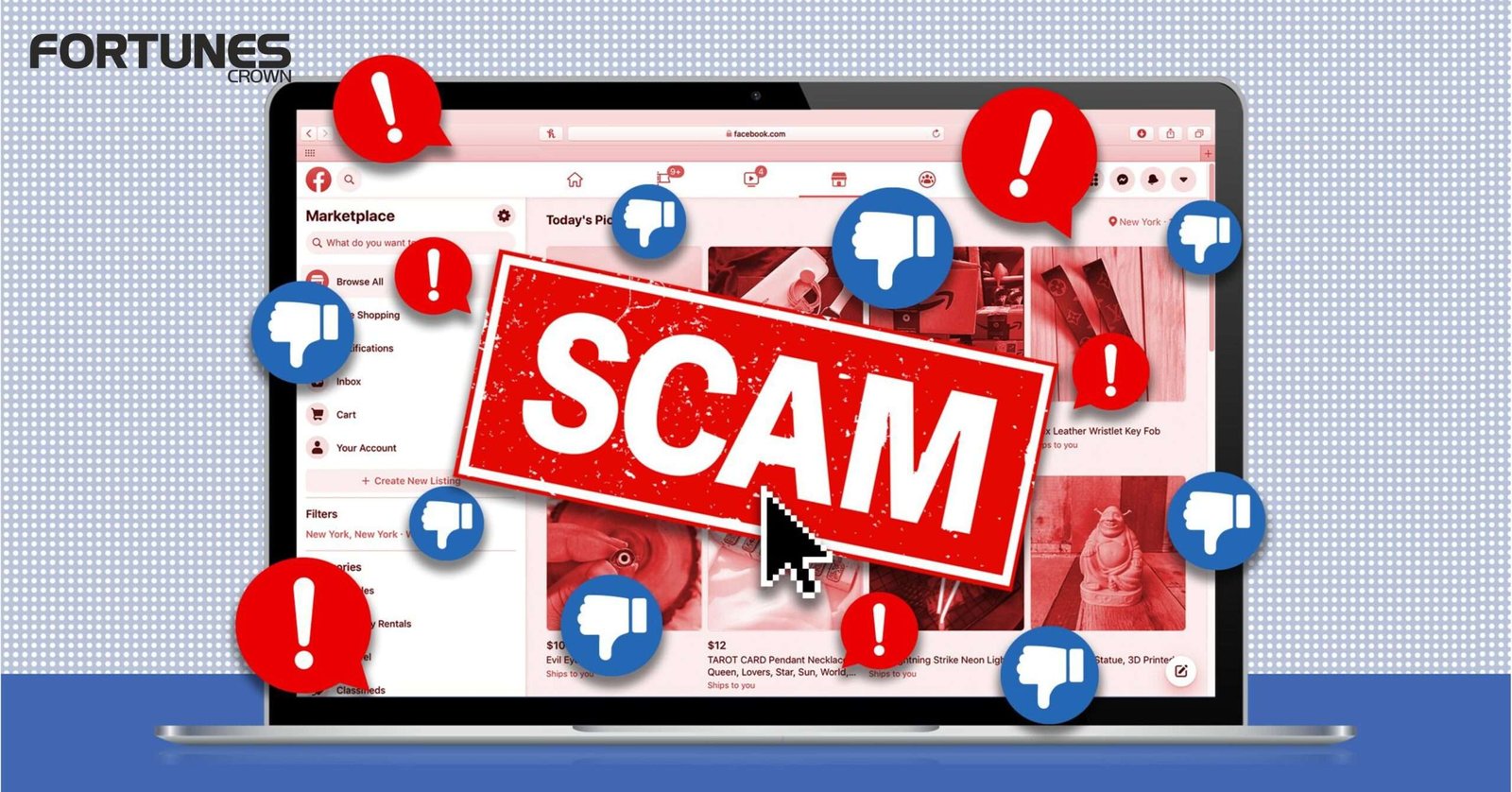
    It doesn’t take much time for scammers to make their homes on new applications and platforms. And Facebook Marketplace is no different. While we figure out how does Facebook marketplace work, they brainstorm over how to scam people.

    Here’s a real-life incident:

    Carman Alfonsi relied on Facebook Marketplace for years to buy and purchase pool tables for his Michigan billiards business. Carman’s account got hacked and then used to post 100 scam listings for phones and vehicles.

    Interested customers would be contacted and transacted with, but then left with no product delivery. This leads them to flood the messages of Carman Alfonsi demanding their products. Alfonsi later contacted people on Facebook to report that he’s been hacked and his account committed fraud. To his surprise, instead of helping, Facebook banned him from Marketplace.

  • Following Threats, Twitter Sues CCDH Hate Speech Watchdog

    Following Threats, Twitter Sues CCDH Hate Speech Watchdog

    Twitter has filed a lawsuit against the Center for Countering Digital Hate (CCDH), a nonprofit organization that has voiced criticism of the company’s response to hate speech, alleging that CCDH is attempting to deter businesses from using the platform.

    The hate speech monitor is accused in the case of “using flawed methodologies to advance incorrect, misleading narratives.” In an earlier statement on its website, the CCDH said that “Musk’s lawyers have threatened CCDH with baseless legal action over our work exposing the rise in hate & lies on Twitter.”

    The lawsuit, according to CCDH, is an effort to stifle criticism and independent study and serves only as a mirror to Twitter’s platform, revealing the rise in hatred and misinformation.

    X Says…

    A free public service called X is mostly supported by advertising. The CCDH is aggressively seeking to stop public discourse through its fear campaign and continual pressure on corporations to restrict public access to free expression.

    According to the American National Public Radio (NPR), X accused the CCDH of contract breach, contravening the Computer Fraud and Abuse Act, intentionally interfering with contractual relationships, and instigating a breach of contract in its court petition.

    “Despite our continued progress, the Center for Countering Digital Hate (CCDH) and its backers have been actively working to assert false and misleading claims encouraging advertisers to pause investment on the platform.”

    The CCDH has released a ton of studies on hate speech on X in recent months. On June 1st, the most current one was released. According to the report, 91% of hate speech uploaded by Twitter Blue subscribers goes unchallenged by X, “suggesting that the platform is allowing them to break its rules with impunity and is even algorithmically boosting their toxic tweets.”

    Accusations And Reactions

    By inappropriately gathering information about Twitter that it had sent to a third-party brand monitoring supplier and by urging an unknown person to do so, it is expressly claimed that CCDH violated both Twitter’s terms of service and federal hacking statutes.

    In this case, CCDH is charged with running a broad effort to intimidate Twitter users by drawing attention to the opinions they express on social media.

    Imran Ahmed, the CEO of CCDH, responded to the charges in the complaint on Tuesday by saying that many of them “sounds a little bit like a conspiracy theory to me,” especially the assertion concerning the nameless person.

    “The truth is that he’s [Elon Musk] been casting around for a reason to blame us for his failings as a CEO,” Ahmed said, “because we all know that when he took over, he put up the bat signal to racists and misogynists, to homophobes, to antisemites, saying ‘Twitter is now a free-speech platform.’ … And now he’s surprised when people can quantify that there has been a resulting increase in hate and disinformation.” Added Imran Ahmad.

    The case was filed after CCDH revealed Monday that Twitter had initially threatened to sue on July 20. In its reaction, Twitter called the company’s assertions “ridiculous.”

  • The Radioactive Diamond Battery That Can Run For 2800 Years!

    The Radioactive Diamond Battery That Can Run For 2800 Years!

    At some point, people only dreamt, imagined, and wrote about telephones in science fiction movies. A device that could perform the functions of devices like a camera, calculator, map, radio, and whatnot. When smartphones were brought to reality, they took over the world. Developers have had some insane and unfathomable developments made with the Smartphone. NDB reveals a battery made up of nuclear waste and diamonds that can run up to 2800 years.

    The Diamond Battery

    A battery company in California by the name of NDB has been working on creating an unusual, emission free power cell that can power your dependable electronic friend for up to nine years! In addition, the business says it is on track to develop a pacemaker that can produce heart- stimulating electricity for 28,000 years. As well as an auto-battery pack that can last a century, making the Energizer bunny’s head spin.

    The battery gets its primary source of energy from radioactive waste, hence called the Diamond Battery. It employs a betavoltaic method, which involves turning nuclear waste radiation into electrical energy.

    Nuclear waste is converted into radioactive diamonds by NDB, which then encases them in a synthetic diamond. Such a radioactive substance might release radiation for tens of thousands of years while simultaneously generating power.

    Around the world, 440 nuclear reactors are in use. After producing energy from a regulated nuclear fission chain reaction, their priority is to dispose of the extremely radioactive nuclear waste. It was estimated to be 25,000 metric tons in 2020. Following this, NDB hopes to power its batteries using that waste.

    Apple And Innovations

    The all innovations encompassing iPhone never leave its users disappointed. The Diamond Battery has surely reached the R&D department at Apple. A future iPhone could have a battery powered by nuclear waste and nanodiamonds.

    The Problem With Present Batteries

    Batteries present several issues during the lifespans of our products. Mining Lithium iron is a destructive industry, which is another issue. These effects will spread to more of our untamed environments as demand rises, perhaps having devastating results.

    When our batteries run out of juice, they frequently decompose in landfills along with the electronics they powered. Our electronic garbage is occasionally exported abroad, where it is crudely recovered or burnt before ending up in the air and water. Our old gadgets are only partially recycled responsibly. Batteries would produce far less trash if they didn’t deteriorate so fast.

    Nuclear Batteries

    Our batteries might not only outlive our phones and even our own life spans in the not-too-distant future, but they would also never require a recharge.

    Nuclear batteries sound absurd enough as it is, but the ones that could eventually be found in our phones and automobiles are built of synthetic nanodiamonds. In addition, it would be an understatement to say that the science underlying these nanodiamond batteries is sophisticated.

    To put it as simply as possible, chemical vapor deposition is used to remove radioactive materials from nuclear waste and enclose them in diamonds. The radiation is subsequently converted into electricity using the diamond as a transducer.

  • Facebook Privacy Settlement: Users Can Claim A Share In $725M

    Facebook Privacy Settlement: Users Can Claim A Share In $725M

    Users of Facebook in the US can seek to get a portion of the $ 725 million privacy settlement that the parent company of the social media network, Meta, agreed to pay last year. The reward is for any US citizen who had a Facebook account between May 24, 2007, and December 22, 2022. According to the AP, the settlement sum can be claimed by filing a form online by August 25 at the latest.

    The world’s largest social networking platform, Meta, is paying to resolve claims that it sold millions of its users’ personal information. The information and data were given to Cambridge Analytica, a company that helped Donald Trump win the 2016 presidential election. The parent company of Facebook has agreed to provide the impacted individuals with $75 million in late 2022.

    The Exact Amount

    The amount of money that each user will get is unclear. Since the funds must be distributed among them, each payout will be lesser the more persons who file legitimate claims.

    Facebook still has more than 2 billion members globally, including an estimated 250 million in the US. Despite the fact that its growth has slowed as more people interact and amuse themselves on competing sites like TikTok.

    How To Claim?

    There is a website that takes you to the settlement form, or users can claim by mail-

    • Name
    • Address
    • Date of Birth
    • Facebook Handle
    • Contact Details
    • Payment Information (PayPal, Zelle, Venmo, Mastercard)

    Meta’s Consequences

    Over the years, Facebook has been charged with gathering personal data and using it in ways that users weren’t aware of or had not authorized. In several claims, it was alleged that the network failed to keep an eye on how personal information was used after sharing. The deal made personal data available to app developers, business partners, marketers, and data brokers without their consent.

    “Meta is keen to present privacy issues such as those raised by the Cambridge Analytica controversy as historical – obviously it remains to be seen whether that’s the case – as if there are more settlements in the future, that could start to have a more serious impact on the company.” Technology Author James Ball said.

    The most prominent of these third parties was a personality quiz app that secretly acquired data from 71 million Facebook friends, including roughly 270,000 Americans. In addition to the app’s 270,000 users, there are other members linked to the app whose data is also stored.

    Beyond the Cambridge Analytica scandal, Meta has long faced criticism over data protection. For instance, the EU fined Meta a record $1.3 billion in May. Further mandating them to stop sending customers’ private information across the Atlantic by the end of October. Additionally, because of privacy concerns, the new text-based software Threads from the internet giant has not been released in the EU.

  • Welcome TwitterX: Elon Musk Rebrands The Bird App

    Welcome TwitterX: Elon Musk Rebrands The Bird App

    Coming up next in the list of changes implemented by Elon Musk to Twitter, is Twitter X. Going for a rather “minimalist art deco”, Musk rebranded the OG Twitter Bird to a glowing X.

    ‘X’ has been chosen as Twitter’s official logo instead of the iconic bird. Elon Musk made the announcement of “change” over the week. Following the announcement, the Twitter X website has already gone live.

    Musk tweeted that x.com is now also redirected to twitter.com, which is noteworthy. Musk also described this design as “interim” in the post, so a future logo update may be in order.

    “Bidding Farewell”?

    The social networking platform will soon get rid of all the “birds” as Musk stated. He also asked tweeters to “bid adieu to the former Twitter brand”.
    Following the announcement, Some users tweeted their reactions and concerns regarding Twitter X. One said “What will the ‘tweets’ be called now?”
    To which Musk replied “X’s.”

    Announcements and Trends

    Linda Yaccarino, the CEO of Twitter, announced the decision on Monday by tweeting the image and stating, “X is here! Let’s do this!
    Furthermore, Linda tweets – “X will go further and will have features “centered in audio, video, messaging, payment/banking” and make it a “global marketplace for ideas, goods, services, and opportunities.”

    GoodbyeTwitter was trending minutes through the announcement with users following this change. Twitter X is Elon Musk‘s way to rebrand the platform, which he has wanted to do completely.

    Musk and Twitter X

    It’s commonly known that Musk has a fascination with the letter “X.” In 1997, he started X.com, which later changed its name to PayPal. The logo for his space company SpaceX is an ‘X’. In addition, he established X.ai, an AI business. The social network owned by Elon Musk changed its formal name from Twitter Inc. to X Corp. in April.

    The Tesla CEO has mentioned making the social network “X, the everything app” after he gained control of Twitter.

    Reactions

    Twitter is a platform that started in 2006. The platform has always stayed active and is a hub for all information you can think of. Especially, when it comes to worldly affairs, Twitter is the best place to look out for opinionated people. Naturally, when a huge change, such as this rebranding, is announced, people will have mixed reactions to it.

    One user shared an illustration of an X shedding blue feathers, symbolizing the old logo and Twitter X. However, another user had a different take on Twitter X and had a suggestion. Ending this with a dilemma or confusion many people expressed. So… Valid or not?

    Did you like Twitter X?

  • SpaceX’s Euclid Space Telescope To Explore 36% of The Sky And Dark Regions

    SpaceX’s Euclid Space Telescope To Explore 36% of The Sky And Dark Regions

    At 11:12 a.m. ET on Saturday, a SpaceX Falcon 9 rocket carrying the Euclid Space Telescope
    lifted off from Florida’s Cape Canaveral Space Force Station. The mission was long awaited by
    several astronomy enthusiasts as it has the potential to explore several mysteries, theories, and
    questions.

    The Telescope

    The four-foot-diameter, 1.2-meter-diameter telescope has begun a month-long voyage to the sun-
    Earth Lagrange point L2, which is around 1 million miles (1.6 million kilometers) from Earth
    and also serves as the home of NASA’s James Webb Space Telescope. Euclid will follow Earth
    as it revolves around the sun.

    Euclid will spend two months testing and calibrating its equipment, a visible light camera and a
    near-infrared camera/spectrometer, after entering orbit. Then, over the following six years, it will
    observe one-third of the sky.

    Over the course of its six-year mission, the Euclid telescope will survey 36% of the sky, and to
    examine such a big region, the telescope has an extremely broad field of vision.

    “Euclid is coming at a really interesting time in the history of cosmology,” said Jason Rhodes, a
    physicist at NASA’s Jet Propulsion Laboratory who leads Euclid’s U.S. science team. “We are
    entering a time when Euclid is going to be great at answering questions that are just now
    emerging. And I am certain that Euclid is going to be fantastic for answering questions we
    haven’t even thought of.”

    A Wider Horizon!

    The spaceship won’t be the only one gazing into the universe’s dark recesses. However,
    astronomers will utilize Euclid to scan large swaths of the extragalactic sky at once, in contrast to
    the Hubble and James Webb Space Telescopes, which concentrate intently on one area of the sky
    at a time.

    Euclid will image the universe’s structure around one billion years after the Big Bang in three of
    the locations it records, going even further back in time. Before arriving at the second Lagrange
    Point, which is a stable hovering location around 1.5 million kilometers (about 930,000 miles)
    from Earth, Euclid will spend about one month journeying through space.

  • Tesla in India is Finally a Reality! Government’s Green Signal

    Tesla in India is Finally a Reality! Government’s Green Signal

    Tesla’s senior executives have flown to Delhi to discuss the business’s ambitions to establish operations in the country, reviving expectations of the company entering India after months of stagnation. The presence of the American carmaker here is probably going to accelerate the transition of the automotive sector toward sustainable and electric transportation.

    A Shift of Tesla in India

    Elon Musk’s Tesla is now thinking about producing in India and is no longer lobbying for a reduction in the import tariff on fully manufactured units, which is at 100% for vehicles costing $40,000 and more.

    60% of the tax is applied to vehicles that cost less. In the past, Tesla has called for a reduction in the duty to 40%.

    “We have signaled to them that the government of India is working together (and) will certainly make whatever ambitions they have or investment objective they have in (making them) India (plans) a success,”  said Union Minister of India, Rajeev Chandrasekhar. A few days after that high-profile visit, Musk announced on Twitter that he’ll likely pick a new Tesla factory location by the end of the year—and confirmed that India is an ‘absolutely’ interesting option.

    Brief History

    The Tesla Model 3 was the company’s first ‘affordable’ automobile when Elon Musk, the flamboyant CEO of the American automaker Tesla Inc., unveiled it in 2016, and an order page for India was also made available. Indian IT businessmen hurried to place orders. There was an expectation that the producer of electric vehicles would soon begin operating in India. Tesla had, after all, stated in 2015 that it “would consider” constructing a battery facility in India, according to Musk.

    The company’s decision to warm up to India again is part of its aim to diversify and grow outside of China, which is now its biggest market outside of the US. India might definitely serve as a substitute market because the national government is keener on fostering domestic production. The largest EV manufacturer in the world, Tesla, has numerous US plants, including one in Fremont, California. The business also has plants close to Shanghai, China, and Berlin, Germany.

  • “Innovation is Power” Toyota Announces Hydrogen Combustion Engine As Toyota Mirai 

    “Innovation is Power” Toyota Announces Hydrogen Combustion Engine As Toyota Mirai 

    Sustainable ways to travel have been a purpose for research and development for a while now. Every company today wants to be the first to introduce the next best alternative that is not only efficient but also environment friendly. For many years, Toyota has been one of the leading advocates for the use of hydrogen fuel in both road vehicles and racing vehicles. Recently, Toyota announced to the world that they are here with its hydrogen fuel cell vehicle- Toyota Mirai.

    Toyota presented its hydrogen fuel cell vehicle at the ongoing Auto Expo 2023 event in Greater Noida. Running on hydrogen, Toyota Mirai can give a range of up to 640 km in a full tank. The company has brought this car to India as a pilot project for hydrogen cars. It is believed that the cost of running a km from this comes to only one rupee.

    Toyota Mirai is termed a Fuel Cell Electric Vehicle (FCEV). It contains a hydrogen tank, and when oxygen and hydrogen taken from the atmosphere react there, electricity is produced as a result.

    “For FCEVs, we will pursue mass production centered on commercial vehicles,” said Hiroki Nakajima, Toyota’s chief technology officer. “One feature of FCEVs is that the energy source, hydrogen, is lightweight so even when traveling longer distances the vehicle is not as heavy as a battery EV, and less space is required. Refueling is also much quicker. Taking advantage of these strengths, we will work with business operators to promote FCEVs by starting with commercial vehicles such as medium to heavy-duty trucks.”

    The Technicalities

    The electric motor has a power output of 182 horsepower and a max torque of 300 Nm. The automobile can go from 0-100 Kmph in 9.2 seconds thanks to its electric powertrain.

    On the Toyota New Global Architecture platform, Mirai was created. It is a 4.9 m long car in the coupe design. It has a 12.3-inch touchscreen interface and 20-inch wheels. Other amenities include a color head-up display, a panoramic sunroof, a digital rear-view mirror, a wireless charger, heated and ventilated seats, and Toyota Teammate driving aid software.

  • Meet ANDI! The First-Ever “Sweating, Breathing, and Shivering” Robot

    Meet ANDI! The First-Ever “Sweating, Breathing, and Shivering” Robot

    The basic difference differentiating robots from humans is the natural bodily actions and
    processes we can do that robots can’t. This includes digestion, urination, or perspiration. Some
    wisdomous minds are constantly working towards deleting these differences between humans
    and their “humanoid” robots. A humanoid robot that can breathe and perspire is being used by
    Arizona State University researchers to examine how severe heat affects the body, including butt sweat.

    However bizarre ANDI (and its rear end) may appear, the gadget may aid scientists in creating
    better goods, techniques, and therapies to protect populations as the world continues its risky,
    climate change-related warming tendencies.

    According to scientists, they have created the first “breathing, sweating, shivering” robot, which
    was created to adapt to various temperatures.

    ANDI is a heat-sensitive “thermal mannequin” with 35 independently controllable surfaces that
    have pores that bead sweat just like human skin.

    Meet ANDI!

    Thermetrics created the NSF Major Research Instrumentation Grant-funded ANDI specifically
    for ASU. He has 35 distinct surface regions that are all independently regulated with temperature
    sensors, heat flux sensors, and pores that bead perspiration. He can simulate the thermal
    functions of the human body.

    Andi’s body is designed with internal cooling channels that circulate cool water throughout it,
    allowing him to stay cool enough to withstand intense heat while analyzing complex factors such
    as solar radiation from the sun, infrared radiation from the ground, and convection from the
    surrounding air that affects how hot we perceive various environments.

    “You can’t put humans in dangerous extreme heat situations and test what would happen,”
    stated Jennifer Vanos, whose studies have shown a link between excessive heat and health,
    particularly in active groups like youngsters, outdoor workers, and sports. “But there are
    situations we know of in the Valley where people are dying of heat and we still don’t fully
    understand what happened. ANDI can help us figure that out.” 

    The researchers are also hoping that ANDI, which even has internal “organs” patterned after their
    human counterparts may provide some further light on deaths that have been linked to the heat
    in the past.

    Summertime Experiments

    Together, ANDI and MaRTy, ASU’s biometeorological heat robot, will be used by researchers
    this summer to better understand human sweating mechanisms, such as altering skin temperature
    and changing core temperature, and to determine how particular surroundings may increase the
    risk of heat stress.

    The ANDI and MaRTy team will first be testing in heat-sensitive locations, such as open streets
    and old mobile homes where the AC stopped working, on the campus of Arizona State
    University in Tempe. Later, they will go across the larger Phoenix region.

    “MaRTy can tell us how the built environment modifies the amount of heat that hits the body, but
    MaRTy doesn’t know what happens inside the body,”
    said Middel, who studies urban climate and
    how urban environments influence weather hazards. “ MaRTy measures the environment, and
    then ANDI can then tell us how the body can react.”