Category: Technology

  • This Comet Could Be Visible To Naked Eye In January, February 2023

    This Comet Could Be Visible To Naked Eye In January, February 2023

    In 2023, there is already something to look forward to for all astrophile. According to NASA, comet C/2022 E3 may be visible to the naked eye in clear skies during the cold months of January and February as it approaches Earth.

    C/2022 E3 (ZTF) is the name of the comet, which is currently traveling through the inner solar system. On January 12, it will make its perihelion or closest approach to the sun, and between February 1 and 2, it will make its perigee or closest approach to Earth.

    Comets

    The “cosmic snowballs” known as comets are made up of frozen gases, dust, and rock and orbit the sun. As they approach our star, these objects are subjected to radiation doses that increase, resulting in the release of gases and debris

    A First Time Naked-Eye Comet

    This fresh comet was detected in March of last year while orbiting Jupiter. The comet should be visible in the Northern Hemisphere’s early morning sky in January. It will travel northwest and pass between the Little and Big Dippers before the end of the month. By the second half of January, humans may be able to observe the comet with their own eyes. Anyone in the southern hemisphere can anticipate seeing the comment by early February. The comet is expected to be at least magnitude +6–roughly the brightest that the human eye can see—by the time it makes its closest approach to Earth, if not slightly better.

    According to Robert Massey, Deputy Executive Director of the Royal Astronomical Society in the United Kingdom, “The current prediction is that the comet will reach magnitude +5 around the start of February.” “So far, the observed brightness is in line with that model.” Mr Massey remarked.

    After traveling by the Earth, this comet will proceed away from the sun and the inner solar system. According to the site, considering the uncertainty surrounding its future direction, it will be interesting to observe what occurs next.

  • Stora Enso’s Lignin – A Battery That is Generated From Trees?

    Stora Enso’s Lignin – A Battery That is Generated From Trees?

    Energy storage is a necessity for contemporary life. We wouldn’t be able to have electric cars, laptops, or cell phones without them. Electrical energy needs to be stored and readily available for use in everything from consumer devices to transportation. The limited resources used to create current systems, such as the lithium-ion batteries used in many devices, result in environmental issues when disposed of.

    The process of turning plant biomass into a substance known as “porous carbon” is one of the most promising ones for developing sustainable energy storage devices. It is possible to create “nanostructures” with a range of beneficial electrochemical properties out of this type of carbon in three dimensions.

    Scientists are looking for materials to build environmentally friendly batteries as the demand for electric vehicles rises. The substance that gives trees their woodiness, lignin, is a strong contender.

    According to Lauri Lehtonen, manager of Stora Enso’s lignin-based battery product, Linode, “Lignin is the glue in the trees that kind of glues the cellulose fibers together and also makes the trees stiff.”

    A polymer called lignin includes carbon. Additionally, carbon is a fantastic material for the anode, a crucial part of batteries. Your phone’s lithium-ion battery almost probably features a graphite anode because graphite is a layered type of carbon.

    The engineers at Stora Enso concluded that lignin could be extracted from the waste pulp that was already being produced at some of their facilities and processed to create a carbon substance for battery anodes. The business intends to start building batteries as early as 2025 and has partnered with the Swedish business Northvolt.

    Wonders of Science

    Porous carbon nanostructures can be selectively combined with small amounts of other atoms or chemical groups to form composites that could serve as electrodes or conducting components for capacitors or rechargeable batteries. Numerous straightforward methods, such as changing the temperature at which the material is generated, can be used to modify pore size and structure. Chiang and his co-authors examine research that is exploring these options utilizing a variety of plant products, including, but not limited to, trees, cotton, bamboo, beans, seeds, tea leaves, fruit peels, and fungi.

    As the globe transitions away from fossil fuels, the number of additional gigawatt hours (GWh) needed yearly will increase from a few hundred in 2015 to a few thousand by 2030, according to management consulting firm McKinsey. The issue is that many of the industrial and mining operations used to produce the lithium-ion batteries on which we currently rely are harmful to the environment. These batteries also include several hazardous and challenging-to-recycle components. A lot of them come from nations with a bad track record for human rights.

    Batteries And Charges 

    Cathode and anode, the positive and negative electrodes, respectively, between which charged particles known as ions move, are typically required for all batteries. According to Jill Pestana, a battery scientist and engineer currently employed as an independent consultant in California, when a battery is charged, lithium or sodium ions, for instance, travel from the cathode to the anode, where they settle like automobiles in a multi-story parking lot.

    The ions move back to the cathode after releasing electrons when the battery is drained to power something like an electric car. The electrons then move through the wire in an electrical circuit, transferring energy to the vehicle.

    “Byproducts Put To Use”

    In a lab setting, Wyatt Tenhaeff of the University of Rochester in New York State has also created anodes built of lignin. He describes lignin as “very cool” because it is a byproduct with a wide range of possible applications. In tests, he and his coworkers discovered that they could create an anode with a self-supporting structure out of lignin without the use of glue or a copper-based current collector, which is a typical element in lithium-ion batteries. Although this would make lignin-derived carbon anodes less expensive, he doubts they will be able to outsell graphite anodes in terms of cost.

    The issue of sustainability is another. According to Chelsea Baldino, a researcher at the International Council on Clean Transportation, no additional trees will be felled to create batteries as long as the lignin needed to make anodes is collected as a byproduct from the paper-making process.

    Research is still in its early stages, so there is a long way to go before large amounts of plant-based materials are used in manufactured products. Converting the potential now being shown in the laboratory into reliable technologies is a significant problem. Chiang underlines that cooperation within the fields of materials science, chemical engineering, mechanical engineering, and environmental management will be necessary to meet the problems.

  • The Public Has Spoken: Musk’s Stepping Down As Twitter CEO Gains Majority “Yes”

    The Public Has Spoken: Musk’s Stepping Down As Twitter CEO Gains Majority “Yes”

    Well Well Well. Has the Elon Musk-Twitter story been updated with a new chapter? Musk implemented several controversial policies after owning the social media platform. The media, the European Union, and even the United Nations were outraged by his move to suspend the accounts of many journalists who were covering Twitter.

    The Twitter Poll Mayhem

    Elon Musk, the CEO of Twitter, started a poll asking people if they thought he should step down as the platform’s leader. 

    In a rather hilarious turn of events, more than half of respondents to the poll said they wanted Musk to leave his position as Twitter’s CEO. The decision was supported by more than half of those who participated in the poll.

    Elon Musk had stated that he would follow the poll’s results, but he did not specify when he would resign if the results indicated that he should.

    The Twitter Responses Mayhem

    Of course, after Elon Musk got the witty community of Twitter a golden-plated chance with this poll, there were lines and lines of hilarious tweets and videos for the same. 

    One user comments that no matter what the result is, we will get to see Elon as the CEO till he finds a “devoted successor.”

    Another one used a Family Guy clip to describe the situation. 

    This one user has a rather quick solution for Elon Musk for getting the desired result of the poll- to keep extending it till he gets a higher percentage for “no.” 

    In anticipation of Musk stepping off from Twitter, Tesla shares surged. Before regular trading on Monday began, the price of Tesla’s stock increased by as much as 5.3%. Since Musk revealed in early April that he had purchased a stake in Twitter, the shares have fallen 58%, outperforming the 15% decline in the S&P 500 Index.

    “It appears Musk’s reign as CEO of Twitter will come to an end and thus be a major positive for Tesla’s stock, starting slowly remove this albatross from the story.” Wedbush analyst Dan Ives said in a note. 

  • Epic Game’s Fortnite Penalized After Constant Claims Of “Tricking Users”

    Epic Game’s Fortnite Penalized After Constant Claims Of “Tricking Users”

    The developer (Epic Games) of the well-known video game Fortnite has agreed to pay $520 million (£427 million) to settle US regulators’ charges that the game violated user privacy rules and deceived players into making payments.

    According to the Federal Trade Commission (FTC), the company tricked users with “deceptive interfaces” that might prompt purchases even as the game was loading. It also accused it of using “privacy-invasive” default settings.

    “No developer creates a game with the intention of ending up here,” the company said. “We accepted this agreement because we want Epic to be at the forefront of consumer protection and provide the best experience for our players.”

    Raising Increasing Concerns

    More than 400 million people worldwide play Fortnite, a battle royale game that shot to fame after its 2017 release. Although the game may normally be downloaded for free, it is funded through in-game sales of things like costumes and dance techniques.

    Even after making improvements to address internal and public concerns, the game’s producers disregarded rules involving parental consent, according to the FTC, despite the fact that it matched strangers from all over the world for interactive battles and was targeted at children and teenagers.

    According to the complaint, the company had resisted altering its design to include a separate confirmation step because it was concerned that doing so “would add ‘friction’,’result in a decent number of people second-guessing their purchase’, and reduce the number of ‘impulse purchases’”.

    The Impact

    The FTC announced Epic Games would pay $275 million to settle accusations it gathered child and teen data without parental authorization and exposed kids and teens to bullying and harassment by turning on voice and text conversations by default. This is a record fine for the consumer watchdog.

    In addition to changing the privacy settings for kids and teenagers, Epic Games agreed to make chat communications off by default. The gaming company will also make a record payment of $245 million to resolve a different complaint over dishonest billing practices. This money will be used to repay clients.

    A “counterintuitive, inconsistent, and confusing button configuration,” according to the FTC, caused hundreds of millions of dollars in unauthorized purchases.

  • A Brain Stimulator Powered By Breathing Instead of Batteries

    A Brain Stimulator Powered By Breathing Instead of Batteries

    New Techniques For Depression, Parkinson’s- Brain Stimulators Powered By Breathing 

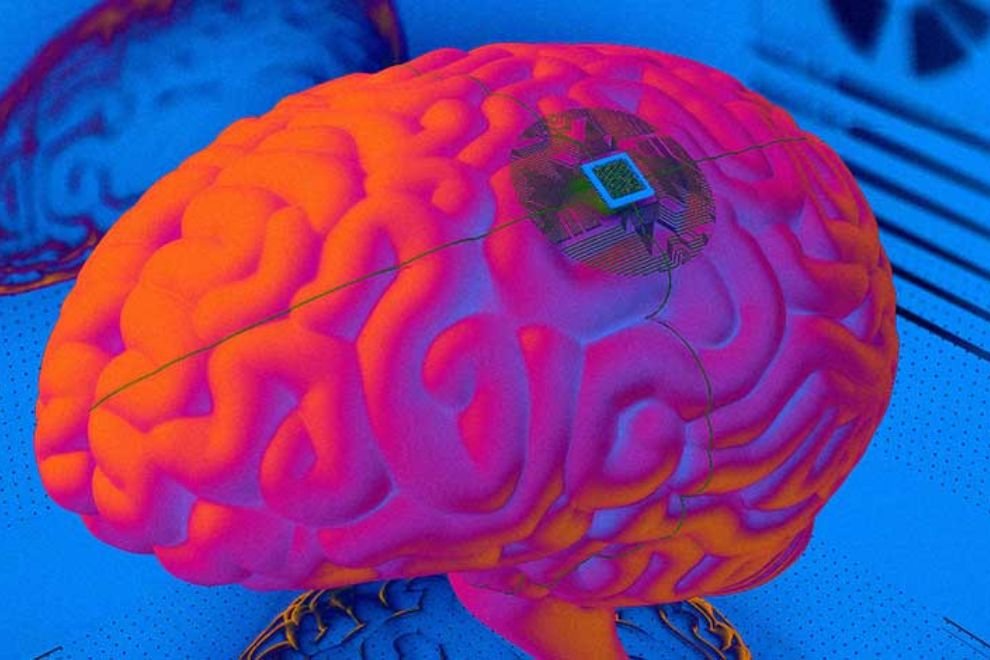
    In the never-ending search for highly effective yet less painful treatments, new experimental, battery-free, surgically implanted brain technology is boosting optimism.

    Today, epilepsy and Parkinson’s disease are treated with neural implants that electrically activate deep brain tissue. Recent studies have also demonstrated the effectiveness of deep-brain stimulation in the treatment of mental illnesses such as addiction, depression, obsessive-compulsive disorder, and post-traumatic stress disorder.

    These Deep Brain Stimulation (DBS) implants have three years’ worth of battery life. Surgery to replace the large batteries, however, can be expensive and increase the risk of infection. A DBS system that powers itself by gathering and storing energy from the motion of breathing lungs has been created by researchers as a solution for that issue.

    “Deep-brain stimulators are energy monsters so the battery runs out very quickly,” says Islam Mosa, a chemist, and chief technology officer of the University of Connecticut 

    How Does It Work?

    Electrodes are surgically inserted in the deep interior region of the brain during deep brain stimulation to convey electrical impulses at various frequencies. The electrodes are fired through a wire under the skin that goes up the neck to the skull by a pulse generator positioned immediately below the collarbone.

    The brain would receive those electrical pulses in a controlled manner. Previous attempts to create battery-free DBS systems that rely on capturing the body’s mechanical energy failed to deliver pulses at a controllable frequency or to produce enough power to activate the electrodes.

    “We wanted to make this fit in with the rest of the available technology in the usual way. In principle, if someone already has a deep brain stimulator, we could just replace the battery with this generator without having to retrofit them with a wholly new device,” says UConn chemist Jim Rusling.

    Testing

    The scientists put their triboelectric nanogenerator to the test by placing it inside the chest of a model pig with a pig lung attached to a pump. The pig’s lung pushes against the nanogenerator during breathing and exhaling, forcing two layers inside the device to rub against each other and generate electricity.

    The deep brain stimulator electronics are located outside the rib cage and are powered by a supercapacitor that receives electricity through a tiny wire. The brain stimulator produced pulses 60 times per second using the supercapacitor’s stored electricity, much like a commercial device would.

  • Are Big Tech Employee Lay-Offs Start of a Global Recession?

    Are Big Tech Employee Lay-Offs Start of a Global Recession?

    UN recently announced that the world might go into a recession in the coming year. 2020 was a pandemic-stricken year that caused significant markets and economies to crash. As we stand today, 2 years after the pandemic, is that situation changed? Has the world risen from that state? Recent reports and economic analyses say differently. Fears of an upcoming global recession have increased as a number of tech giants, like Amazon and Disney, have announced mass layoffs as part of their reorganization plans.

    Silicon Valley experienced a wave of layoffs in the third quarter. According to a recent count by Crunchbase, which offers insights into the current state of business, US-based IT companies had let go of more than 45,000 employees as of October 2022. These layoffs include Twitter’s most recent round of mass layoffs, which affected about half the company.

    After a few companies, it has become a trend for companies to lay off employees with no notice period or warning. 

    Recession Not So Far?

    The world economy is currently experiencing its sharpest slump. The three major economies in the world—the US, China, and Europe—have been startlingly slowing down since the pandemic crisis. A thorough research by the World Bank suggests that if central banks raise interest rates simultaneously to combat inflation, the world may be creeping closer to a worldwide recession in 2023.

    “Global growth is slowing sharply, with further slowing likely as more countries fall into recession. My deep concern is that these trends will persist, with long-lasting consequences that are devastating for people in emerging markets and developing economies” said World Bank Group President David Malpass.  

    Meta

    After Meta’s stocks disappointingly went down- seen at their lowest since 2016, the company decided to lay off around 11,000 employees which make up to 13% of their workforce. The company will continue these layoffs through the departments. The current team will be roughly affected by this and later will be restructured “more substantially”.

    In a message to staff members, Zuckerberg stated that individuals who lose their employment would be paid for 16 weeks and two more weeks for each year of service. For six months, Meta will pay for health insurance.

    Twitter

    Everyone is familiar with the Musk-Twitter drama. Soon after owning Twitter in a $44 billion deal, it was Musk’s first decision to lay off many employees including the CEO Parag Agrawal. Claiming there was “no choice” Musk has already laid off more than 75% of its employees. While there were 7500 employees working for Twitter on November 1, not even a month later, Twitter has around 2500 employees left. 

    Musk stated that the platform is losing $4 million per day causing him to take the step of layoffs. 

    Shopify

    After its stock prices went down 78% in 2022, the e-commerce company announced laying off 1000 of its workers making 10% of its global employees. 

    The company claims to have misjudged how long its pandemic-driven sales would last and they are hit by a wave of losses- monetary and raw material. 

    Netflix

    Netflix witnessed its stocks going down by 58% this year. Caused by both its high subscription prices and customers’ attraction to competitors, the streaming platform announced two rounds of layoffs. In May, eliminating 150 jobs and later in June around 300. 

    The platform claims to be adjusting its costs to grow in line with its slower revenue growth. 

    Microsoft

    The company laid off around 1000 employees in multiple divisions. “Making structural adjustments” was the reason behind the layoffs as claimed by the company. The company says it wants to “realign” its workforce and will continue to invest and hire in key growth areas in the year ahead. 

    Post-Covid Hits

    COVID forced a lot of people and companies to work from home. Even after the pandemic got over, many employees found work-from-home comforting and beneficial. Post-pandemic many employees continued the arrangement which gave birth to a hybrid work situation. 

    Many employees (and employers) desire some time at the office for teamwork, idea sharing, and developing a corporate culture.

    We’ve moved past the days of having every meeting hosted automatically online, even though tools like Zoom and Google Meet are still widely used.

    The final outcome? Too many individuals were hired by tech companies. And these are highly skilled software engineers and developers earning low to mid-six-figure salaries, not part-time administrative assistants making $10 an hour.

    “Recent IT sector layoffs can be read alongside the contemporary global uncertainty coupled with the Russia-Ukraine war. The global situation is quite poor. However, Twitter layoffs are likely to be linked with the company’s current situation… “ said Prof. Pupapre Balakrishnan, former director of the Centre for Development Studies.

  • LG Introduces “Rubber Band Like” Stretchable Rollable Screens

    LG Introduces “Rubber Band Like” Stretchable Rollable Screens

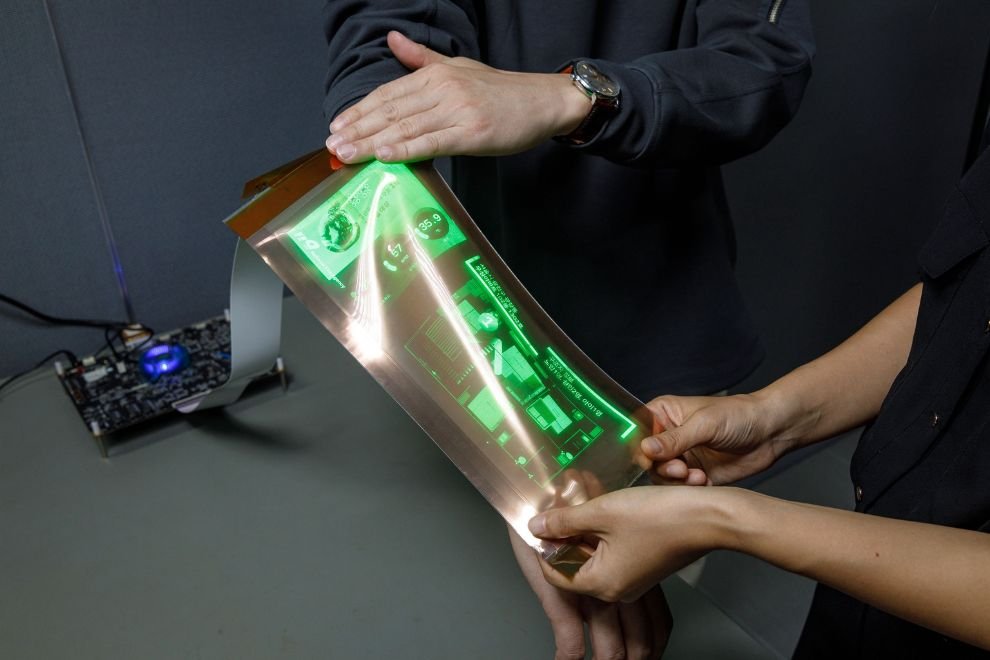
    We started with foldable phones, and now we have foldable mobile screens that miraculously don’t break in two halves when you fold them. Behold. Now you can fold your screen in a neat little fold and push it down your pockets! LG brings this marvel of an invention who’s latest screen can not just be bended, but can be twisted, distorted, wobbled and rolled up without any damage.

    Announced through a press release, “Stretchable Display: can display full-color RGB and has a 100ppi resolution. The micro LEDs utilized in the prototype had a sub-40 m pixel pitch and put together into a silicone substrate material that is commonly found in contact lenses. This gives it a consistency “similar to that of a rubber band,” according to LG Display, and enables it to be stretched in any direction by up to 20%.

    Previously, we have seen flexible screens have in smart phones, TV screens and even in smart wardrobes. The company Although the company hasn’t announced any product announcements featuring the technology, they anticipate it will eventually utilized in sectors like wearables, mobility, smart devices, gaming, and fashion. As part of a government-sponsored development effort, LG Display is now working on the first prototype of a stretchy screen with the goal of advancing display technology by 2024.
    “Innovations like the Stretchable are important as it builds a bridge to connect display technology to countless other industries, ultimately providing a more convenient lifestyle for consumers.” L.G via their press release.

  • Fake Verified Accounts Can Cascade The Platform Into Chaos

    Fake Verified Accounts Can Cascade The Platform Into Chaos

    Ever since Elon Musk purchased Twitter in a $44 Billion deal, the app has constantly been escalating into more and more chaos. Advertisers rush away, actual neo-Nazis are becoming verified, and imposter accounts are widespread. Additionally, Musk must find a way to pay the $1.2 billion in debt payments due annually or risk the company’s collapse.

    The latest “Twitter Blue” policy which allows literally any account to rock that blue verified tick mark at $8 is taking turns even Musk wouldn’t have imagined. While the policy was made for the micro-blogging platform to collect extra revenue, it has now become a way for parody accounts to be the imposter as fake celebrities, authorities, or politicians’ Twitter accounts and tweet just about anything. 

    The two types of blue check accounts can no longer be visually differentiated from one another when tweets are shown in Twitter’s timeline. To do this, one would need to click through to a user’s follower count, which isn’t always a trustworthy indicator or look for any hints in their other tweets. The copy that appears when you click on the check mark directly from a profile page appears to be different as well, but like with anything on Twitter at the moment, that might change.

    But one cannot deny that these fake tweets and the irony of the accounts they’re coming from are incredibly hilarious to witness. 

    1. Trump Back And is Loveable By All?

    Thanks to previous events and actions, former US president Donald Trump was banned from the platform. But well apparently he made a comeback- and his statements and tweet on the app are completely ironical to his real-life speeches. 

    However, through tweets like “Joe Biden is a fine man. Very great leader!” it is evident to any user that this account is fake, but well we can pretend for a second or two. 

    1. Apple’s Apple Air Too Cheap For Anyone’s Liking

    After launching iPhone14 and other models, “Apple” decided to apple-ise the air we breathe bringing Apple Air+ “a brand new innovative group of atoms specifically tuned to enhance your Apple Store experience”. 

    “AppleofCA” on Twitter announced this marvelous of a product making it uncannily resemble an official announcement that Apple lovers might just go and purchase their own Apple Air+.

    1. Mario is Really Angry

    The beloved video game character Mario has been a friendly and goofy character to little kids ever since Nintendo launched. But it seems the new policies have angered the friendly little Mario. 

    When a verified account for Nintendo, “nintendoofus” tweeted the character showing the bird. 

    These and many more “subscribed not verified” impersonating accounts flooded Twitter and cascaded for Twitter to stop their verification-official account process just to look into these impersonating accounts and either suspend or take their blue tick away. 

  • China Sending Monkeys In Zero Gravity To Test Survival 

    China Sending Monkeys In Zero Gravity To Test Survival 

    The world is about to hit a population of around 8 billion pretty soon. And as climate change keeps warning us, there is indeed no Planet B. So save the one you’re living in right? Well, According to reports, China intends to send monkeys to its recently launched Tiangong space station to observe how they develop and breed in zero gravity. 

    The experiment will be carried out in the most extensive module of the space station, which is primarily utilized for life sciences investigations. According to reports, Chinese scientists Zhang Lu-who previously led research for the space state will be citing and supervising this experiment. 

    Mr. Zhang stated-, “some studies involving mice and macaques (monkeys) will now be carried out to see how they grow or even reproduce in space”. After studying smaller creatures like fish and snails. 

    The project requires sophisticated and modern scientific equipment to first test the conditions and study the consequences. 

    Why Monkeys?

    Scientifically and Genetically, monkeys share the most similarities with humans in terms of reproduction, and other bodily functions. 

    Additionally, Mr. Kee added that “these tests will be necessary” since “bigger animals, especially monkeys, shared more similarities with humans and because more governments are planning for long-term settlement in orbit around the Moon or Mars.”

    Such experiments and trials really prove that the day isn’t far when we start to rehabilitate planets leaving our own. 

  • India to Introduce Direct-To-Mobile Broadcasting, Watch Movies Without Internet

    India to Introduce Direct-To-Mobile Broadcasting, Watch Movies Without Internet

    Picture this. You are on the metro or some weird place where you can’t find even an ounce of the network. Those 5 little network sticks are betraying you in every way possible. And just in time, you have a heavy PDF to download from this website. Perfect timing isn’t it? The universe is against you. If only you could download the PDF offline to save this mess of a day! Well, guess what! You are in luck! How did you ask? India’s Direct-To-Mobile Broadcasting Technology (D2M Technology). 

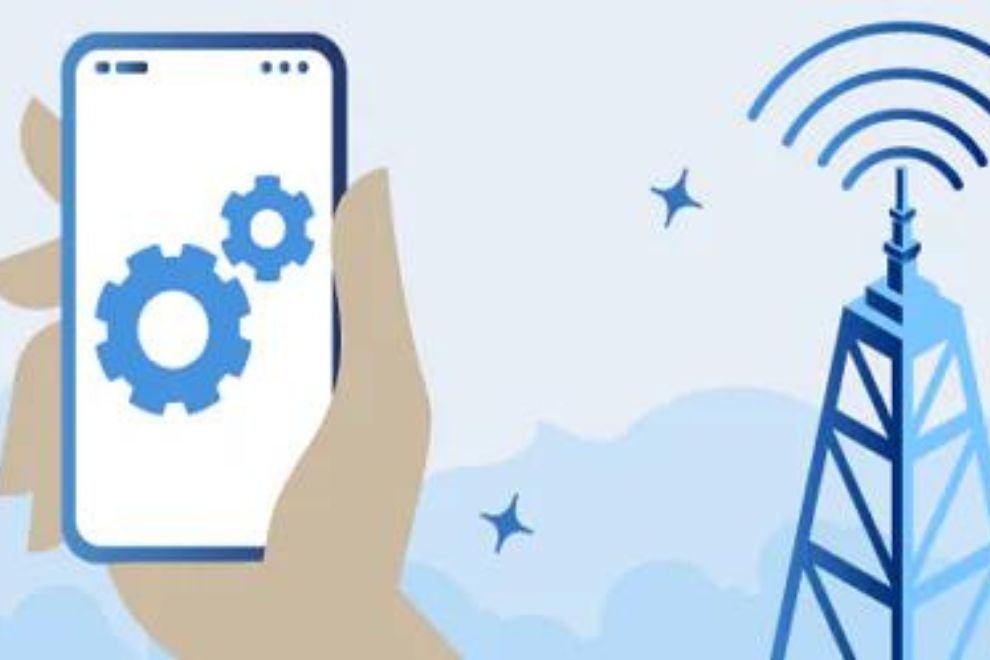
    To broadcast video and other multimedia information directly to mobile phones without an active internet connection, the Department of Telecommunications (DoT) and India’s public service broadcaster Prasar Bharati are investigating the viability of the technology. The “direct-to-mobile” (D2M) broadcasting technology claims to increase broadband usage and spectrum efficiency.

    What is Direct-To-Mobile Broadcasting?

    Similar to how FM Radio works, the D2M Broadcasting technology will enable consumers to download multimedia files directly to their mobile devices without needing a working internet connection. With the help of this indigenous technology, the Government of India hopes to provide information to the public directly, combat false news, send out emergency notifications, and aid in disaster management.

    The Need 

    As a country that had 1.2 billion mobile subscribers and sim-holders in 2021, of which about 750 million are smartphone users, the need and possibilities of a technology like this are insane. With so many smartphones being used, the country has 4G connectivity and plans to roll out 5G in the next few years. 

    With a population and phone usage that huge, it increases the load on servers and network providers. Over 2.5 quintillion bytes of data is produced and shared every single day. It is important for the emergence of a technology that would help emergency messages, opportunities, and other important updates reach those who don’t have access to the internet, momentarily or permanently. 

    This would enable telecoms and internet service providers to free up valuable mobile spectrum by allowing them to transfer video traffic from their mobile network onto the broadcast network. By offloading video traffic, the mobile spectrum will be better utilized.

    Another obstacle that could be tackled through this technology is the threat of fake news and updates being shared around. If people would get credible information made available to them with no network or connectivity hassles, they’d be aware of updates, opportunities, and facts. 

    The Beginnings

    To evaluate the viability of the D2M technology, public service broadcaster Prasar Bharati also established a partnership with the Indian Institute of Technology (IIT) Kanpur last year.

    In New Delhi earlier this month, IIT Kanpur hosted a symposium on “Direct-to-Mobile & 5G Broadband – Convergence Roadmap for India” with the help of Prasar Bharati and TSDSI (Telecommunications Standards Development Society, India).

    “It’s an indigenous ‘Made in India’ technology, and it is the first of its kind in the world. D2M is going to revolutionize content delivery, especially video content. Consumers today are watching videos on their phones; most of the things are consumed on phones, and with D2M tech, they would be able to receive video content without having to pay for data plans,” Parag Naik, CEO, Saankhya Labs told Prachar Bharati News Services.

    The Challenges 

    The government’s biggest issue is getting all the necessary parties, including the telcos, on board to launch D2M technology widely.

    The government must also overcome the infrastructure obstacles if it wants to implement the technology widely. It won’t be simple to make technology accessible to everyone in the nation.