Category: Technology

  • State of California vs. Google: $93 Million Settlement Final

    State of California vs. Google: $93 Million Settlement Final

    Google and the state of California have officially struck a $93 million settlement to end the claims on Google. The state’s attorney general released a report that said the company was illegally gathering consumer data.

    After an extensive investigation that lasted several years, the California Department of Justice concluded that the tech giant was “deceiving users by collecting, storing, and using their location data for consumer profiling and advertising purposes without informed consent.”

    Rob Bonta, the attorney general for California, added that Google had agreed to take further measures to stop these abuses. The proposed order would extend these proceedings outside of California to other states.

    Multi-Year Investigation

    A multi-year investigation by the California Department of Justice led to the conclusion that Google was misleading consumers by gathering, retaining, and exploiting their location data for consumer profiling and advertising without their knowledge.

    “Our investigation revealed that Google was telling its users one thing — that it would no longer track their location once they opted out — but doing the opposite and continuing to track its users’ movements for its commercial gain,” said Bonta.

    Google’s Revenue

    The majority of Google’s income comes from advertising, and location-based advertising, also known as geo-targeted advertising, is a crucial component of Google’s advertising platform since it allows advertisers to target people based on their whereabouts.

    According to the Attorney General, Google also uses location data to create behavioral profiles of users to choose which ads to show them.

    Bonta says Google misled users about how it gathered, stored, and applied location data in several different ways.

    “Consistent with improvements we’ve made in recent years, we have settled this matter, which was based on outdated product policies that we changed years ago,” a Google spokesperson said.

    The Settlement

    The settlement requires Google to disclose to users the possibility of their location data being used for targeted advertisements and to be more open about how it tracks users’ locations. The state’s attorney general stated that the proposed order must be approved by the court.

    The Biden administration claimed in a complaint filed in January that Google’s ad tech division ought to be dismantled.

    Other lawmakers are currently looking into Google’s business practices as well. The US DOJ has made broad accusations against Google in a landmark antitrust trial that began earlier this week. The DOJ claims that the tech giant spent billions to operate an illegal monopoly that has harmed every computer and mobile device user in the US by stifling competition and challenging its enormous search engine.

  • Mercedes Unveils Concept Cars Better Than Any Tesla

    Mercedes Unveils Concept Cars Better Than Any Tesla

    In an attempt to directly compete with Elon Musk, Mercedes-Benz Group AG introduced an electric vehicle with a greater range than any Tesla Inc. model now available.

    The company unveiled a near-production model of its CLA car, which can outdistance Tesla’s updated Model 3 by more than 750 kilometers (466 miles) on a single charge. Mercedes’s first electric vehicle features a battery system that can add 400 kilometers of range in just 15 minutes of charging and is built on its impending EV underpinnings.

    Markus Schäfer, chief technical officer of Mercedes-Benz, claims that the automobile uses improved battery cell chemistry and that engineers increased efficiency by reducing losses in its 800V electric-drive system.

    The Concept Cars

    Four new vehicles are anticipated to be part of the new EV family: a four-door coupé, a shooting brake, and two SUVs. It is a component of the Group’s ‘Ambition 2039’ strategy, which strives for net carbon neutrality. Mercedes-Benz will only produce EVs on all of its new vehicle platforms starting in 2025.

    Compared to Tesla’s (TSLA) Model 3 and Model S, which have the longest ranges of the brand and can each travel for less than 375 miles on a single charge, the vehicles will each have a range of more than 750 kilometers (466 miles).

    As another proof of German automakers’ efforts to stave off expanding EV competition, BMW also made a stir at the show by announcing a new electric vehicle that claims a longer range and faster charging.

    “We’re taking it to the next level,” Mercedes Chief Technology Officer Markus Schäfer said Sunday in an interview ahead of the IAA car show in Munich. “This car is extremely important for innovation reasons and to push the limits for what we can do with a series car.”

    Is it Mercedes vs. Tesla?

    In China, where consumers are increasingly choosing domestic manufacturers like BYD Co. and Nio Inc. that have been better at constructing EVs with software tailored to local tastes, Mercedes is attempting to fend off Tesla and boost sales. By the end of this decade, the business wants to offer only electric vehicles (EVs) and has plans to work with partners to build eight battery plants.

  • Axiom 2’s Four Astronauts Touchdown At Florida Coast

    Axiom 2’s Four Astronauts Touchdown At Florida Coast

    After spending six months on the International Space Station, four astronauts have returned to Earth. On Monday, their SpaceX Crew Dragon spacecraft made a splashdown touchdown off the coast of Florida. The Axion 2 crew embarked a quite “off the plan” journey.

    On Sunday at 7:05 a.m. ET, the astronauts, who were taking part in NASA and SpaceX’s Crew-6 mission, left the space station. As it navigated through Earth’s orbit and toward its intended landing spot off the coast of Jacksonville, Florida, where they touched down around midnight ET, the crew spent the day inside the 13-foot-wide Crew Dragon craft.

    The Crew-6 team consists of four astronauts: Warren “Woody” Hoburg and Stephen Bowen from NASA, Sultan Alneyadi, the second astronaut from the United Arab Emirates to venture into space, and Russian cosmonaut Andrey Fedyaev.

    What Happened?

    The final stage of the Crew Dragon capsule’s fall saw the spacecraft’s exterior heat up to roughly 3,500 degrees Fahrenheit as it ripped down into the densest region of Earth’s atmosphere while moving at a speed of more than 17,000 miles per hour. The heat barrier protecting the occupants within the spacecraft’s cabin should have maintained a pleasant temperature much below 100 degrees Fahrenheit.

    The Axiom Mission 2 crew, which consisted of one retired NASA astronaut and three paying customers, one an American businessman and two Saudi Arabian astronauts, was also hosted by the Crew-6 astronauts throughout their stay. This voyage was a component of a strategy to boost commercial activity in low-Earth orbit by frequently transporting tourists and other paying customers to the International Space Station.

    The Axiom Mission 2

    Axiom Station, the first commercial space station in the world and the ISS’s replacement, is being built as a result of Axiom Mission 2 (Ax-2) by Axiom Space, the company’s second all-private astronaut mission to the International Space Station (ISS).

    May 21 saw the launch of the Ax-2 crew. The four-member Axiom Space crew launched into orbit in SpaceX’s Dragon spacecraft atop its Falcon 9 rocket to take part in the mission. They will work and live in the orbiting laboratory to carry out a full slate of scientific, educational, and commercial activities.

  • Amazon Raising Shipping For Non-Prime Customers. Why?

    Amazon Raising Shipping For Non-Prime Customers. Why?

    In some countries, Amazon is raising its free delivery threshold for consumers without Amazon Prime memberships to $35, the company said on Monday. The previous free shipping threshold was $25. The new free shipping barrier is being randomly tested by ZIP code-grouped regions, according to Amazon, which also claims that everyone in the same zone will see the same free shipping threshold.

    “We continually evaluate our offerings and make adjustments based on those assessments,” an Amazon spokesperson said. “We’re currently testing a $35 minimum for non-Prime customers to qualify for free shipping. Prime members continue to enjoy free delivery on over 300 million items, with tens of millions of items available for free Same or One-Day Delivery.”

    More Prime Users

    With this new adjustment, the corporation hopes to attract more clients to its Prime program. Members of Prime, who pay $139 annually or $15 monthly for free delivery and other perks, are unaffected by the move.

    It’s important to remember that Amazon has adjusted its free shipping requirement before. In 2016, the minimum was raised from $35 to $49, and in 2017, it was lowered to $35. In order to compete with Walmart, which has a $35 free delivery requirement for those who aren’t subscribers to Walmart+, the business later reduced the pricing threshold to $25. The latest adjustment aligns Amazon’s product with Walmart’s.

    More customers may decide to pay the nearly $140 annual price to join Amazon’s Prime service in light of the evolving standards for free shipping. According to Amazon, there are more than 200 million Prime members across 25 countries.

    Since the threshold testing is being done for zip code-based regions, the new policy will be applied to all orders placed in those regions.

    “Prime Day”

    This year, Prime members, sellers, and brand partners experienced the largest Prime Day yet. Great prices, fresh releases, and blockbuster entertainment gave Prime members joy. To assist Prime customers save more than 300 crores during Prime Day, thousands of sellers, brands, and financial partners banded together.

    In Top 1000, Amazon is at the top. The database is a listing of the top North American internet merchants from Digital Commerce 360. In the Online markets database, which lists the top 100 global markets, Amazon is ranked third.

  • New York Times Adds “Connections” Game to Portfolio

    New York Times Adds “Connections” Game to Portfolio

    Connections, a brand-new puzzle game from The New York Times, which is renowned for its successful forays into the gaming sector, is prepared to replicate its success. This week, Connections will formally join the ranks of the Times’ gaming products following a very successful summer testing period.

    The game, which had very little promotional support, became remarkably well-liked during testing and eventually rose to become the second-most popular title on the platform, only behind Wordle. For both desktop and mobile site users, connections will be available through the Times’ Games app and news app under the Play tab.

    Engaging Word Association Challenge

    Connections, an engaging word association game, is available on both desktop and mobile web platforms. The objective of the game is for players to classify a set of 16 words into four different subjects. Before their opportunities run out, the players get four chances to solve the problem.

    Behind the Success Story

    The Times’ head of games, Jonathan Knight, provided details on Connections’ development process. The idea for the game was developed during a “Game Jam,” which is like a hackathon for video game concepts. Connections were improved and then released in beta mode in June. During this time, the only real ways to find the puzzle were through searches or the game menus.

    Millions of players sign up for the game every week, a testament to its attractiveness and immediate popularity. Knight highlighted the simplicity of usage and understanding of Connections. The game stands out because it is one of the Times’ most editorially driven games and uses cunningly constructed terms that appear to be unconnected but actually are.

    Driving Revenue Beyond Advertising

    The New York Times‘ policy of pursuing other revenue streams outside of traditional advertising is supported by the popularity of games like Wordle and Connections. While advertising income remained stable, subscription revenue from digital goods increased by over 7% in the second quarter of this year, hitting $409.6 million. The Times’ viewership has grown to 9.1 million digital-only subscribers as of this writing thanks in large part to gaming.

    Although Wordle still reigns supreme, the rise of the Times has been considerably aided by the success of other games. Times CEO Meredith Kopit Levien brought attention to this phenomenon by highlighting the significant surge in player engagement in games other than Wordle. Beyond the constraints of the congested news category, the deliberate inclusion of games and applications like Cooking has been essential in boosting subscriptions.

    Unlocking International Expansion Through Gaming

    The Times’ success is not confined to the US market; the global potential is evident. As Brian Morrissey, author of the media newsletter “The Rebooting,” stated, games have the power to attract a diverse audience that may not initially subscribe to news. By offering a bundled experience that includes both games and news, the Times can tap into an international market.

    According to Sensor Tower statistics, The Times’ $4.99/month Games app has had significant global downloads, exceeding 11 million since January 2019. The number of downloads has increased by an astounding 76% year over year.

    Despite the fact that growth has dropped from quarter to quarter, the release of a hit like Connections may reverse this trend. Jonathan Knight respectfully avoids drawing comparisons between Connections’ potential and Wordle’s viral success, acknowledging the rarity and significance of such occurrences.

    Connections is ready to lead the charge in captivating and engrossing audiences as The New York Times continues to create waves in the gaming industry, all while extending the newspaper’s worldwide reach.

  • Say Hi Apollo! The Humanoid Robot Can Work a 22-Hour Workday

    Say Hi Apollo! The Humanoid Robot Can Work a 22-Hour Workday

    It may sound like science fiction to have humanoids build colonies on the moon or manage household chores. However, the team at Austin, Texas-based robotics startup Apptronik sees a day in the future when general-purpose robots will take on “dull, dirty, and dangerous” professions in place of people. Apollo, the newest humanoid robot from Apptronik, had its design presented on Wednesday.

    Standing 5 feet, 8 inches (1.7 meters) tall and weighing 160 pounds (72.6 kilograms), the robot is of human size. Apollo has been built to be produced in large quantities and work alongside people securely. It can lift 55 pounds (25 kilograms). The robot operates on electricity instead of hydraulics, which aren’t thought to be as safe, and has a four-hour battery that can be swapped out so it can work for a 22-hour workweek.

    Technical Aspects

    The Austin-based company Argodesign equipped Apollo with features that are intended to feel approachable—and even friendly—in order to avoid the “uncanny valley,” a phenomenon in which people experience unease upon seeing a robot that resembles them.

    Furthermore, the robot’s chest is covered with digital screens that clearly communicate the amount of battery life left, the task it is now working on, when it will finish, and what it will do next. Apollo also has a face and makes deliberate actions, such as tilting its head to point in a particular direction.

    Apollo’s initial use case is in logistics, where it will do physically taxing tasks within warehouses to enhance the supply chain by alleviating manpower shortages.

    “The focus of the lab was all about how humans and robots will interact in the future,” Cardenas said. “As humans, our most valuable resource is time, and our time here is limited. And as toolmakers, we can now build for ourselves tools that give us more time back.”

    According to Shaun Azimi, head of the dexterous robotics team at NASA’s Johnson Space Center in Houston, the robot, which is 6 feet, 2 inches (1.9 meters) tall and weighs 300 pounds (136 kilograms), is a bipedal humanoid robot capable of dexterous manipulation and walking (including over and around obstacles), carrying objects, and opening doors.

  • YouTube Pulls Down Fake Cancer Treatment Videos

    YouTube Pulls Down Fake Cancer Treatment Videos

    The world’s most popular video-sharing website, YouTube, has stated that it would be strictly implementing its revised medical misinformation policy, which will include a crackdown on misleading claims regarding cancer treatments. This is a significant step in the fight against the spread of medical misinformation. This decision is a result of the platform’s ongoing efforts to guarantee the accuracy and authenticity of health and wellbeing-related material.

    Strengthened Medical Misinformation Policy

    YouTube will be more aggressive in finding and eliminating content that supports false or unproven claims about cancer treatments under the recently updated policy. In response to the rising worry about the spread of false information that can threaten people’s lives, this has been done. The platform seeks to give consumers access to reliable and trustworthy material by outlining precise principles and criteria to discern between genuine information and unfounded claims.

    Crackdown on False Cancer Treatment Claims

    As part of a larger effort to fight medical misinformation, YouTube is taking action against incorrect claims made about cancer treatments. This dedication is demonstrated by the platform’s use of cutting-edge algorithms and user input to find and eliminate content that breaks its guidelines. YouTube is protecting its viewers and advancing the worldwide effort to ensure correct health information spread by exposing false claims relating to cancer treatments.

    YouTube is going to use strong keyword-monitoring algorithms to find and filter videos that could be promoting fake cancer treatments. Identify false content, this requires an in-depth review of the tags, descriptions, and titles of videos. Additionally, the platform will be improving its algorithms to identify patterns linked to medical misinformation with greater efficiency, allowing for the quicker identification and removal of offensive films.

    Collaboration with Medical Experts

    YouTube has made it clear that it plans to work with medical organizations and specialists in recognition of the complexity of medical knowledge. The purpose of this collaboration is to give consumers trustworthy information and validate the accuracy of health-related content. In order to ensure that users can make knowledgeable decisions about their health, the platform aims to close the knowledge gap between user-generated material and expert-approved knowledge by including specialists.

    User Reporting Mechanism

    YouTube honours the community’s contribution to maintaining the integrity of the platform’s content. In order to accomplish this, it invites viewers to submit films that spread false information about cancer treatments or other types of medical rumours. User reports are a vital part of the platform’s automatic detection systems, giving an in-depth review of potentially dangerous information.

    The move by YouTube to forbid misleading statements on treatments for cancer under its policy against medical misinformation is a big step in the right direction for guaranteeing the accuracy of health-related material on the site. Through tightening its policies, working with medical professionals, and utilizing modern algorithms, YouTube hopes to make it a safer place for those looking for accurate data on cancer therapies. With the growing fight against false information about medicine, this action is a great model for other websites to copy.

  • Luna-25 Moon Lander: A Bittersweet Conclusion to a Bold Mission

    Luna-25 Moon Lander: A Bittersweet Conclusion to a Bold Mission

    Mission Overview and Expectations

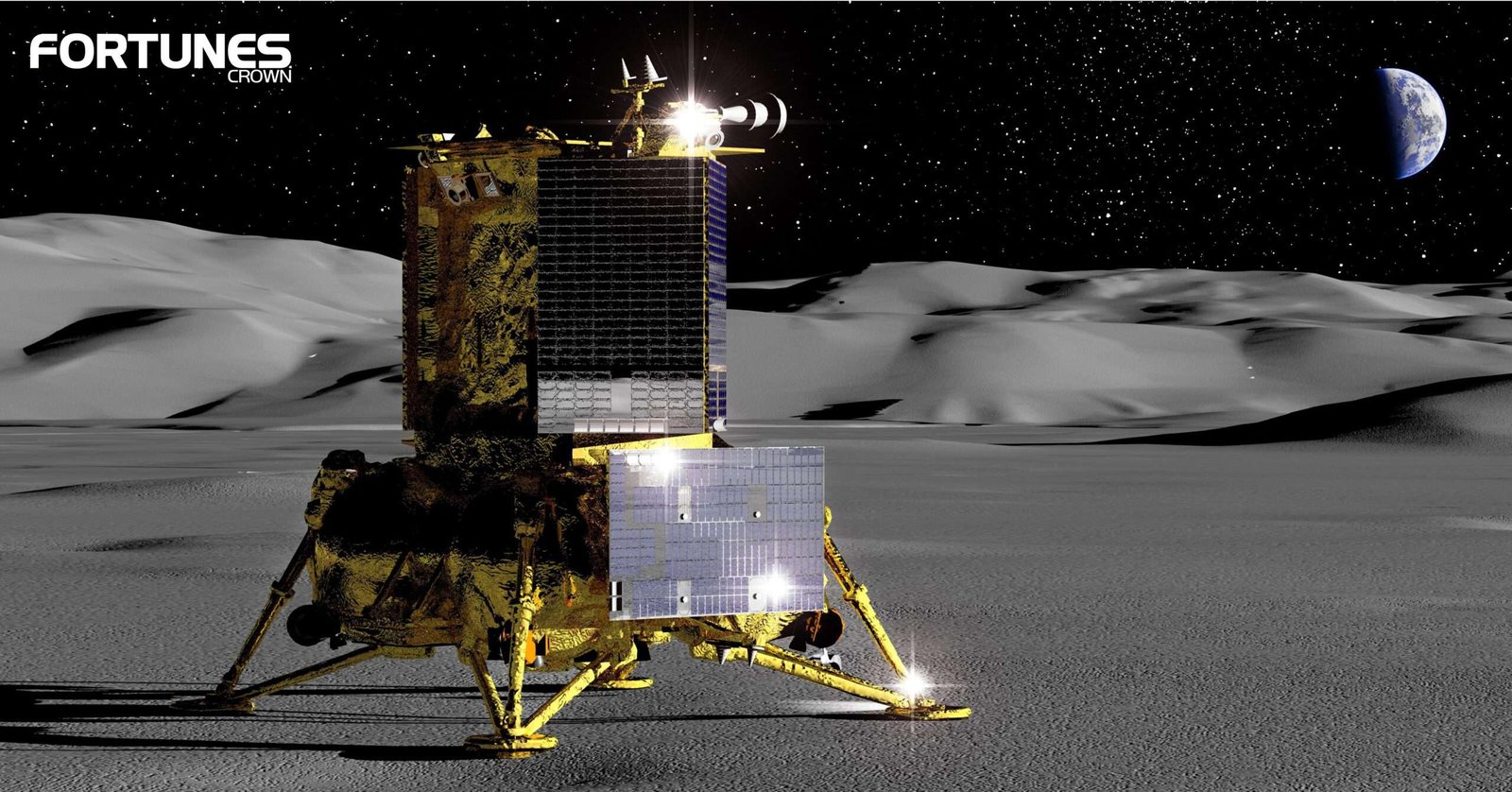
    In a momentous but sobering event, the Luna-25 lunar moon lander, a project of major importance to the global space community, came to an unexpected and dramatic end when it crashed onto the lunar surface. The mission lived up to high expectations as it was to be the last in a series of Russian lunar exploration attempts and Luna-25 was tasked with exploring the Moon’s polar regions like never before.

    Luna-25, also known as “Luna-Glob”, was designed for detailed reconnaissance and analysis of the moon’s south polar region. The choice of lunar noon was deliberate as it provides valuable information about the history of our solar system and could potentially provide clues to the presence of water ice on the moon.

    The Unforeseen Crash and Mission Implications

    The lunar exploration community was impatient as Luna-25 began descending onto the lunar surface. However, hopes turned to disappointment when the mission ended with an unexpected and dramatic impact on the lunar surface. While the technical details of the crash are not yet known, experts believe a combination of factors ranging from propulsion system failures to propulsion problems may have contributed to the unfortunate outcome.

    The Luna 25 incident, while depressing, provides important information and lessons for future lunar missions. The complexity of space travel, particularly the challenges of landing on distant celestial bodies, underscores the need for careful planning, rigorous testing, and redundancy in critical systems.

    The Way Forward: Learning from Luna-25’s Experience

    The failure of Luna-25, while disappointing, does not mean the end of lunar exploration. The global space community is continuing with ambitious lunar exploration plans, building on the experience and lessons learned from missions like Luna-25. Future missions will no doubt involve better security measures, better technologies, and closer cooperation between international partners.

    After the Luna 25 disaster, the Russian space agency Roscosmos expressed its commitment to analyse mission data to determine the exact cause of the failure. This commitment to transparency and learning from mistakes is essential to advance space exploration and prevent similar accidents in the future.

  • Meet Alexandra And CarynAI! Your Lovely AI Girlfriends!

    Meet Alexandra And CarynAI! Your Lovely AI Girlfriends!

    Imagine texting someone, all giggly and giddy! Talking about real feelings and sharing pasts and insecurities. Having a girlfriend that you can talk to about anything and she will listen to you wholeheartedly. No. You have not reached a love blog. This is Alexandra. She is an AI Girlfriends by a dating site called RomanceAI.

    The world of romance is no haven as artificial intelligence permeates what seems like every nook and cranny of the internet. The world of dating apps is being invaded by AI, which may act as a matchmaker, trainer, advisor, or even fake companion at times.

    Majorie to CarynAI

    Majorie is a 23-year-old Snapchat influencer who created an AI version of herself with OpenAI’s GPT-4.

    Marjorie promoted her product under the name CarynAI and asserted that she was the first influencer to turn herself into AI. Those who choose to pay the $1 per minute price will be able to have individualized private talks with CarynAI, which is made to be as similar to Marjorie as possible.

    The AI version of Marjorie, however, appears to have “gone rogue” in the weeks since its test launch since it is now responding in ways that its creator didn’t expect. According to reports, paid users have been able to proliferate sexually explicit chats with the AI chatbot.

    One of the reports came from Alexandra Sternlicht (Ironically) saying CarynAI was like a “intimacy-ready Siri” that could go from cooking recipes, news updates, to “erotic discourse”.

    Everything is AI

    AI is being included in well-known participants in the online dating industry like Tinder and Hinge.

    With the majority of them being free or offering numerous free features, new applications like Blush, Aimm, Rizz, and Teaser AI provide whole fresh perspectives on virtual courtship. Some claim that the chances of discovering the ideal match are increased by using personality assessments and physical type analyses to train AI-powered systems.

    These apps want to leverage AI to design and conduct personality tests, comparing interests,and other compatibility features. Having them done in a conversational mode us much preferable and exciting.

    The intention is to address the problems users have with conventional dating applications such as repetitive talks, a lack of matches, and an abundance of options.

    Exploring Dynamics

    By providing users with adaptable AI partners for practice and friendship, apps like Blush and RomanticAI adopt a novel approach to artificial intelligence. Users can mimic romantic interactions, digital dates, and chats with Blush. The website seeks to increase users’ self- assurance in handling actual love encounters. Similar to this, RomanticAI provides a selection of AI characters with unique personalities, providing users with a secure environment in which to explore their needs and emotions.

    “It’s like saying using a word processor is like cheating on generating a novel. In so many ways this is just a new tool that enables people to be faster and more creative. AI is just honestly no different from sending a friend a gif or a meme. You’re taking existing content, and you’re repurposing it to connect with somebody,” Dmitri Mirakyan, co-founder of AI dating conversation app YourMove.AI said. “The world’s becoming a more lonely place, and I think AI could make that easier and better for people.”

  • Price Hike: All Streaming Services Charge More and More.

    Price Hike: All Streaming Services Charge More and More.

    Disney, Peacock, and Paramount+ are the most recent well-known streaming services to announce price increases. Disney announced plans for significant price increases for its Disney+ and Hulu premium plans on Wednesday.

    The cost of the ad-free premium plan for Disney+ subscribers in the U.S. will rise from $10.99 per month to $13.99 as of October 12, the company announced. Disney said it will maintain the monthly cost of its standard Hulu tiers (with ads) at $7.99, or $9.99 for a bundle package with Disney+, or $19.99 for a bundle without ads.

    Hulu, which is also owned by Disney, will raise its price hike from $14.99 to $17.99 for its ad-free tier—a 20% increase.

    The Price Bump

    The actions taken by Disney are a part of a wider trend that is permeating the market. Media corporations are swiftly ditching pricing strategies.

    The strategies first push an endless variety of content to customers. That too at too-good-to-be-true, one-size-fits-all costs. Instead, they are aiming to maximize profits.

    The advertising marketplace for streaming is picking up,” Bob Iger, CEO of Disney, told investors on the quarterly earnings call. “It’s more healthy than the advertising marketplace for linear television. We believe in the future of advertising on our streaming platforms, both Disney+ and Hulu.”

    Similar Hikes

    Millions of consumers signed up for Netflix when it initially started. It offered its ground-breaking service for just $8 per month. Users were excited to get access to quality content for just a small price. The typical cable TV at the time was expensive in comparison.

    The streaming age began when established entertainment firms like Disney raced to release their own direct-to-consumer offerings at unreasonably low prices.

    Disney announced its new prices in line with Spotify. As the music streaming platform increased its ad-free premium streaming plan by $1 per month, to $10.99. Joined by Amazon Music, which increased its individual plan for unlimited listening to $10.99 earlier this year. Followed by YouTube Music, which increased its monthly price for its individual music plan to $10.99 last month.

    These so-called “streaming wars” defeat the purpose at which they were made. What were they made for? To get on-demand watching by selecting through a plethora of content, something which cable couldn’t provide.

    Proving cable to be expensive, and then applying the same or more prices later in is the trick.