Category: Technology

  • Morocco’s Fog-Harvesting Technology Turns Fog into Drinking Water

    Morocco’s Fog-Harvesting Technology Turns Fog into Drinking Water

    If you open your daily newspapers, the news about Ground Water Depletion can be seen every other day. Water Depletion is an issue the world is facing and trying to find solutions for it every day. With Global Warming constantly increasing, we are losing fresh and oxygenated water like sand from our fingertips. 

    Morocco is the home to this unique project to save water. Condensation is a process by which molecules of water vapor combine to make tiny liquid water droplets that hang in the air. You can see fog because of these tiny water droplets. This leads to the formation of Fog. 

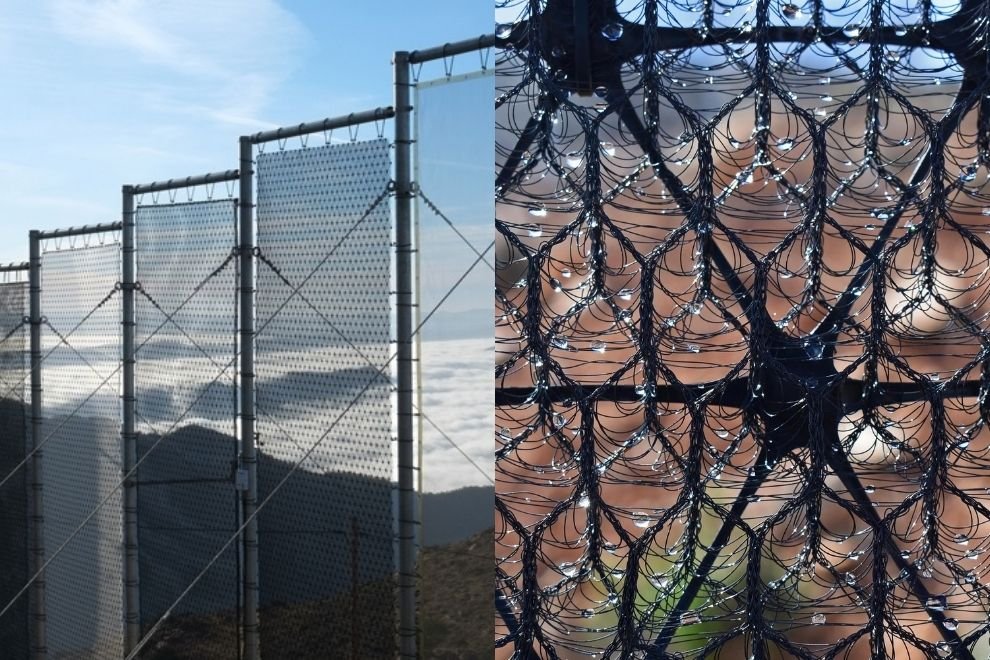
    CloudFisher Net, a fog-harvesting project developed by engineer Peter Trautwein of the German Water Foundation, is a structure with tiny triangles sandwiched between a robust grid made from plastic. 

    How Does it Work?

    When wind flows through the CloudFisher Net, it traps water droplets within its triangle-like structure. These water droplets then fall downwards through the net into the reservoir where water is collected. 

    This triangle-like structure is made from a rigid yet flexible material that not only collects water droplets but also reduces the impact of the flowing wind to prevent any damage to the structure. 

    How Much Water Can This Structure Harvest?

    Depending on the region, time of the year, and the flow of the wind, the Fog-Harvesting project can harvest between four to fourteen liters of water per square meter of the net. The project is already showing its impact on the households around the villages and towns in Morocco. They no longer have to spend hours walking to far-off places to fetch a pail of water; enabling them to grow crops efficiently and support their families and livelihood. 

    When this project achieves its set goal, around 1,150 villages will have access to 18 liters of water per day. Comparing it to their previous conditions of getting less than 8 liters per day, Fog-Harvesting technology has the power to improve thousands of lives. 

    “All over the world, this idea fails because of its construction, not because of the principle. On the day of my visit, I was determined to design a maintenance-free and effective system,” explains Mr. Trautwein. 

  • Indian Man Built own Private Plane, Traveling Europe with Family

    Indian Man Built own Private Plane, Traveling Europe with Family

    The epidemic was surely a tiring period for many, but some took advantage of it by picking up new DIY hobbies and challenges. Take, for example, Ashok Aliseril Thamarakshan, a Kerala native living in the United Kingdom who took advantage of the opportunity to realize his ambition of having a private jet by actually building one!

    When dream gives you wings

    Everyone enjoys traveling, right? But have you considered building your own private plane at home to fulfill your dreams?

    During the coronavirus curfew, the world was busy preparing Dalgona coffee and streaming movies or series, while Ashok Aliseril Thamarakshan was hard at work creating an aircraft. He is the son of MLA A V Thamarakshan, who came to the United Kingdom in 2006 to pursue his master’s degree after graduating from Palakkad Engineering College with a BTech.

    During the 2020 lockdown caused by the coronavirus, Thamarakshan made the decision to construct a private aircraft. Thamarakshan built a four-seater airplane for his family’s vacation after spending over Rs 1.8 crore, 18 months, and around 1,500 hours.

    Not just a backyard engineer

    Ashok, who now works for Ford, stated that after obtaining his pilot’s license, he used to charter modest two-seater aircraft for vacations. However, as he looked at his family, he realized he wanted his private plane. On this plane, he’s flown all around the world. Germany, Austria, and the Czech Republic are among the countries represented. He’s also traveled with his friends.

    He said that the girls had only flown a few times previously, but never with their father as a pilot. As their first family vacation, the family booked a flight to Newquay.

  • OneWeb and Eutelsat Merge to Compete in Satellite Space Race

    OneWeb and Eutelsat Merge to Compete in Satellite Space Race

    Two leading competitors in the European satellite industry are merging in a $3.4 billion all-share deal, posing a challenge to Elon Musk’s SpaceX. The two firms claim they would connect low-Earth orbit satellites that provide faster connections with less lag and geostationary satellites that have greater capacity and cover more areas, with OneWeb continuing to operate as its own brand under Eutelsat.

    Prior Standing against the Rivals

    Eutelsat, headquartered in France, provides television and internet services via 36 geostationary satellites orbiting near the Earth’s equator. OneWeb, which launched its initial internet-broadcasting satellites in early 2019, now contains around 428 satellites in orbit out of the 648 planned for its constellation and has so far established arrangements centered on serving as a supplier for governments and other corporations such as AT&T.

    The Project Kuiper low Earth orbit satellite internet enterprise, owned by Amazon, has reserved 83 launch flights over a five-year period to deploy its projected constellation of 3,236 satellites, although none have been carried out as of yet. SpaceX Starlink, on the other hand, has already launched hundreds of satellites, has over 250,000 users, and is already delivering high-speed internet access in dozens of countries with different service options.

    Finally, Eutelsat and OneWeb highlight the complementary nature of their separate offerings as the great potential here: Eutelsat’s GEO satellites, which are at higher altitudes and hence have a larger latency, are better suited for things like weather predictions and TV broadcasts. Furthermore, OneWeb’s network of lower-altitude satellites is better suited for essential communications requiring low-latency data transfers. The firms say that by combining their efforts, they would be better positioned to target a larger range of use cases in both the B2B and B2C arenas.

    Key Takeaways from the merger

    In a joint statement, Eutelsat and OneWeb claimed the proposed merger would combine resources (Eutelsat has a fleet of 36 geostationary satellites and OneWeb has a network of 648 Low Earth Orbit satellites) to establish a “leading global player” in space-based communication.

    The agreement, which values privately owned UK satellite operator OneWeb at $3.4 billion, will see OneWeb owners swap their shares for new ones issued by Eutelsat, resulting in a 50% holding in the newly merged business.

    The newly merged organization will be “uniquely positioned to capture” the fast-growing global connectivity market, according to Eutelsat and OneWeb, and may yield €1.5 billion ($1.53 billion) in cost efficiencies and higher revenue.

    According to the announcement, the organization will maintain its principal listing in Paris and will pursue a listing on the London Stock Exchange.

    Major shareholders of both companies— The United Kingdom government, corporations controlled by the French and Chinese governments, and Indian telecommunications mogul Sunil Bharti Mittal have all expressed support for the merger and will be represented equally on the entity’s 15-member board.

    The proposed chairman of the merged firm, Eutelsat chairman Dominique D’Hinnin, said the merger is a “game changer” for the sector and will speed the commercialization of OneWeb’s fleet.

  • 3 Indian Gems Contributed to NASA’s James Webb Telescope Development

    3 Indian Gems Contributed to NASA’s James Webb Telescope Development

    There is a huge team of scientists behind the success of the legendary James Webb Telescope launch and there were three Indian minds also involved in this biggest achievement. So here are the stories of their journey of playing integral and crucial roles in projecting Hubble’s friend, James Webb Space Telescope.

    Kalyani Sukhatme

    Kalyani Sukhatme was the project administrator for this Mid-Infrared Instrument or MIRI, one of the four science instruments on the James Webb Telescope. She works at NASA’s Jet Propulsion Laboratory, or JPL, California Institute of Technology in Pasadena, Calif.

    Kalyani is the daughter of two mathematics professors, was born in Mumbai, India, and she has curiosities in engineering and physics which led her to a Bachelor of Technology in engineering physics from the Indian Institute of Technology at Mumbai in 1993. She was awarded the Institute Silver Medal for standing first in her class on her graduation. She finished her master’s in physics in 1995 from the University of California, Irvine UCI. She achieved a doctorate in physics from UCI in 1997 with a thesis in low-temperature experimental physics.

    Kalyani has been at JPL full-time, starting as a postdoctoral fellow in 1998. In graduate school at UCI, she earned the Regents’ Fellowship. At JPL she has gained five team rewards from 2004 to 2009, one individual outstanding accomplishment award in 2005, and one NASA group achievement award in 2006. She is the recipient of the European Space Agency James Webb Space Telescope award for significant achievement in 2012.

    Kalyani’s investigation concentrates on low-temperature transport properties on grounds and Josephson junction behavior in superfluid Helium. She has joined in the technology development of infrared detectors and their operation for spaceflight missions.

    At JPL, she served as the examination head for the SPIRE instrument on the mission, which launched in May 2009. She oversaw the MIRI Focal Plane Module or FPM advancement, providing the flight and spare units in September 2009.

    Hashima Hasan

    Hashima Hasan was The Deputy Program Scientist for the James Webb Space Telescope and was born in Lucknow. She is the NASA Program Scientist for NuSTAR, the Keck Observatory, and ADCAR (Astrophysics Data Curation and Archival Research).

    In a NASA video, she talked about how her interest in space evolved.

    “I grew up in India, and first got fascinated with space when my grandmother took us all to the backyard to see Sputnik. I was five at that time. I was excited and wanted to become a scientist.”

    Hasan graduated from Aligarh Muslim University and studied at the Tata Institute of Fundamental Research (TIFR), Mumbai. After that, She had a brief stint at the Bhabha Atomic Research Centre (BARC).

    She obtained a doctorate from the University of Oxford in theoretical nuclear physics.

    Hasan was the Optical Telescope Assembly Scientist at Space Telescope Science Institute, Baltimore, till 1994, after that she united with NASA.

    Kartik Sheth

    According to NASA’s website, for 7 years Kartik Sheth has been working as a program scientist in both the Astrophysics and Earth Science Divisions.

    Kartik’s duty encompasses supervising space journeys, along with analysis and development programs. He also works in the fulfillment of the United Nations endurable development goals.

    He was the Assistant Director for Research Infrastructures and Science Equity in the Office of Science and Technology Policy in the Executive Office of the President in the White House.

    He assisted as the Director of the Office of Diversity and Inclusion at the National Radio Astronomy Observatory.

    Sheth established a non-profit called Empowered Earth Alliance and the goal of this alliance is to entrust regional authorities with scientific and business knowledge so they can operate independently towards sustainability.

    He earned the NASA Diversity, Equity, and Inclusion Award for his work overseeing the Anti-Racism Action association, and the other work at the agency in 2022.

    So this was the journey of Indian scientists who are involved in the making of NASA’s James Webb telescope.

  • China Builds World’s Longest Single-Tower Suspension Bridge

    China Builds World’s Longest Single-Tower Suspension Bridge

    The bridge, which is supported at both ends by cables and is built in a mountain valley with a V form, seems as though it defies gravity and is recognized as an engineering marvel known to be the longest suspension bridge in the World. It is only held up by one tower on one side.

    When it opens to traffic next month, China’s Lvzhijiang Bridge will be the first single tower, single-span suspension bridge in history.

    An engineering marvel

    The bridge, which is 798 meters long and spans the Lvzhijiang, also known as the “Green Juice River,” will facilitate and speed up transport in the remote and beautiful Yunnan province. The bridge is recognized as an engineering marvel. It is only held up by one tower on one side.

    This bridge, a three-year project completed in 2019, is an important part of the 9,000 km long Yunnan Highway network and the 190 km long Yuchu Expressway. It will significantly cut the travel time between Chuxiong Yi Autonomous Prefecture in Yunnan and nearby Yuxi City. After the completion of the project, the crossing time between the two sides will be shortened from 1.5 hours to 2 minutes, which will play an important role in promoting tourism development and economic growth in central Yunnan.

    China Railway Engineering Corporation

    On March 9, the Lvzhijiang Bridge of the Yuxi-Chuxiong Expressway in Yunnan that CREC had been working on was successfully closed as the cable crane fastened the final piece of steel box girder on the sling precisely and steadily. (@CRECofficial).

    It now extends 766 meters farther than the previous record-holder, the one-tower Jinshajiang Hutiaoxia expressway bridge.

    For an insight view of the Longest Suspension Bridge in the World, click here

  • China Reports A Massive Data Breach: 1 Billion Citizens Data Hack

    China Reports A Massive Data Breach: 1 Billion Citizens Data Hack

    Recently, China has recorded a massive data hack and 1 billion citizens alleged that they got trapped by hackers.

    As yet there is no official confirmation of this data leak from Chinese authorities. The cyber security experts and other web forums have confirmed the leak.

    Data squeezed from the Shanghai police database

    It is reported that a hacker has acknowledged that he has stolen the data of 1 billion Chinese citizens from the Shanghai police database. If it is found authentic then this will be the biggest data theft in the history.

    Shanghai Police has not instantly reacted to the issue, as per reports.

    What’s in that database?

    Reports said that the database which leaked comprises all the necessary information like names, addresses, mobile numbers, case details, and national identification numbers, all leaked from the Shanghai police database as claimed by hackers.

    As per the news reports the size of data leaked is around 24TB it includes information about 1 billion citizens and their cases.

    Originally the news rolled out from Chinese social media platforms like Weibo, but after some time Chinese censors blocked the searches for keywords related to the news. China’s government was smart to compress online discussions on the issue.

    “When you’re talking about a billion people’s information and it’s static information, it’s not about where they travelled, who they communicated with or what they were doing, then it becomes very much less interesting,” said the expert Chester Wisniewski he adds on that “The information, once it’s unleashed, is forever out there,” Wisniewski said.

    “Everyone, please be careful in case there are more phone scams in the future!,” mentioned an individual in a Weibo post.

    About the Hackers

    The identity of the hackers is not evident yet as per current posts on the online hacking forums, breach forum an unknown user recognized with the user name of “ChinaDan“. He has proposed to sell all the data for 10 bitcoins which is the same as  $200,000.

  • China’s First Solar-Powered Car, a Zero-Emission Level 4 Autonomous Vehicle

    China’s First Solar-Powered Car, a Zero-Emission Level 4 Autonomous Vehicle

    As other businesses across the world get closer to providing scaled manufacturing of solar EVs, a multi-organizational collaborative effort in China has advanced sustainable mobility by developing a solar car that is powered by solar energy. The Tianjin solar vehicle is now available. At the sixth World Intelligence Conference, the Tianjin Solar vehicle was introduced in China and has since begun a tour of mainland China. The vehicle was collaboratively created by 42 enterprises and three colleges, following the local press in China. There are several limitations because it took five months to create, such as the 47-mile maximum tested range.

    Solar-powered automobiles of the World

    Gaining range from the enormous, flaming ball of gas that descends on us every day seems like a no-brainer and many of the EV firms attempting to accomplish the same feel the same way. The second effort by Aptera to commercialize a solar electric vehicle (EV) in California is still scheduled for later this year.

    Light year recently debuted the production model of the Light year 0 SEV abroad; manufacturing will also start later this year. For its flagship Sion EV, scheduled for production in 2023, Sono Motors is in the process of developing a validation prototype in Germany.

    Tianjin’s portrayal

    The sixth World Intelligence Conference served as the Tianjin solar vehicle’s premiere, and it has since begun a fresh tour of mainland China.

    Specifications

    For instance, it is claimed that the Tianjin solar car can “Level 4 and above” of autonomous driving. This vehicle’s solar module size is 8.1 square meters, much larger than that of a SEV like the Light-year, and it has 5 square meters worth of cells, which is a lot. The first 100% solar car from China has the following additional details:

    The car in the video is more than 13 feet (4 meters) in length, over six feet (1.7 meters) in width, and six feet (1.8 meters) in height. It weighs 2,250 pounds (1,020 kg).

    The driver’s compartment is located upfront and minimally comprised of three controls underneath a large touchscreen display. Since the vehicle is purportedly equipped with Level 4 autonomous driving, which is well seen in the brief video, a steering wheel is conspicuously absent from the scene.

    • Speed

    According to reports, the automobile can go at a top speed of 49 mph (79.2 kph), which is respectable for a vehicle that will probably be utilized in urban settings.

    Although not very exciting specifications compared to a solar EV or any other EV, these figures are nonetheless fairly good given that they are fully powered by solar energy. To put it mildly, that is thrilling.

    The Sun is the Engine

    The solar module on the automobile has a far larger surface area than any prior solar vehicle, measuring 87 square feet (8.1 square meters). It has a maximum energy production of 7.6 kWh on sunny days. Also included in the vehicle’s setup is a battery with a 330 WH/kg energy storage density.

    For every 62 miles (100 km) traveled, using this vehicle is predicted to minimize carbon emissions by 55 pounds (100 lb). However, this has a 47-mile maximum tested range (74.8 km).

    With the solar-powered automobile presently on tour in China, we hope to hear more about it shortly.

  • Harley Davidson Launches Serial 1 Limited Edition Mountain Bike

    Harley Davidson Launches Serial 1 Limited Edition Mountain Bike

    Harley Davidson announced a series of exclusive, one-of-a-kind e-bikes under its series 1 brand name. Inspired by the Schwinn Sting-Ray Mosh/Chopper is the first offering. The winning bid was $14,200. At the time, the company said that just like in the world of motorcycles, customization would play a big role. Like Serial 1, the company thinks about the types of e-bikes it designs.

    Serial 1, the e-bike company spun out of Harley-Davidson nearly two years ago. Revealed another premium model designed to make you open your wallet in helpless surrender. The Mtn is the company’s first electric mountain bike, and it can destroy an off-road trail.

    A rigid, single-speed eMTB, the Mtn is designed for serious off-roading, and also requires less maintenance because of its simplified design. But it won’t be cheap, with a suggested retail price of $3,999.

    What does it offer?

    The Mtn design was based on the Serial 1 engineer’s build and adapted to the company’s entry-level model. This new premium model keeps many of the Cty features,  Gates Carbon Drive belt, and Brose S Mag mid-drive motor. Additionally, the TRP hydraulic disc brakes run internal cables and wires and integrated LED lighting.

    Read More: Asus Unveils Overkill Rog Swift 500Hz Fastest Gaming Monitor

    The Cty with the inclusion of  Michelin EWild knobby tires and a “back-friendly, shock-absorbing” SR Suntour NCX suspension seat. Yucca Tan’s painting with special Gloss Graffiti graphics also differentiates the Mtn from other Serial 1 models. Also thanks to a deal with Google, the Serial 1 app will relay all the ride data and other metrics to users.

    Serial 1 features a removable 529Wh battery that powers the bike for 30–95 miles, depending on the ride mode. It’s a  Class 1 e-bike with no throttle, which means it tops out at 20 mph. With 90 Newton meters and 66 foot-pounds of torque, it ensures you can get up a steep hill without much effort. Much like the stunning, vintage-inspired S1 Mosh/Tribute, the Bash/Mtn will be in limited production. Only 1,050 copies will be produced: 525 for the United States and 525 for Europe.

    No fussy suspension to tune, no finicky drivetrain to adjust — just two wheels, one gear, and one purpose, to provide the most direct connection between you and the trail.

  • Asus Unveils Overkill Rog Swift 500Hz Fastest Gaming Monitor

    Asus Unveils Overkill Rog Swift 500Hz Fastest Gaming Monitor

    The best gaming monitors offer high refresh rates for smooth gaming experiences. There are some gamers who balk at refresh rates below 144Hz, and monitors with 240Hz and even 360Hz displays are becoming more common. Now Asus is launching the world’s first 500Hz display in the form of the 24-inch 1080p Asus ROG Swift 500Hz.

    During Computex 2022 reveal, the Asus ROG Swift 500Hz seems overkill. 500Hz might not be something normal gamers aren’t expecting, it might be what competitive gamers are looking for.

    What are the offerings of The ROG Swift 500Hz?

    The ROG Swift 500Hz features a 24.1-inch panel that comes out at Full HD (1920×1080) resolution. The relatively low resolution here is understandable given the insanely high refresh rate. We doubt if even the best graphics cards out there will be able to push such insanely high frame rates at anything above 1080p. Just to put things into perspective, the ROG Swift 500Hz draws frames more than eight times faster than typical 60Hz displays in a single second. But it also means your GPU will be put through its peak.

    ASUS says it’s using a new Esports TN technology that offers 60% better response times than standard TN panels to make the ROG Swift 500Hz better responsive. It also supports built-in NVIDIA Reflex Analyzer and G-SYNC technology. Which will let you tweak settings to achieve the lowest possible input lag without stuttering or tearing.

    Read More: NFTs Aren’t as Cool as They Sound

    Requirements to use the 500Hz overkill monitor

    This monitor is aimed at competitive gamers who want to get the full out of their gaming screen. However,  to take full advantage of the 500Hz display would require a superpowerful gaming rig. Nvidia’s GeForce RTX 40-series graphics cards are reportedly set to arrive in the second half of 2022. According to rumored specs, they should be able to run games at very high frame rates, thus taking advantage of this monitor’s high refresh rate.

     Nvidia claims that this gaming monitor makes a match-making difference for competitive gamers. This monitor reduces ghosting and makes it easier to follow targets with smoother animations.

    The screen uses other technologies that, according to Nvidia, ensure better response times. Nvidia has not announced a release date or price for the ROG Swift 500Hz gaming monitor. Although it’s only 1080p, given its ultra-high refresh rate.

  • Apple and Samsung Could Face Fines for Excluding Charger Bricks

    Apple and Samsung Could Face Fines for Excluding Charger Bricks

    Tech giants Apple and Samsung are reportedly dealing with new fines for now no longer delivering energy adapters with new smartphones. Apple started the trend of eliminating charging bricks from its iPhones starting with the iPhone 12 and the main organization to embody this fashion after the great of Cupertino became Samsung. It commenced to now no longer deliver charging bricks with Galaxy S21 series and deliver only a USB-C cable in the box.

    Apple and Samsung’s Bad luck

    While Apple at the time said the step is to decrease the quantity of e-waste that’s piling up and it is being assumed that everyone must have a charger round from their preceding phone.

    However, this has caused each business to deal with scrutiny and fines from diverse governments throughout the World. Apple is currently facing additional fines in Brazil for no longer shipping its new iPhones with chargers.

    Read More: Google, Microsoft, and Apple Team Up to Introduce Zero Password Devices

    The organization has defended itself and clarified that it took the flow to eliminate the energy adapter that allows you to lessen its carbon emission every year through 2 million metric heaps of smaller packaging. And with smaller bins, the organization can deliver greater bins in an unmarried delivery pallet and it additionally advantages the organization as it is able to properly store delivery charges as now he no longer needs to provide power adapters and AirPods.

    Samsung additionally made an equal shift with its flagship smartphones. However, this has landed each of the tech giants in trouble. A choice in Brazil has ordered Apple to reimburse a patron the equal of $1,081 when you consider that now no longer delivering the energy brick violates the patron legal guidelines of the organization. The South Korean tech large has additionally confronted a quality for now no longer along with a charger.

    In addition to this, each business also is being charged in Sao Paulo as properly, through the patron safety organization referred to as Procon. Procon in Fortaleza has imposed a quality of $5.2 million on Samsung.

    Read More: Apple Shifting To India Due To China’s Zero Covid Policy